Feeds:
Posts
Comments

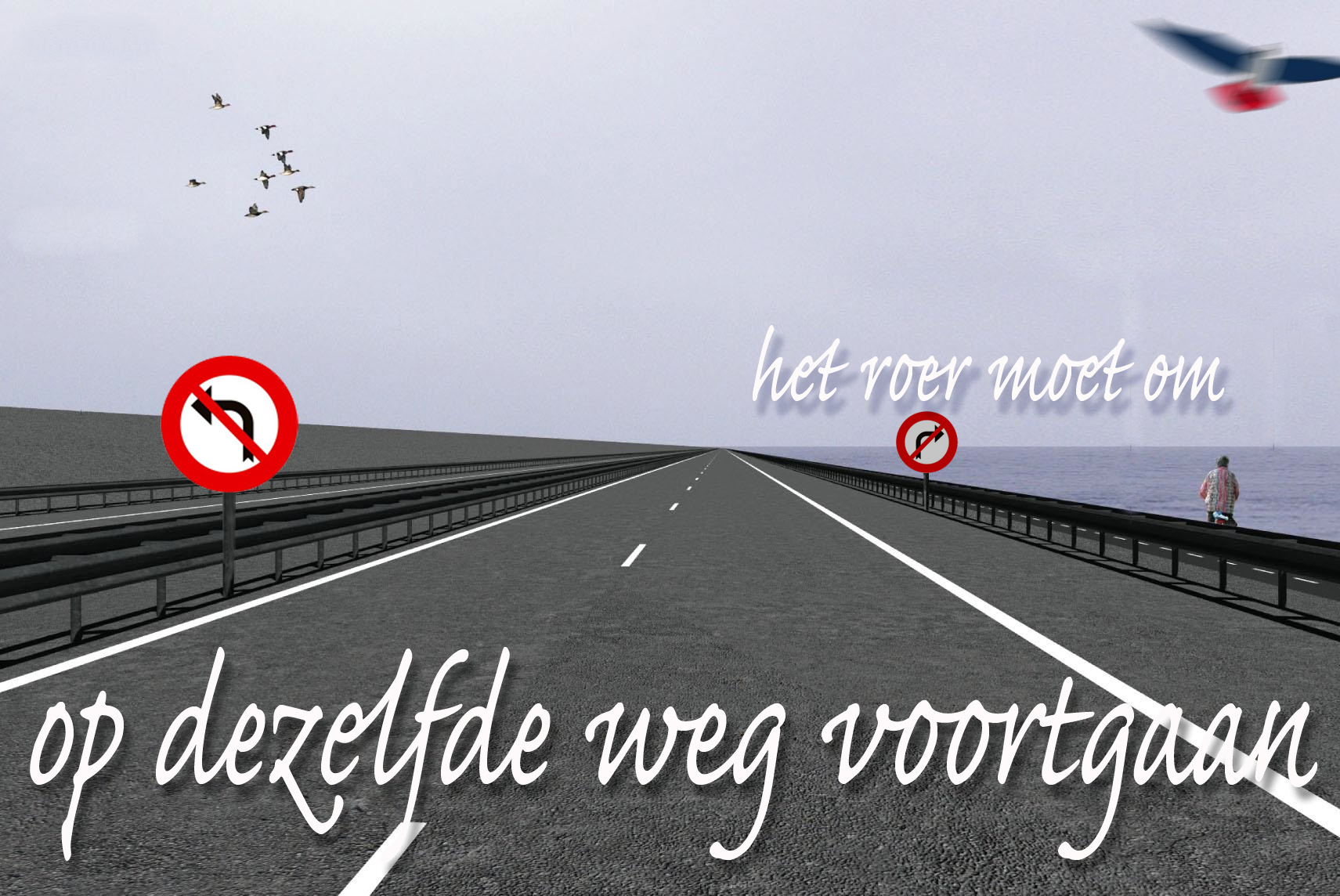
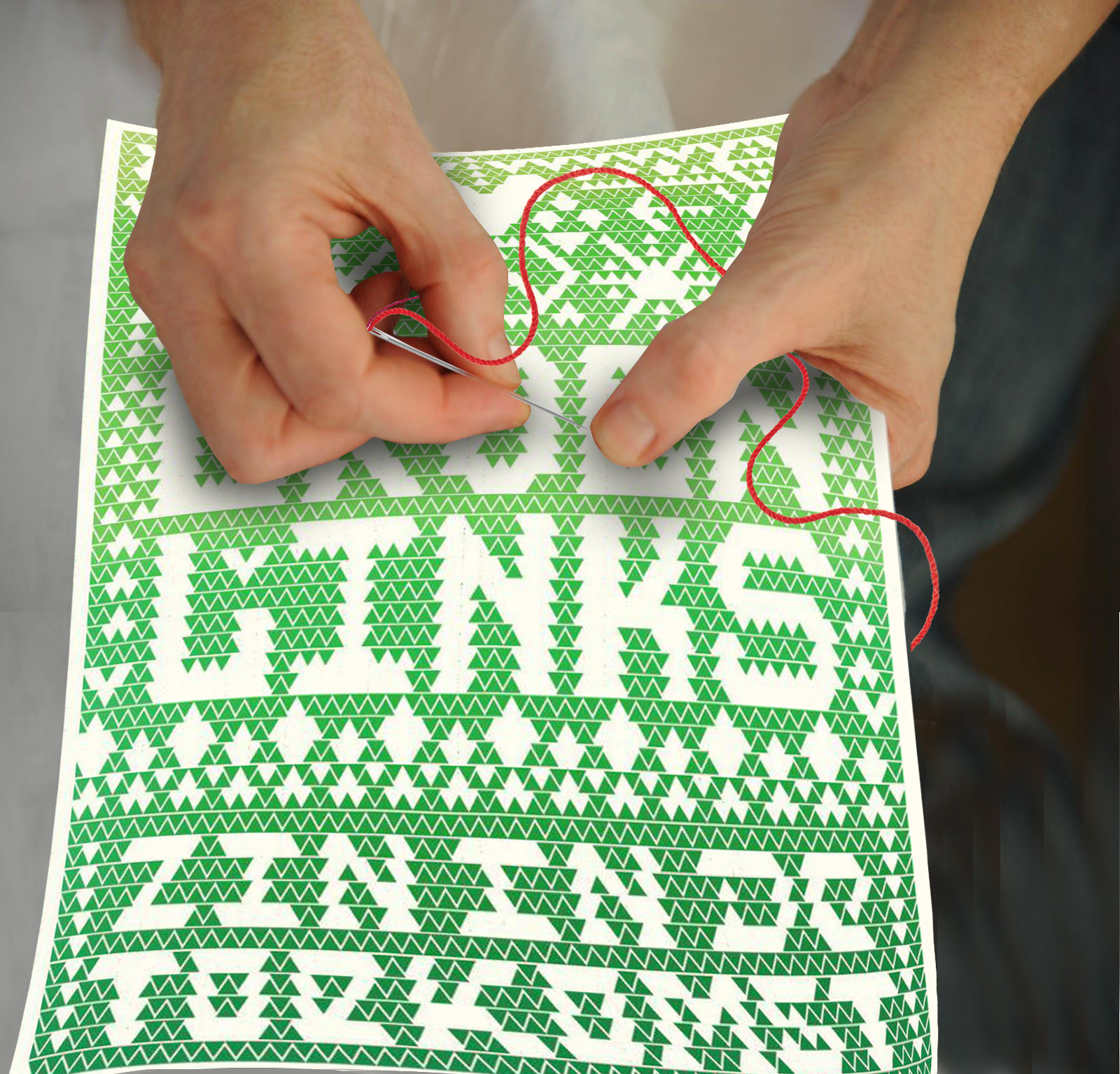
Keep on embroidering GreenLeft or the reconfiguration of a party that lost more than half its seats in the last September 2012 elections in the Netherlands (from 10 to 4 seats); “zin in de toekomst” is the party slogan of GreenLeft and means something like “fancy the future” also something like “make sense of the future” and “a sensible future”; In the past two years the GreenLeft party has alienated itself on more than one occasion with the centre-right government coalition of liberals and christian-democrats, supported by right wing PVV party of Wilders; this has lead to a bewildered electorate that choose to vote for the less compromised social-democrat party; less compromised only in these last two years after the fall of the the liberal/social-democrat and christian-democrat coalition in the year 2010)

—-

Zie ook: Voor JOLANDE SAP: niet ieder kruisje is een mandaat – ofwel afstraffing voor aangegaan monsterverbond door GroenLinks


De hele idee van het kiezersmandaat – in zijn huidige vorm – is altijd al een probleem geweest en gebleven. Zo is er nu het voorstel van de 2e kamervoorzitster Gerdi Verbeets (PvdA) om na de val van een kabinet gewoon door te regeren en de volle 4 jaar af te maken, iets waar nog weinigen zich direct en publiekelijk tegen gekeerd hebben. Arrogantie van “volksvertegenwoordigers”, in een nog verdere gaande structurele vorm dan al die verliezende partijvoorzitsters en -zitters die allen zeggen gewoon aan te blijven.

Jolanda Sap leek mij ooit iemand die wel goed haar huiswerk deed als kamerlid (1), maar als lijsttrekker toont zij weinig begrip voor de ‘demos-kratos’ – al was het maar in de gefingeerde vorm van ‘onze’ parlementair stelsel.

Zij zegt zich gesterkt te voelen in haar overtuiging ondanks het eclatante verlies van GroenLinks en gewoon als partijvoorzitsters aan te blijven.

GroenLinks kamerlid van voor deze verkiezingen Rick Grasshold wordt geciteerd in Het Parool van 14 september, een artikel met de veelzeggende kop “Sap blijft – er is niemand anders”:

“Wat moet ik zeggen? We hebben echt tot het uiterste campagne gevoerd, maar het resultaat is er niet naar. Ik weet het even niet meer.”

Het is ook niet de campagne en de wijze waarop die gevoerd is (zoals een aantal hoogleraren in politiek en communicatie in de dagen vlak voor de verkiezingen nog verzuchtten in de Volkskrant), het is – heel simpel – het gevoerde beleid van GroenLinks in de afgelopen ‘jaren’, dat te ver afgedreven was van het vaste land van de daadwerkelijke trouwe GroenLinks-stemmers.

Sap prijst zichzelf altijd als iemand die tegen de stroom oproeit en pas bij tegenwind in vorm komt.

“Wij zijn zelf zo wie zo buitengewoon gemotiveerd om heel scherp te gaan controleren. We zullen ook zelf regelmatig ter plekke gaan kijken, er zijn goeie contacten in Afghanistan en we zullen de achterban daar ook heel goed bij gaan betrekken en op de hoogte houden.” (1:02)

Aldus Jolande Sap na haar eerste GroenLinks Congres in Utrecht, zaterdag 5 februari 2011 sprekend in de NOS microfoon. “Goeie contacten in Afghanistan”, je vraagt je af hoe ver de contacten en expertise van partijleidster Sap wel niet reiken, zou dat bij de lokale bevolking zijn of gewoon een persvoorlichter binnen de muren van één van de forten van NATO of  ISAF? Terug naar dat congres…

Het was een schizofreen congres dat enerzijds “een motie van treurnis” aannam over de steun van de Tweede Kamerleden van GroenLinks voor het regeringsbeleid, dat een ‘politionele missie’ in de provincie Kunduz in Afghanistan ondernam. Een congres waar jonge vredesactivisten een ludieke actie tegen dit GroenLinks besluit voerden, met nep-politieagenten die het congresgebouw beveiligden. Een congres dat pal daarvoor – echter wel – een ‘motie van afkeuring’ verwierp die de kersverse partijleidster van het podium gestoten zou hebben.

Toch blijft dat niet met de oorsprong van GroenLinks strokende beleid van het steunen van Nederlandse deelname aan militaire acties, doorvreten. Eén van de vijf partijen die ooit tot GroenLinks fuseerden was de PSP, ofwel de Pacifistische Socialistische Partij. Zo komt op hetzelfde NOS verslag van het congres een wat oudere man (Paulus de Wilt is mij later verteld tj.) in beeld (0:52) die zegt:

“Ik ben 21 jaar lid van GroenLinks, de partij zit in mijn hart, ik heb er ontzettend veel moeite mee dat dit gebeurd, maar ja het is niet anders, je hebt het af en toe accepteren.”

Dat klinkt dan weer als een houding die haar oorsprong vindt in weer een andere wortel van GroenLinks, de CPN, ofwel de Communistische Partij Nederland, waar het onderschikt maken van het ‘persoonlijk gevoelde’ aan een  hoger, door de partij bepaald belang, een vanzelfsprekendheid was, ongeacht de kille tegenwind van de Koude Oorlog.
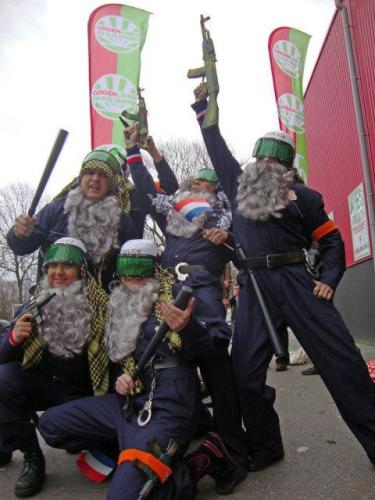
Op de Indymedia.nl web site stond dit verslag van het protest tegen GroenLinks Kundus steun:Eerste Dwaze Training Kunduz Politie bij GL. De Politie van Kunduz zou ergens op de planeet les moeten krijgen. Geen betere plek op zaterdag 5 february dan het congres van GroenLinks in Utrecht! Rond 10.30 uur kwamen de eerste recruten opdagen en probeerden ze voor de eerste keer in hun leven een gebouw veilig te stellen waar (je weet maar nooit!) Taliban zich zou kunnen verschuilen. Helaas was de coördinatie met andere geuniformeerde krachten nog niet helemaal zoals het zou moeten zijn…Verschillende pogingen om de zaal binnen te komen, faalden op ‘n dramatische wijze. Veligheidstypes wisten niet van de nieuwe, belangrijke missie en duwden het bataljon van de Kunduz Politie uit het gebouw. De enige overgebleven mogelijkheid was om door te gaan met onze dwaze training buiten het gebouw. Gelukkig was er professionele ondersteuning van de Nederlandse politie uit Utrecht – die het heerlijk vonden om met ons te oefenen! Met hun spelen was echt dikke pret!We weten dat de volgende Nederlandse bijdrage aan een NATO-missie niet erg goedkoop is: het begint met 500 miljoen Euro. Maar dan krijg je ook iets heel moois! We leerden bijvoorbeeld de typisch Nederlandse polonaise en zongen: “Olé, olé, olé – we gaan naar Kunduz – we gaan naar Kunduz!”  (2)

Dan komt op 26 april 2012, vlak na de struikeling van kabinet Rutte I – in de tuin van het Catshuis –  over het uitgestoken been van Geert Wilders, de reddende hand van de gelegenheids-coalitie van D66, GroenLinks en de Christen Unie, die ten val gebrachte gedoogregering nog even overeind helpt. Dit in een zelfde combinatie die destijds de regering Rutte aan een meerderheid hielp voor voortzetting van de ‘politionele actie’ in de Afghaanse provincie Kunduz.

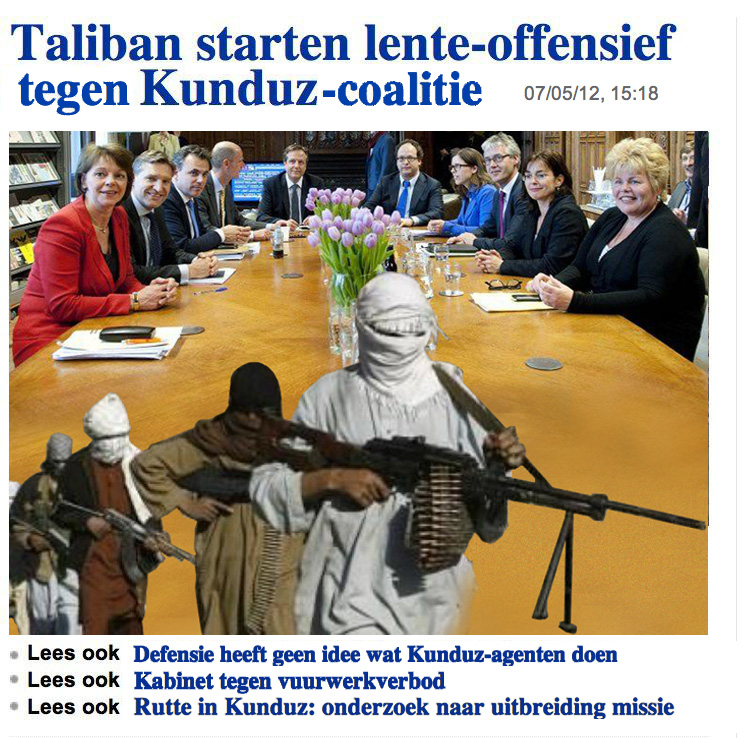
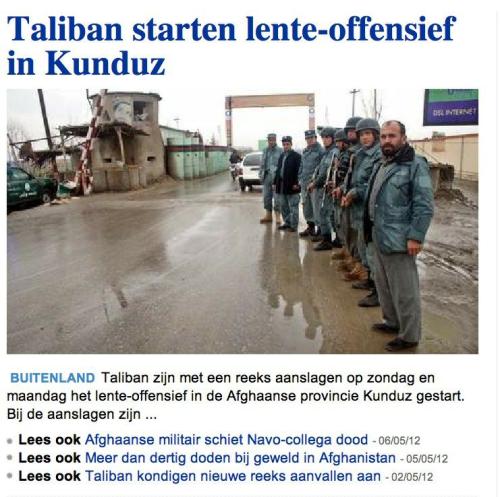
Verdraaiing van mijn hand van een krantenkop in de Volkskrant vlak naar het sluiten van het zogenaamde ‘Kundus-akkoord’ waarbij gewag gemaakt van een ‘lente-offensief’ van de Taliban in Afghanistan, wat ik dan voor mijn geestesoog zag als oprukken over de onderhandelingstafel in de fractiekamer van D66 op het Binnenhof. NB ‘kurduz-coalitie’ c.q. ‘kurduz-akkoord’ ook wel ‘wandelgangenakkoord genoemd: “Er zijn verschillende namen voor het akkoord. De term wandelgangenakkoord is ontstaan doordat minister De Jager van Financiën en de fracties in de Tweede Kamer voortdurend heen en weer liepen door de wandelgangen van het Tweede Kamergebouw. Vandaar de naam wandelgangenakkoord. GroenLinks noemde de partijen die het met elkaar eens waren de regenboogcoalitie. De partijen trokken eerder samen op toen het ging om de politietrainingsmissie in de Afghaanse provincie Kunduz. Vandaar dat deze coalitie ook wel de Kunduz-coalitie wordt genoemd.”[citaat van een Nederlandse Wikipedia pagina die in mei dit jaar genomineerd is om verwijderd te worden, met ander woorden het was toen een nog ‘zwevende term’]

Vandaar ‘Kunduz-coalitie’ (ondanks pogingen van CDA Minister De Jager om het wat vriendelijker ‘Lente offensief ‘ te noemen). Maar liefst 16 miljard Euro aan ‘ombuigingen’ en lastenverzwaringen, worden in dit begrotingsakkoord vast- en voor het jaar 2013 opgelegd. Ook dit moet een deel van de achterban van GroenLinks verbijsterd hebben. Zo niet het partijbestuur, die steeds  ‘Realpolitik’ boven ‘oppositie’ blijkt te verkiezen. Een partijbestuur dat willen laten zien – om met Femke Halsema op het GL-Congres van 28 november 2009 te spreken –   “GroenLinks is klaar om te regeren.”

Een veelvoud aan verwijderingen bij GroenLinks voltrekt zich: tussen GroenLinkse kamerleden onderling (de potsierlijke ‘partijleider’ verkiezingen), tussen kamerfractie en partijbestuur, als ook tussen partijbestuur en partijleden. Dit alles leidt dan uiteindelijk tot de vervreemding van potentiële kiezers van “hun partij”, die iets anders is geworden dan dat wat zij als GroenLinks kenden.

De afstraffing van GroenLinks in de jongste verkiezingen is zeker ook toe te schrijven aan deelname van GroenLinks aan dit tussendoor geflanste Kunduz-akkoord, dat sommige commentatoren “een huzarenstukje” noemden (FritsWester/RTL Nieuws) maar bij de achterban klaarblijkelijk gezien werd als een verwerpelijk ‘monsterverbond‘.

Het is niet enkel GroenLinks dat te lijden heeft gehad van getoonde ‘regeringskoorts’ tijdens de 2012 verkiezingsstrijd. Ook de SP heeft dit moeten ervaren, alhoewel deze partij zichzelf  niet op gelijke wijze als GroenLinks gecompromitteerd had door de ondersteuning van het Kabinet Rutte I. Anders dan bij de SP kon er bij GroenLinks geen sprake zijn van een gedroomde ‘grote voorsprong voorwaarts’ van oppositie- naar meerderheids-regeringspartij. De GroenLinks strategen moeten het verdeelde politieke landschap dat de 2010 verkiezingen opleverden, voor ogen hebben gehad, waarbij regeringsmeerderheden van gelijkgezinden niet of nauwelijks te vormen waren. Door zich het lot van het gevallen kabinet Rutte I aan te trekken, dachten deze strategen, hun eigen droom van regeringsdeelname (Halsema 2009) te kunnen verwerkelijken. Overwaardering van wat een kleinere fractie in een regeringscoalitie vermag te weeg te brengen, gekoppeld aan een onderschatting van het effect van oppositie bedrijven.

De teloorgang van grote gelijkgestemde regeringscoalities openbaart zich al gedurende bijna twee decennia, een gegeven dat de betekenis van ‘oppositie partijen’ veranderd heeft, van machteloos toezien, tot actief tussenbeide komen. De betekenis van het recht van een ieder Kamerlid om het initiatief te nemen om een wetsvoorstel in te dienen is de laatste decennia ook ingrijpend veranderd. Vond dit in de regeringsperiode 1945-1967 nog slechts 8 x plaats, in de periode 1973-1990 was dat opgelopen tot een aantal van 67 initiatieven. Tegenwoordig heeft ook de oppositie recht op ambtelijke ondersteuning bij het opstellen van zulke initiatieven. Dus oppositie is al lang meer dan enkel lijdzaam toezien. Daarbij moet ook gerekend worden het recht van amendement van ieder kamerlid – al dan niet deelnemend aan de regering – op regeringsvoorstellen. Sterker nog, met minderheidscoalities (zoals de VVD/CDA gedoogconstructie met de PVV) en heterogene coalities zoals Paars (VVD/PvdA/D66) en met de mogelijke herhaling van dat coalitiemodel, komen besluiten meestal tot stand en worden zij vaak gewijzigd door wat heet ‘shoppen’ van de regering voor een kamermeerderheid per ingediend voorstel. Niet enkel in de Tweede, maar ook in de Eerste Kamer.

Een partij als GroenLinks verzwakt enkel zichzelf als zij kiest voor regeringsdeelname. Het getalsmatige machtsspel van ‘een meerderheid is de helft + 1’ biedt in het huidige politieke bestel van Nederland voor kleine partijen meer kansen vanuit de oppositiebanken dan op het regeringspluche. Op basis van het partijprogramma kiezen welke thema’s gesteund en welke bestreden worden. Dat maakt dat het door de kiezers gegeven mandaat niet verkwanseld hoeft te worden en het bestaansrecht van zoiets als GroenLinks tijdens een regeringsperiode bewezen kan worden.

Het is de herinnering van wat al gedaan is en niet de beloften van de toekomst die bepalend zijn voor kiezersgedrag. In die zin zou het GroenLinks logo met de leuze “zin in de toekomst” aanpassing verdienen.

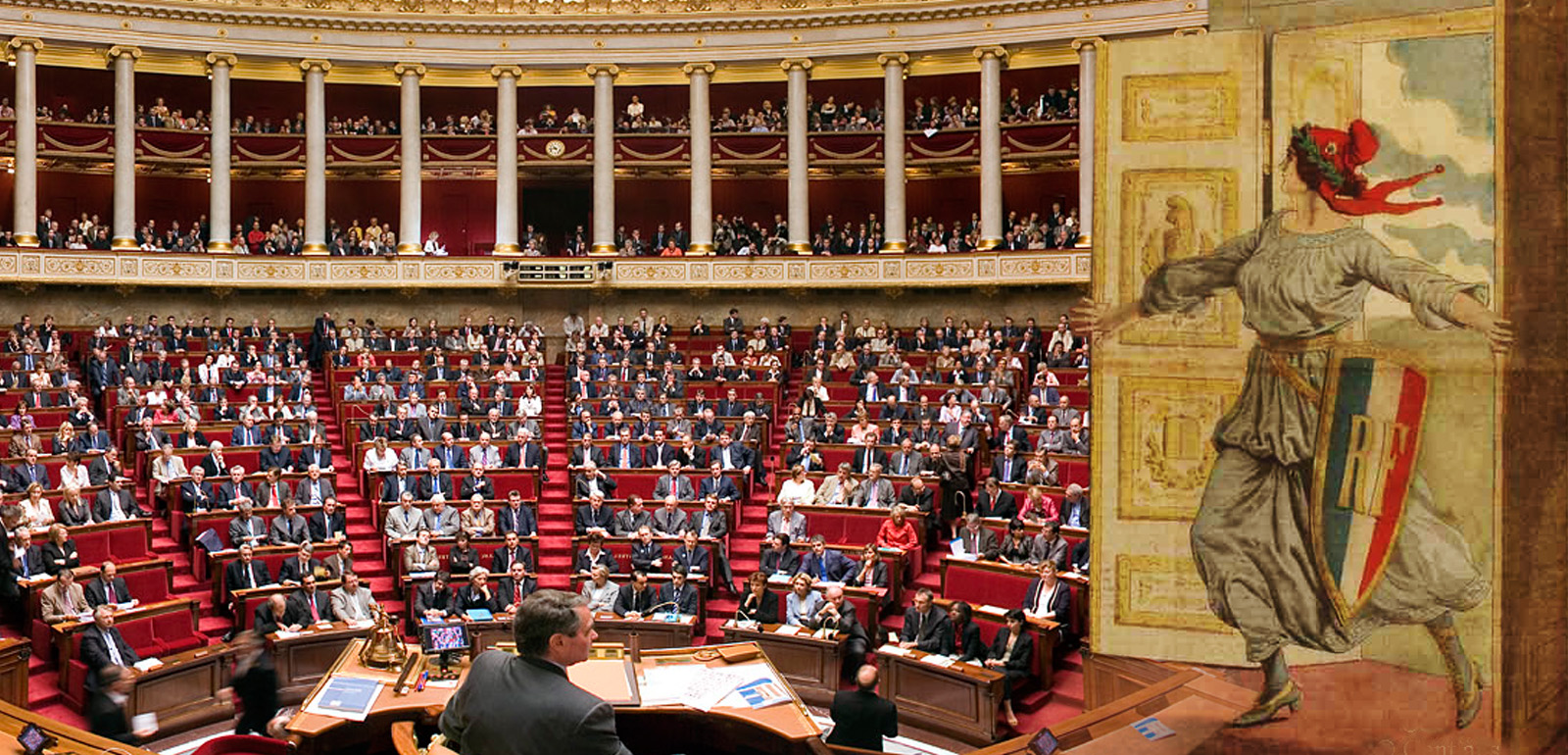
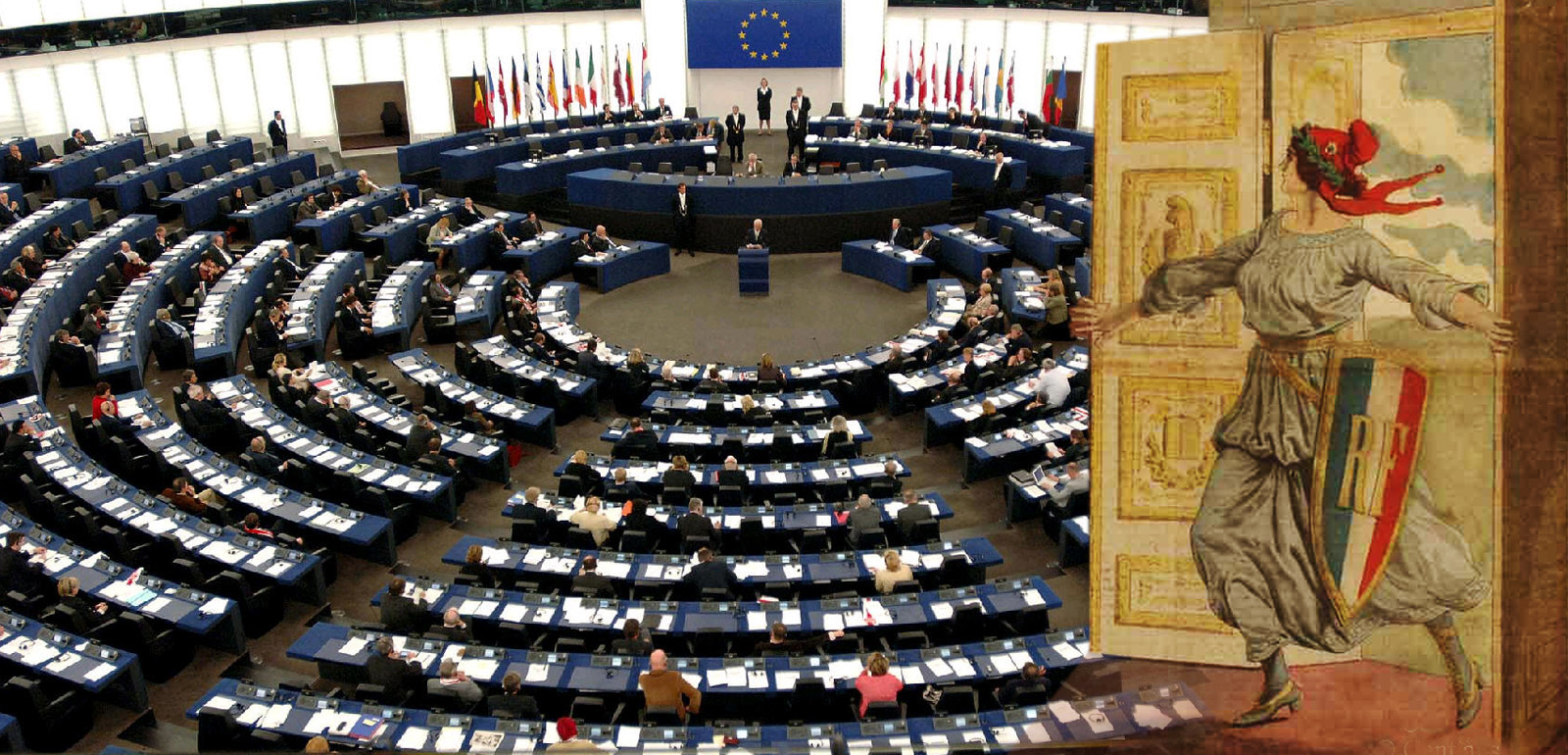
Links het huidige logo van GroenLinks, rechts een affiche-ontwerp van Diana Scherer dat zij in opdracht van de VPRO om eens een ander beeld te geven van een partij, in het jaar 2010 maakte (3)

————-
(1) Sap stelde in een vroeg stadium kamervragen over de oplichtingspraktijken van Dirk  Scheringa en zijn DSB bank (aangeizen de link van het Ministerie van Financiën verdwenen bleek,  hierbij de volledige tekst uit mijn documentatiesysteem, om een indruk te geven van de grondige werkwijze van Jolande Sap als kamerlid in de periode dat Femke Halsema de fractie leidde:

Antwoorden op kamervragen kamerlid Sap hypotheken DSB Bank

 Kamervragen | 18-05-2009 | Kredietcrisis

 De voorzitter van de Tweede Kamer der Staten Generaal

Postbus 20018

2500 EA Den Haag

 Datum 18 mei 2009

Ons kenmerk: FM09-960

Betreft Kamervragen SAP

 Geachte voorzitter,

 Hierbij zend ik u de antwoorden op de vragen gesteld door het lid Sap (GL) over hypotheken van DSB Bank.

 Hoogachtend,

de minister van Financiën,

 Wouter Bos

 1) Bent u bekend met de uitzending van Tros Radar van 13 april over hypotheken van de DSB Bank?

 Ja

 2) Bent u bekend met het bericht “AFM: Maak een einde aan tophypotheek”

 Ja

 3) Is het waar dat er een groot aantal hypotheken is verstrekt van boven de 125% van de executiewaarde van een huis? Zo ja, hoeveel zijn dit er en door welke banken zijn deze verstrekt?

 Recente exacte cijfers zijn niet bekend. Uit cijfers van het onderzoek woON (2006) blijkt dat 68% van de koopstarters een Loan to Value (LTV) van meer dan 100% heeft, terwijl het gemiddelde van alle eigenaren op 21% ligt. Wat betreft Loan to Income (LTI) heeft 20% van de koopstarters een LTI van meer dan 5,0, terwijl het gemiddelde van alle eigenaren op 9% ligt in 2006.

 4) Is het waar dat dit een structurele overtreding is van de gedragscode hypothecaire financiering?

 Nee. De Gedragscode Hypothecaire Financieringen (GHF) bevat niet zulke exacte voorschriften hierover. Op dit moment is namelijk vastgelegd in de code dat ten aanzien van hypotheken op inkomen getoetst moet worden. Er hoeft niet op LTV, de verhouding van het krediet t.a.v. de onderliggende waarde van het pand, te worden getoetst. Hiervoor geldt alleen een waarschuwingsplicht voor kredietverstrekkers. Maar DSB Bank dient wel te voldoen aan de (zorg)plicht om verantwoord krediet te verstrekken. Dit is een open norm die in de wet is opgenomen. Op dit moment wordt de open norm ingevuld door de GHF. De AFM houdt toezicht op invulling van deze norm door de sector, en dus ook op invulling van deze norm door DSB Bank.

 Zo ja, bent u bereid deze gedragscode wettelijk te verankeren? Of hoe bent u anders voornemens hier tegen op te treden?

 Dit is niet nodig conform het huidige wettelijke kader. De Wet op het financieel toezicht (Wft) bevat een verbod op overkreditering waarin een open norm is neergelegd.

 Artikel 4:34 bepaalt dat de aanbieder geen kredietovereenkomst aan mag gaan met een consument indien dit, met het oog op overkreditering van de consument, onverantwoord is.

 Het is in principe aan de aanbieder van krediet om invulling te geven aan deze norm. In de lagere regelgeving (artikel 115 van het Besluit gedragstoezicht financiële ondernemingen) is bepaald dat de aanbieder zijn criteria voor kredietverlening vastlegt en deze toepast bij de beoordeling van een kredietaanvraag. Dit wijst er op dat de wetgever het ook in eerste instantie aan de aanbieder heeft over willen laten de norm in te vullen. In de praktijk heeft de sector hieraan invulling gegeven met de Gedragscode Hypothecaire Financiering. De AFM houdt toezicht op de invulling hiervan.

 5) Wat vindt u van de uitspraken van de directeur van de AFM dat er geen hypotheken van boven de 100% van de woningwaarde meer verstrekt zouden moeten worden?

 Het huidige voorstel van de AFM zou een aanscherping van het toezichtbeleid betekenen. In de regel komt dit beleid tot stand in nauw contact met het ministerie van Financiën, De Nederlandsche Bank en de sector. De AFM is voornemens om in mei het voorstel te concretiseren en nader te onderbouwen met onderzoek. Het ministerie van Financiën zal in samenspraak met de ministers voor WWI en EZ het voorstel van de AFM bestuderen en hierbij letten op de maatschappelijke en economische gevolgen, en in het bijzonder op het voorkomen van ongewenste gevolgen voor de woningmarkt (zoals startersproblematiek, belemmering doorstroming en stagnatie in de woningbouw). Zoals de voorzitter van de AFM ook al meldde liggen in de huidige economische omstandigheden abrupte maatregelen niet voor de hand.

 6) Hoe denkt u dat bij deze eventuele 100% norm zo goed mogelijk rekening gehouden zou kunnen worden met de positie van starters?

 Zie antwoord op vraag 5.

 7) Bent u ook van mening dat het aantal gevallen waarbij de norm van 4,5 keer het jaarinkomen wordt overschreden, teruggedrongen dient te worden?

 Ja, in principe is in de Gedragscode Hypothecaire Financiering deze norm vastgelegd. De AFM houdt toezicht op invulling van deze norm door de sector. Als de AFM van mening is dat deze norm onvoldoende wordt gehandhaafd, kan de AFM sanctioneren. De AFM heeft aangegeven van plan te zijn stringenter toezicht te houden op naleving van deze norm.

 8) Is het waar dat de DSB Bank provisies ontvangt van tot wel 85% van de koopsom van een polis? Zo ja, zijn er ook andere banken die zulke hoge premies ontvangen?

 In de uitzending werden cijfers genoemd van 80 tot 85 % provisie voor de verkoop van een verzekering door DSB Bank. De huidige provisieregels gelden per 1 januari 2009 voor hypotheken en complexe producten. Op grond hiervan dient de provisie in verband met hypotheken vooraf transparant te worden gemaakt aan de klant. Verder moet deze provisie voldoen aan een inhoudelijke norm (inducement- norm). De provisie mag op grond daarvan niet te hoog zijn. De AFM houdt toezicht op deze nieuwe regels.

Exacte cijfers zijn ons niet bekend over andere banken.

 8) Deelt u de mening dat alle in dit verband direct aan de koopsom gerelateerde provisiebetalingen, zoals “marketingbijdrages” en “winstdelingen” onder de regelgeving op het gebied van provisietransparantie zouden moeten vallen?

 Daarbij wordt ook de vraag gesteld of een ‘gegarandeerde winstuitkering’ ook een provisie is. Binnen de provisieregelgeving worden alle betalingen van een aanbieder aan een tussenpersoon geregeld. Daarbij maakt de naam die op een dergelijke betaling wordt geplakt niet uit.

 9) Bent u bereid zogenaamde kredietbeschermers (zoals een overlijdensrisicopolis), evenals “complexe financiële producten” ook onder deze regelgeving te laten vallen?

 Er is momenteel een discussie gaande over de reikwijdte van de provisieregels. Een belangrijk punt daarbij is of deze regels van toepassing moeten worden op eenvoudige financiële producten zoals woonlastbeschermers en overlijdensrisico- en uitvaartverzekeringen. Daarom worden deze regels uiterlijk begin volgend jaar geëvalueerd. Dit is toegezegd aan uw Kamer d.d. 6 november 2009.

 10) Deelt u de mening dat er een maximum gesteld moet worden aan de provisie bij bijvoorbeeld kredietbeschermers?

 Het is niet de bedoeling om een maximum aan provisies te stellen, maar wel om te toetsen of een provisie niet in strijd is met het behartigen van het belang van de klant.

 11) Bent u bereid aanbieders van bijvoorbeeld overlijdensrisicoverzekeringen te verplichten de kostenstructuur van deze verzekeringen openbaar te maken?

 Zie antwoord op vraag 9.

 12) Bent u bereid lopende het onderzoek van de AFM naar de tophypotheken van de DSB, de DSB te sommeren de invordering van deze schulden bij mensen die in grote betalingsproblemen komen op te schorten, in afwachting van de resultaten van het AFM onderzoek?

 Deze bevoegdheid bezit ik niet. De AFM heeft van mij de bevoegdheid gekregen om, als toezichthouder op de financiële markten, te sanctioneren bij overtreding van overkrediteringsnormen. Voor het overige is het aan de bank en cliënten zelf om te proberen een oplossing te vinden voor hun onderlinge problemen. Hierbij kan het burgerlijk recht ook een rol spelen. DSB Bank heeft aangegeven zelf een regeling te willen treffen met de gedupeerden (Stichting Hypotheekleed).

 13) Kunt u aangeven wanneer de Kamer de resultaten van het onderzoek van de AFM kan verwachten?

 De AFM kan geen onderzoeksgegevens van individuele instellingen publiceren als dit vertrouwelijke toezichtsinformatie betreft. De AFM heeft wel mogelijkheden om een eventuele boete met het boetebesluit waarin de boete wordt toegelicht te publiceren.

 Meer informatie

Brief aan de Tweede Kamer

18-05-2009 | PDF bestand, 34 Kb

(2) Indymedia.nl “Eerste Dwaze Training Kunduz Politie bij GL “

(3) Website Mediacultuur: VPRO verkiezingsaffiche voor GroenLinks gemaakt door Diana Scherer in 1010
BETER ÉÉN IN DE HAND DAN DE ZWERM OP VLUCHT, spreekwoord van 13 september 2012, nu Wilders en zijn PVV als partij afgestraft zijn, maar niet de PVV kiezers. Zij en hun denkbeelden, zijn nog niet uit de lucht.

In de gedoogconstructie van Kabinet Rutte 1 gijzelde Wilders de minderheidscoalitie van VVD en CDA, maar er was ook de keerzijde, Wilders kon – als gedoogregeerder – niet anders dan langzamerhand in binden en zag zich zelfs genoodzaakt zijn campagne doelpalen in het politieke veld gaandeweg te verplaatsen. Islamofobie verdween geleidelijk op de achtergrond en het Dictaat Van Brussel en de Ouden Van Dagen werden zijn nieuwe thema’s. Het Zwartboek Ramadan van de PVV was een laatste opflikkering, maar tijdens de verkiezingscampagne kwam dit thema nauwelijks nog terug bij Wilders en de zijnen.

Wilders hield anderen in zijn greep en kwam hiermee zelf in de greep van die anderen.

Nu is een deel van zijn kiezers gewoon niet komen opdagen en heeft een ander deel zijn ‘toe-vlucht’ gezocht bij de SP en de VVD, zo werd ons gisteravond uitgelegd bij de plaatselijke verkiezingsstatistieken. Het Wilderiaanse ideeëngoed is zich nu aan het nestelen in die partijen. Het Wilders-virus blijft actief in Nederland.

Tag PhotoAdd LocationEdit

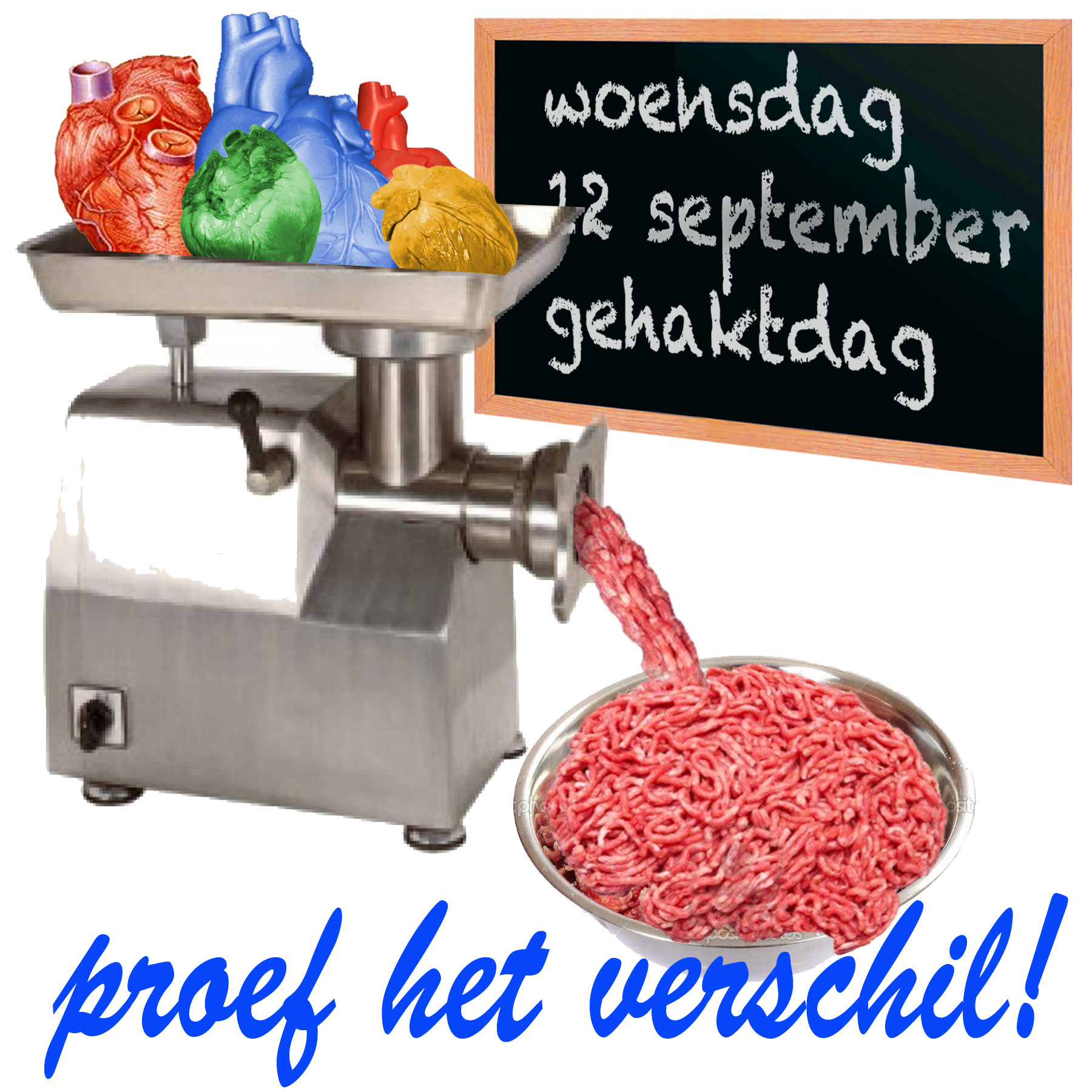
De molen van de parlementaire democratie heeft afgelopen woensdag 12 september gemalen en wat er uit kwam was een iets ander soort half om half  gehakt als dat wat we de afgelopen twee jaar geslikt hebben.

“Een zakje kruiden erbij…” vraagt de slager dan, aangezien door het mengen de specifieke smaken verloren zijn gegaan.

Hoe wordt het nieuwe mengsel gekruid, hoe gevormd en bereid? Heel erg vers lijkt het nieuwe gerecht niet opgediend te kunnen worden. Het wachten is nu allereerst op een formateur die het gehakt gaat kneden, tot die gevonden is gaat de uitdraai nog even in de koelkast. Ook de discussie over bereiding – braden, bakken, grillen of stoven – zal de nodige tijd nemen. Het ziet er naar uit dat de nieuwe keuken meer dan één chef-kok heeft en dat is niet bevorderlijk voor het gezwind opdienen.

Zegt de slager: “Wat een onzin allemaal, of je het nu links om of rechts om draait, het blijft gehakt.”

vergelijking recept 2010 – 2012

VOORWAARTS IS MAAR 1 STAP ….

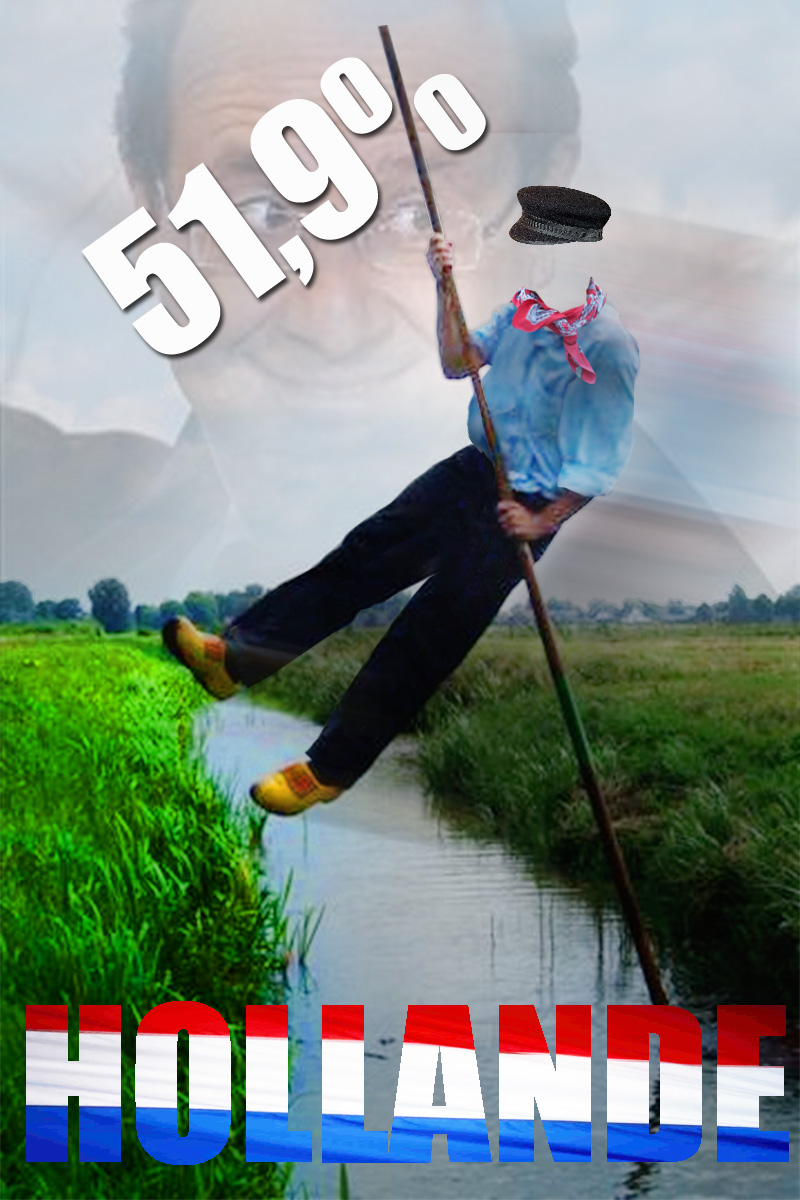
(forward is only 1 step; local context picture about Dutch elections on September the 12th for a new government, with 21 parties participating and several possible government coalitions as an outcome – without any pre-election combines presenting themselves. So, too many options that will be dealt with by the parties after the elections, without the voters having any more influence. More of a gamble than anything. Voting with your wooden-shoes is referring to the Dutch expression ‘you can sense/guess that with your wooden-shoes on’… and I can assure you you will not feel too much of what lays below your feet when you wear these wooden contraptions)

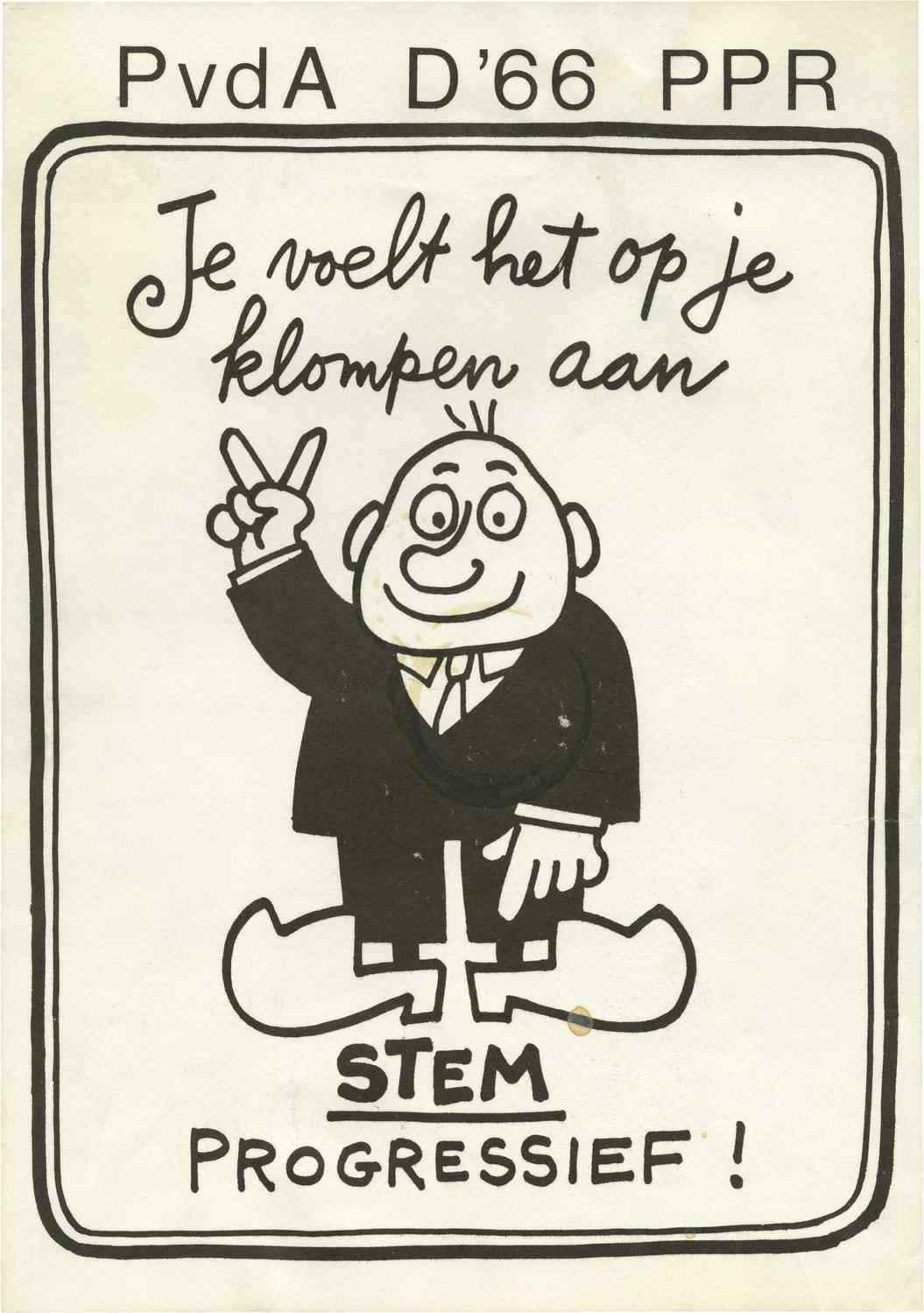
OPLAND tekende dit affiche in het jaar 1972: zit in de collectie van het IISG, het resultaat was dat D66 van 11 terug ging naar 6 zetels, de PPR van 2 naar 7 en de PvdA van 39 naar 43 zetels… de VVD ging toen van 16 naar 22 zetels. En na veel geharrewar werd het Kabinet Den Uyl gevormd, een hele optelsom van maar liefst 5 partijen: PvdA, KVP, ARP, PPR en D66.


De CPN werd toen door Opland niet gezien als iets progressiefs en zo ook niet de PSP, die was dan weer te radicaal voor Opland, die uiteindelijk altijd een sociaal-democratische man die voor een ex-katholiek Volksdagblad werkte bleef…

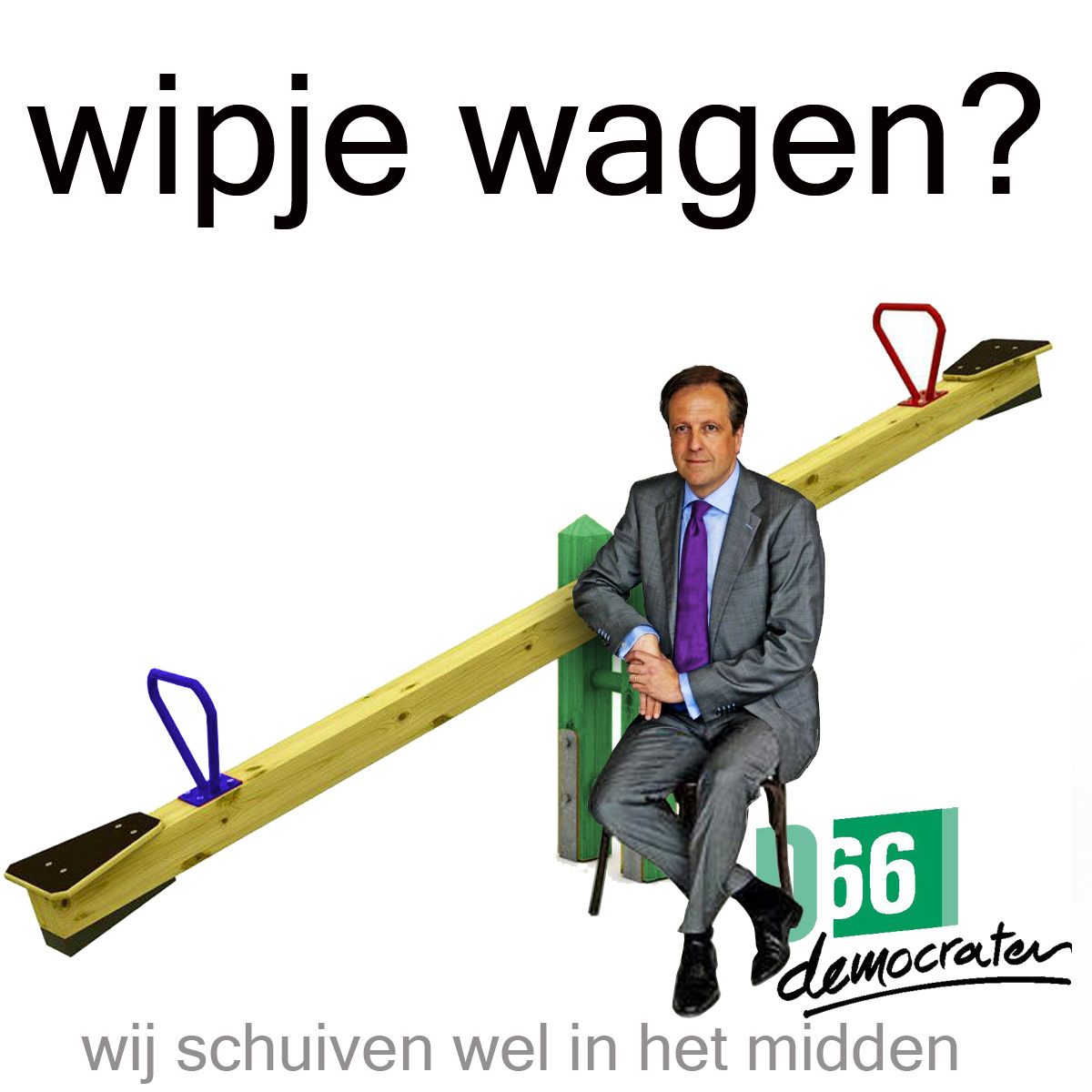
Alexander Pechtold D66 bij de de formatiewip hopend opportuun in het midden heen en weer te kunnen schuiven en zo een minderheidscoalitie van twee tot elkaar veroordeelden grotere partijen, ten voordele van D66 te kunnen sturen.

Pechtold heeft van het begin af aan tot vervelens toe zijn verhaal van de noodzaak van het midden verkondigd.

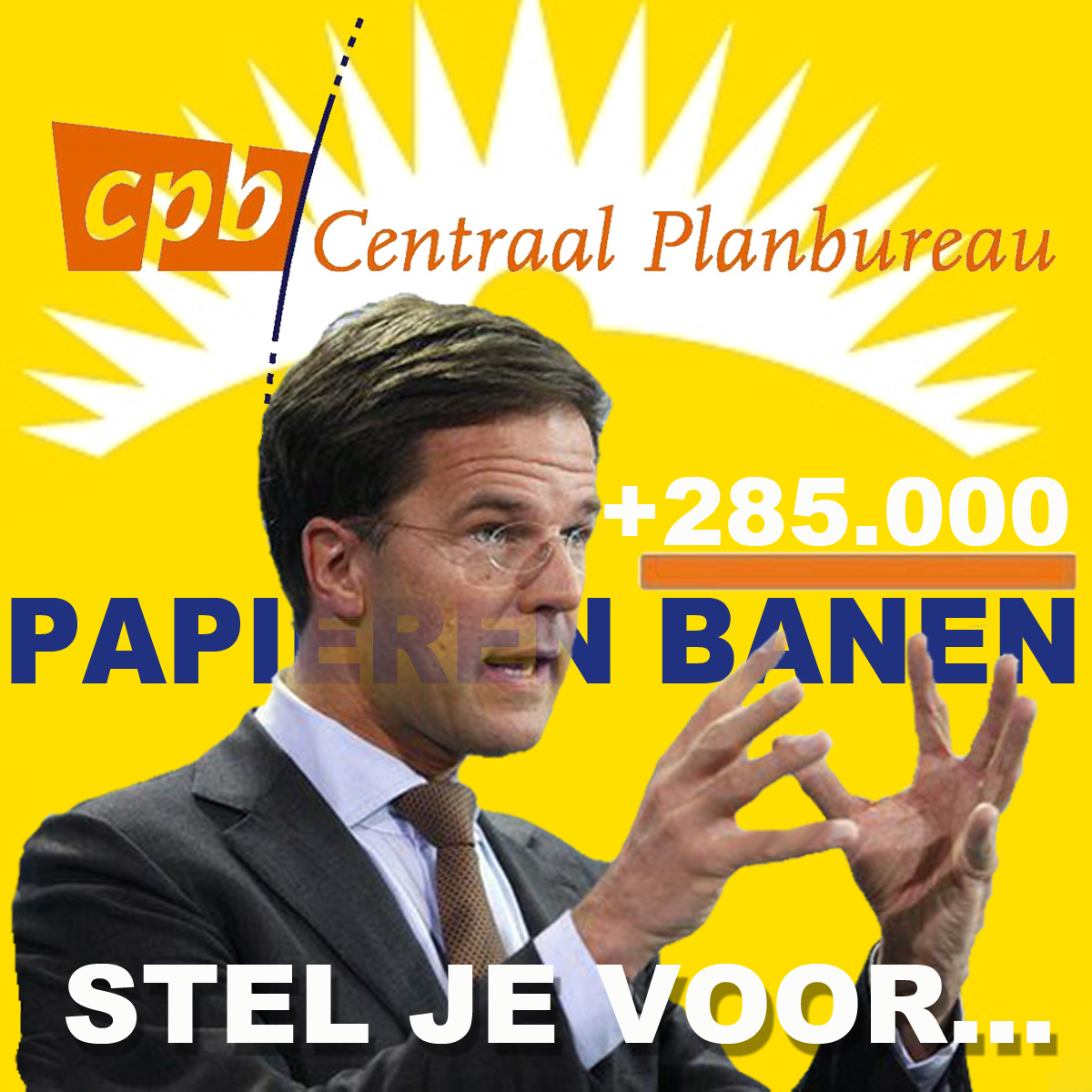
VVD RUTTE’S BANENPLAN belooft in de utopische traditie van de socialistische en communistische regeringen “een stralende toekomst” op basis van een ‘partij-programma’ en een rekenmodel van het Centraal Planbureau. (1)

WENS wordt ons voorgetoverd als WERKELIJKHEID omdat één enkel ambtelijk rekenbureau (2) middels digitale koffiedikkijkerij (3) zegt dat het ingediende huiswerk voor de toekomst van een partij, klopt.

Alle ‘slagen om de arm’, alle beroepsmatige relativeringen, alle andere mogelijke rekenmodellen, worden buiten beschouwing gelaten. Heel de verkiezingsstrijd wordt zo opgehangen aan wensen en verwachtingen in een toekomst die niemand voorspellen kan.

Ware het niet beter vooral naar het verleden te kijken, als het gaat om de waarde van een bewering en je stem te bepalen?

Vrije Nederland Maurits Martijn en Map Oberndorff vragen op 4/4/2009: “Is het dan terecht dat in deze crisistijd zoveel gewicht wordt toegekend aan uw voorspellingen?” CPB directeur Coen Teulings “Kijk, allereerst zijn wij slecht in voorspellen. Economie voorspellen is net zoiets als het weer voorspellen. Het weer lukt nog wel voor een paar dagen, daarna wordt het heel moeilijk. Wij voorspellen voor een half jaar vooruit met redelijke zekerheid, daarna wordt het snel onzekerder. Voor 2010 is de onzekerheid helemaal gigantisch. Nou ja, we hebben enig idee, maar niet meer dan dat. Eén ding weten we wel zeker: het zal niet prettig worden. We moeten goed nadenken over hoe we verder gaan.” (4)

De Grote Sprong Voorwaarts van de trotse Liberalen die het Blauwe Banier volgen naar een “schitterende toekomst.”

Een voorbeeld van platvloers gebruik van statistiek kregen we kortgeleden van de VVD die via hun web site en advertenties een statistiek verspreidde afgesteld op de veronderstelde ‘oliedomme kiezer’, waarin het bewijs geleverd wordt dat met de VVD er 285.000 banen bij komen en met de SP er  precies evenveel banen af gaan. Een waarlijk stukje Stalinistisch rekenen van deze liberale  socialistenhaters. (5)

Nieuws-tableau dat ik de eerste week van september maakte als reactie op de platvloerse argumentatie en rekenmethode van de VVD die mij aan het Stalinisme herinnerde…

———–

(1) Web site VVD 27/8/2012: “CPB: VVD IS BANENKAMPIOEN”

Het VVD programma zorgt ervoor dat meer dan 375.000 Nederlanders een baan vinden. Het CPB berekent dat de aanpak van de VVD tot een half miljoen méér nieuwe banen leidt dan de aanpak van bijvoorbeeld de SP.

(2) Volkskrant 27/8/2012: “Nederland heeft maar één CPB, Duitsland vijf: is dat beter?”

(3) Globaliteit.nl: De case tegen het Centraal Planbureau door Olav Dirkmaat:

Helaas is het zo dat zowel politici als het CPB zelf een incentive hebben om gebruik te maken van deze falende en onwetenschappelijke macroeconomische modellen. Beide belangengroepen zijn er direct afhankelijk van. Er bestaat geen enkele reden voor hun om de wetenschappelijke basis van hun modellen in twijfel te trekken.

De naam Centraal Planbureau spreekt boekdelen. Het veronderstelt de mogelijkheid van centrale planning. Zijn ingewikkelde mathematische modellen zorgen ervoor dat men onder een sluier van pseudowetenschap kan opereren. Alle cijfers worden perfect op de punt geschat en geven de indruk van buitengewone beheersing. De burger geeft snel op. “Laat het maar aan de ‘experts’ over…”

 Politici zien vooralsnog in het CPB de heilige graal. Elk beleidsplan moet eerst “doorgerekend” worden door het “orakel van Den Haag”. Lijsttrekkers springen elkaar in de haren tijdens (verkiezings)debatten met pseudo-wetenschappelijke CPB-rapporten. Politici worden afgerekend op statistieken die geenzins een zekerheid zijn. Ondanks de weinig voorspellende kracht van hun voorspellingen worden de geschatte cijfers tot achter de komma afgerond.

 Zelfs onder macroeconomische theoretici kennen macroeconometrische modelontwerpers geen enkele prestige. De macroeconometrische theoretici kloppen elkaar op de borst voor hun reactie op de Lucas-kritiek. Minachtend kijken zij neer op hun collega’s van het CPB die deze kritiek liever negeerde. Als de kritiek valide is, betekent dat immers een genadeslag voor het CPB en het luchtkasteel van Nederlands’ politici.

(4) Vrij Nederland 4/4/2009: CPB-directeur Coen Teulings: ‘Wij zijn slecht in voorspellen’; cartoon komt van de web site van de SP Valkenburg.

(5) Wall foto’s Facebook VVD 3/12/2012:

Statistische bewijsvoering op basis van het CPB zoals geplaatst op de Facebook pagina van de VVD op 3 september 2012.

The text “And if so many great men and women could wear our country’s uniform and sacrifice their lives for our most fundamental rights…” is taken from Michelle Obama’s speech. The village ruins shown is a house targeted by a US drone strike in an area of northwestern Pakistan on March 16, 2009. (**).

When I read & listen to the speech of Michelle Obama on the Democratic Convention yesterday, I am moved to tears… but in my mind’s eye this imagery pops up at the same time and quells my flow of tears… Obama’s care for “fundamental rights” has been also the ‘normalisation of extrajudicial murder’ by remote controlled drones killing in both Afghanistan and Pakistan real, supposed and non-Taliban civilians, all alike, with high technological precision.

No “fundamental rights” for these people, subjected to the professionalism of “great men and women” in USA army uniforms…

It was Obama running for the presidency who promised to put an end to the non-legal ways of fighting terrorism of his predecessor, but in the place of torturing prisoners in the ‘concentration camp of Guantánamo’ under Bush we are facing now high tech liquidation without any due process of law… with hit-lists signed by Obama.

Will Romney do different? He certainly will not, maybe worse, or just the same.

The speech of Michelle Obama is moving many to tears… in the NY Times video we have frequent zoom in’s on faces in the public with both men and women that finger away tears from their faces.

How long will it take before the idea of this kind of ‘exceptional’ chosen guardianship of American Dreamers (*) will be over and people in the USA start to see themselves through the eyes and tears of ‘non-Americans’, ‘the others’?

It will surely make the world more equalitarian and possibly better.

—-
(*) From the last passage of Michelle Obama’s speech (19:10 and further) which the NY Times gave the header “American Exceptionalism”:

… in the end, more than anything else, that is the story of this country, the story of unwavering hope grounded in unyielding struggle

…that belief that here in America, there is always something better out there if you’re willing to work for it

Thank you. God bless you. God bless America

(**)  Iranian Press Agency Press TV reporting : “US assassination drone strikes kill 14 Pakistanis in 24 hours” (non Western-allied countries reporting on Afghanistan can be an important source of information.


(*) een oud ritueel dat door alle partijen in ere gehouden wordt.

SOCIALE MEDIA POLITIEKE PARTIJEN = 1 RICHTINGSVERKEER

Stemvee blijft stemvee ondanks Facebook

I LIKE button, dat is de enige interactie op de Facebook pagina SP NU!… verbaast mij niks, “democratisch centralisme” heette dat vroeger in de jonge jaren van die partij. Sommige locale PvdA Facebook pagina’s staan ‘posten toe’ zo ook bij sommige D66 lokale sites, de VVD heeft die optie sinds enige tijd uitgeschakeld… Jazeker zo mekkerden ze gisteren op het NOS Journaal “sociale media spelen een belangrijke rol.” Die rol bestaat uit éénrichtingsverkeer, zo sociaal zijn die partijen… je kan zelf geen nieuw bericht plaatsen en enkel je mening de digitale woestijn van de ‘comments’ insturen. Kiezers die zelf kunnen posten daar is geen plaats voor in deze ‘digitale democratie’. Wat rest is enkel wel of niet de “I like” button aanklikken. Dat lijkt verdacht veel op dat kruisje zetten op een verkiezingsbiljet.

“Bessie Turf op de wip”: leesvoer voor kinderen: wat als gewicht bepalend zou zijn in de politiek?

Wat is er ‘democratisch’ aan dat de kiezers niet een bepaalde regerings-coalitie kunnen kiezen, maar enkel één enkel kaart van het politieke pokerspel: de Nederlandse kabinetsformaties?

Na de verkiezingen op 12 september houden de partijen hun pas verworven kaarten tegen de borst en spelen kabinet-poker. De kiezers staat dan weer buiten spel en moeten anderhalfduizend dagen wachten om hun stem weer te kunnen laten horen.

A tableau I published on July 7th. this year (1)

Prince Friso of the Dutch royal family has been now for 6 months in what is called PERSISTENT VEGETATIVE STATE (PVS). (2)

The transfer to a UK hospital may pose legal problems, as procedures for ‘ending life’ in cases where there is no more chance of recovery is problematic in the UK – as we know of a recent case of a man that sought help for ending his life that had no future – and the formal refusal of a British court to allow ‘euthanasia’ in his case.

The Netherlands does have a more liberal law in this sense.

There are hardly any examples of people in PVS that regain consciousness, and even less that have any chance to function again as a human. Younger people stand statistically a bit more chance than middle age people like Prince Friso. In most cases ‘economics’ (the extreme high costs of keeping someone in such a permanent vegetative state) form the decisive argument for halting such treatment in a specialised medical ward.

In the case of the Royal House of the Netherlands the financial means are not a problem, but this affluence creates an ethical problem.

Recently a Dutch governmental medical advice commission did propose to scrap certain extreme expensive medications for a small group of special patients. This to cope with the ‘economic crisis’. This caused an uproar as life prolonging medication, even in cases of prolongation of life of weeks or months, should not be denied. Many spoke out in this way. From specialised medical staff to patient organisations and laymen. (2)

Now how does the Dutch Prince who is kept in permanent coma in a British private hospital, fits in this discussion?

Royals are human beings like any other, are they not? They do die after all like anybody else. Those who play their role in keeping monarchies alive, need to reflect also on the limits of prolonging life and the morals and ethics needed, there where we all have to face the sometimes paradoxical consequences of the ingenuity of modern medicine. (3)

We have now witnessed a state of exemption since the avalanche accident in Austria this winter of half a year. However sad it is, also royals should come to a decision, that may be harder to take because of their wealth.

The bereavement process of the family must have been frustrated and one wonders why the wife of Prince Friso has not had the courage to, or has been kept from, ending this ‘high tech’ medical ordeal.

Interview and photographs of Prince Friso and his wife Mabel and they way they enjoy London as the place were they work and live in the M magazine of Dutch daily NRC/Handelsblad May 2006. I did fade the Prince into an image of the brain surgery  specialised Wellington Hospital where he is kept in coma now.

One hopes that Dutch Queen Beatrix who is used to control family affairs with an iron hand, will come to see that her hand is not the hand of God when she orders to pull the plugs out. It is time – also for a prince – to die.

—–
(1) 7/7/2012 News -tableaus by Tjebbe van Tijen: “When is Prince Friso Allowed to Die?”

(2) “Unlike brain death, persistent vegetative state (PVS) is not recognized by statute as death in any legal system. In the US and UK, courts have required petitions before termination of life support that demonstrate that any recovery of cognitive functions above a vegetative state is assessed as impossible by authoritative medical opinion.

This legal grey area has led to vocal advocates that those in PVS should be allowed to die. Others are equally determined that, if recovery is at all possible, care should continue. The existence of a small number of diagnosed PVS cases that have eventually resulted in improvement makes defining recovery as “impossible” particularly difficult in a legal sense.[4] This legal and ethical issue raises questions about autonomy, quality of life, appropriate use of resources, the wishes of family members, and professional responsibilities.”  [Wikipedia on PVS]

(3) Radio Netherlands Worldwide; 31/7/2012: “An emotional debate is underway in the Netherlands over the value of a human life. On Sunday, a Dutch health insurance body announced that it was recommending that certain expensive drugs no longer be covered.”

(4) Radio Netherlands Worldwide 24/8/2012: An influential Dutch ethicist (Heleen Dupuis, former professor in medical ethics at the University of Leiden) has said that if Queen Beatrix’s son, Prince Johan Friso, had been hospitalised in the Netherlands after his ski accident, doctors would have already stopped his treatment.

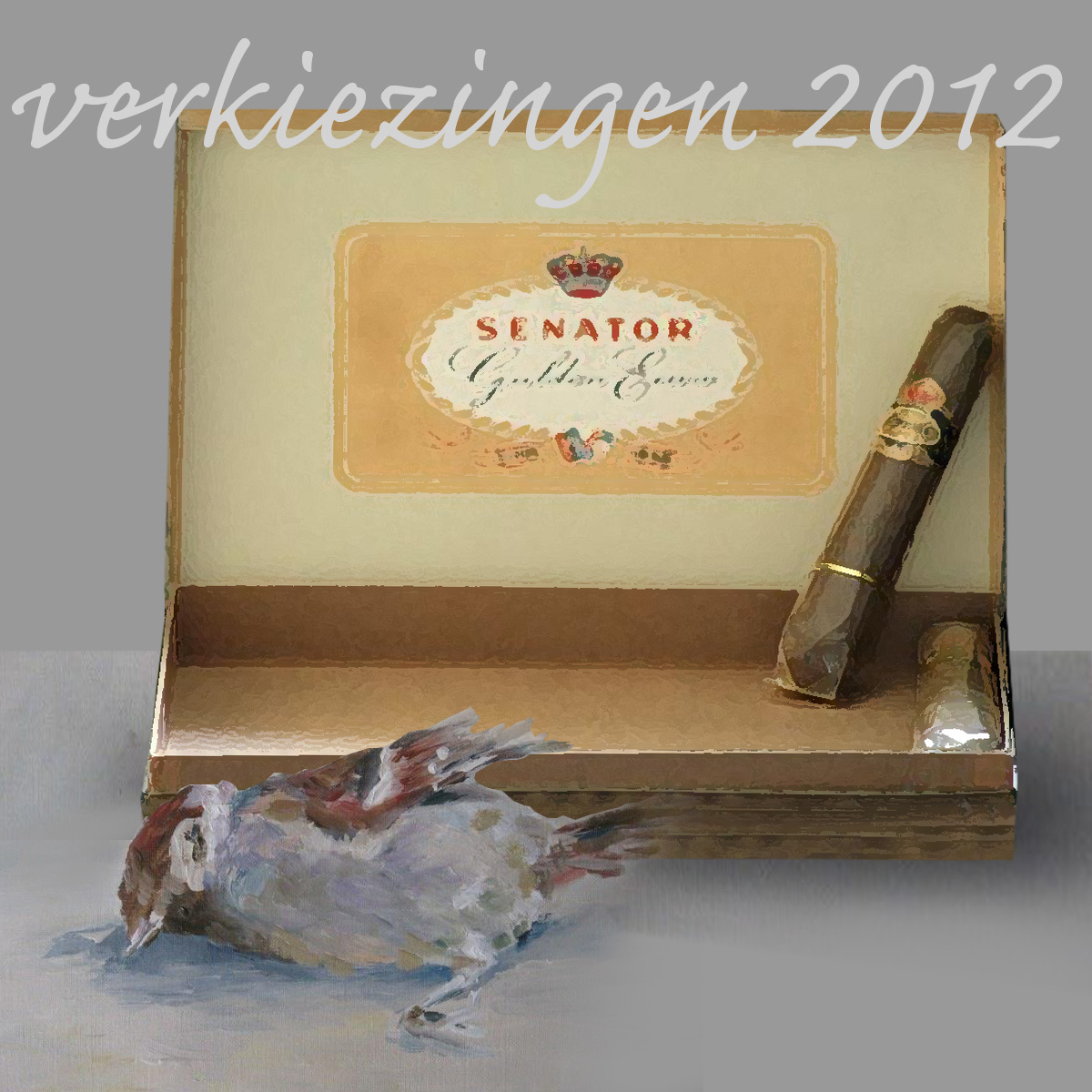
klik op stilleven voor vol formaat

Ik lees net de tekst van het Zwartboek Carnaval op de website van het PVV, met op pagina 21 deze in forse taal gestelde eind conclusie:

 “Dit zwartboek is, zoals in de inleiding reeds gesteld, primair een pleidooi om het carnaval te marginaliseren. Naast het feit dat de buigingen voor dit katholieke ritueel de katholisering versterkt, kost het de samenleving handen vol geld en raakt het tal van maatschappelijke terreinen op een zeer negatieve wijze.

Extra politie-inzet, enorme overlast en geweld, het aanpassen van cao’s aan het carnaval, fors stijgend ziekteverzuim, lessen die uitvallen, scholen die de deuren sluiten, pleidooien nationale feestdagen in te ruilen of op te schuiven voor het carnaval, katholieke militairen waar andere eisen aan gesteld worden, regels omtrent openingstijden die worden aangepast door gemeenten, ziekenhuis- en ander zorgpersoneel dat speciale instructies opgelegd krijgt in verband met hossende katholieken, katholicisme-promotende staatstelevisie en honderdduizenden euro’s aan belastinggeld dat verspild wordt aan carnaval-evenementen en carnaval drinkgelagen die enkel gewenst zijn door een opdringerige multiculturele wensdroomelite.

Nederland is geen katholiek land en dient dat nooit te worden.

De PVV pleit ervoor totaal te stoppen met gesubsidieerde katholieke drinkgelagen en katholieke-evenementen, scholen te verbieden dicht te gaan tijdens het carnaval, geen katholieke propaganda meer op de staatsomroep, de kosten van extra politie- inzet te verhalen op het carnaval-tuig, geen speciale behandeling van katholieke militairen tijdens het carnaval en nooit en geen enkele nationale feestdag in te ruilen voor het carnaval.”

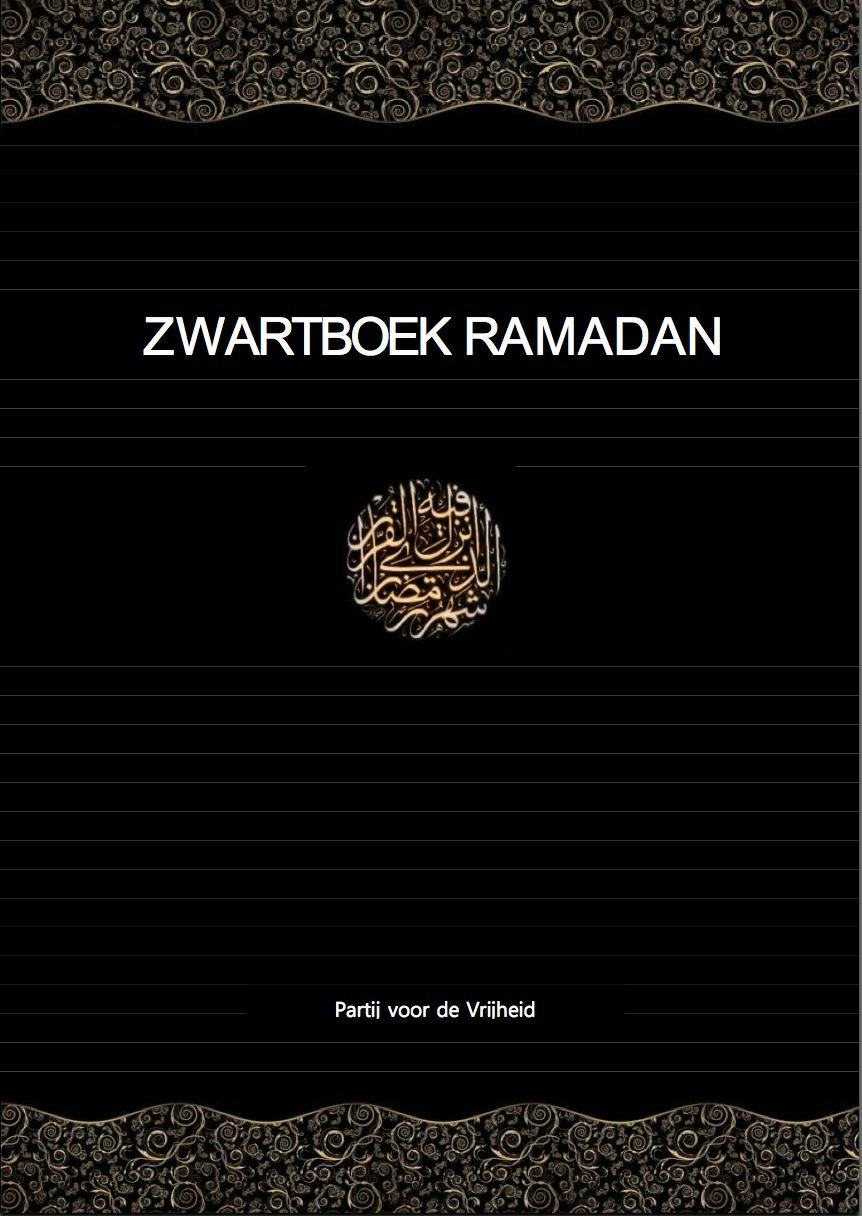
Gelijke monniken, gelijke kappen, zo is het devies van de PVV, zo kwam er afgelopen zaterdag ook een andere publicatie uit die de navrante invloed van een andere godsdienst op het Nederlandse  volk onder de aandacht brengt: ZWARTBOEK RAMADAN. Deze publicatie is eveneens beschikbaar op de web site van de PVV in PDF formaat:
http://www.pvv.nl/images/stories/Zwartboek_Ramadan_PVV_2012.pdf

Ook wordt in welingelichte kringen gerept over een mogelijk “Zwartboek Koninginnedag” waar de uitwassen van de massaal nationaal beleden ‘oranjelol’ aan de kaak gesteld worden. Het lijkt zo te zijn dat delen van het partijkader zich tegen de inhoud van dit rapport – dat al in concept voorligt – verzet omdat de idee van het primaat van de ‘traditionele nationale feestdagen’ daarmee niet te rijmen zou zijn. Liederlijk gedrag tijdens de zogenaamde Koninginne-nachten in diverse steden, zou te tolereren zijn omdat het het doel van ‘nationale eenheid’ dient. Termen als ‘dronken-christentuig’ zouden electoraal niet te verkopen zijn, zelfs afzwakkingen als ‘baldadige jeugd’, zouden bij het jonge electoraat problemen kunnen opleveren. Of traditionele feestelijkheden van andere religieuze gemeenschappen ook door de PVV onder de loep genomen zijn, is niet bekend.

————–
NASCHRIFT
Het blootleggen van een argumentatie door een gehanteerd begrip of een reeks van bij elkaar horende begrippen te vervangen door een ander, is een vaak gebruikte methode. Bij Wilders is die al vaak toegepast, met name door in plaats van het begrip ‘moslim’ dat van ‘jood’ te zetten. Daar komen dan vaak weer reacties op waarbij de historische context van de Holocaust te zwaar beladen is om zulk een vergelijking te maken, dat Wilders niet eenzelfde kwaadaardige vernietiging van een door geloof geduide bevolkingsgroep voorstaat. (1) Dat moge zo zijn, maar de ‘omkering’ (‘détournement’ in het Frans) blijft toch een waardevolle methode om in goed gekozen vergelijkingen de waarde van een argumentatie te meten. De Nederlandse Grondwet is in mijn voorbeeld uitgangspunt geweest en dan wel de eerste zin van artikel 1:

Allen die zich in Nederland bevinden, worden in gelijke gevallen gelijk behandeld.

Nu lijkt mij de vergelijking Ramadan Carnaval een voorbeeld van bijna “gelijke gevallen.” Het Suikerfeest is een feestelijke afsluiting van de vastentijd (Ramadan) en de Carnavalsdagen eindigend met Aswoensdag zijn het begin van de Christelijke vastentijd die nu nauwelijks nog gevolgd wordt, maar ooit duurde tot Pasen (40 dagen). Beide feestelijkheden gestuurd door een ‘maankalender’. In de tekst van Wilders wordt het Suikerfeest vele malen genoemd en dan vooral met de daaraan toegemeten uitspattingen van Marokkaanse jongeren (zonder dat duidelijk gemaakt wordt of aan de beschreven relletjes wellicht ook niet Marokkaanse en niet moslim-jongeren deelnemen. (Zou dit het geval zijn dan veranderd immers het perspectief en is het meer iets als wat ooi deelname van ‘nozems’ aan ‘luilak baldadigheid’ was).

Zo het Suikerfeest voor het grootste deel een mooi feest is met wat baldadigheid uitwassen, zo kan dat misschien ook gezegd worden van het carnaval; alhoewel de hoeveelheden alcohol en andere middelen die moderne carnavalvierders weten te verwerken wellicht meer wangedrag produceren dan het consumptiepatroon van jonge suikerfeestgangers.

Behandelen wij deze ‘gelijke gevallen’ op ‘gelijke wijze’ dan mogen woorden gerelateerd aan de Ramadan wel degelijk vervangen worden door woorden gerelateerd aan het Carnaval, om de argumentatie van Geert Wilders c.s. te testen.

(1) Discussie De Winter/Wilders waarbij in een tekst van Wilders het woord moslim door Joden vervangen werd: “Ik heb genoeg van het jodendom in Nederland: geen joodse immigrant er meer bij. Ik heb genoeg van de aanbidding van hun god in Nederland: geen synagoge er meer bij. Ik heb genoeg van de Tenach in Nederland: verbied dat fascistische boek.” Een discussie die o.m. in de toenmalige De Pers liep en nu nog terug te vinden is op de website Sargosso.

The Guardian June 5th: “London 2012 security operation investigating 500,000 people”

click picture for full size view of this ‘whole mind scanner’

These associated lyrics (from 1968 at the end of the roaring sixties) will certainly let many alarm bells ring when Paul McCartney will pass the check point prior to his opening performance of the 2012 Olympics Games in London. Automated surveillance systems now massively used to prevent any unrest during the London Olympics also checking out this humble WordPress blog – are unintelligent and will just gather that there  is a pattern of ‘adjacent words’ with a recurring frequency of the terms:

‘revolution’, ‘change’, ‘world’, ‘destruction’, ‘money’, ‘hate’, ‘constitution’, ‘chairman’, and ‘Mao’.

M16 and Scotland Yard on-line surveyors vetting each person entering the Olympic perimeters, will rush to their screens alarmed by the perfect Big Brother System – operational and tested already for months – and in the embedded earphones of the female constable’s hat, a voice will say…. “take this man apart for questioning.”

And…, of course there will be excuses afterward and an embarrassed smile, when human intelligence will have been applied. “Please Sir McCartney, come and join the opening ceremony, there never has been any harm in your songs, … excuse us for those stupid machines.”

You say you want a revolution

Well, you know

We all want to change the world

You tell me that it’s evolution

Well, you know

We all want to change the world

But when you talk about destruction

Don’t you know that you can count me out

Don’t you know it’s gonna be all right

All right, all right

You say you got a real solution

Well, you know

We’d all love to see the plan

You ask me for a contribution

Well, you know

We’re doing what we can

But when you want money

For people with minds that hate

All I can tell is brother you have to wait

Don’t you know it’s gonna be all right

All right, all right

Ah

Ah, ah, ah, ah, ah…

You say you’ll change the constitution

Well, you know

We all want to change your head

You tell me it’s the institution

Well, you know

You better free you mind instead

But if you go carrying pictures of chairman Mao

You ain’t going to make it with anyone anyhow

Don’t you know it’s gonna be all right

All right, all right

All right, all right, all right

All right, all right, all right

The good old Birtish National Council for Civil Liberties (founded in 1934) now renamed ‘Liberty’, has already for a long time this subdued polite commend on their web page about the impact of surveillance on the London 2012 Olympics:

There is no doubting that police and security will be faced with demanding challenges during the London Olympics. Nevertheless, infringements on basic civil liberties like the right to free speech and peaceful protest are not the solution to a secure Games. It would also be completely contrary to the spirit of the Olympics for 2012 to become an excuse for mass surveillance and loss of liberties. What a shameful legacy for London 2012 that would be.

The remark about “the spirit of the Olympics 2012” in London and how state surveillance would be contrary to the original intentions of the Olympic Games, points to an implicit positive enlightening view of the history of the Olympic Games, that is widely found. It is surprising that even serious people, like those of the ‘Liberty’ organisation, stick to the idealised vision of international brother- and sisterhood with the emphasis not on winning but on competing in a good manner, thus promoting international understanding and peace. In the words of the founder of the movement Pierre de Coubertin (1863-1937):

L’important dans la vie ce n’est point le triomphe, mais le combat, l’essentiel ce n’est pas d’avoir vaincu mais de s’être bien battu. (The important thing in life is not the triumph but the struggle, the essential thing is not to have conquered but to have fought well.)

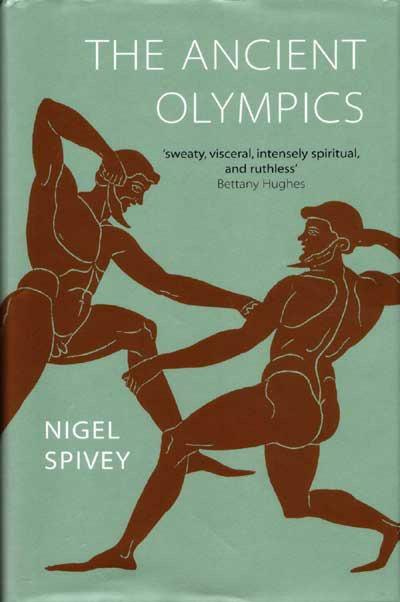
Coubertin’s view of the origin of the Olympic Games was highly idealised and selective  in his historic references. He created of course a new concept and with it the myth of the peaceful fair play internationalism. As always with a good myth, it is not just fantasy, there are some historical relevant elements in it, be it that there is no serious search for the original context of these ‘elements’.  Nigel Spivey of the University of Cambridge did seven years ago a serious attempt to re-contextualise the Olympic Myth in his book “The Ancient Olympics: War Minus the Shooting”, published by Oxford University Press and with several pages on-line available at Amazon.co.uk or at GoogleBooks, this worldcat.org link tells you in which nearby library you can his book. The summary of the book makes clear that it may be a good read for this summer of the London 2012 Olympics:

The word “athletics” is derived from the Greek verb “to struggle or to suffer for a prize.” As Nigel Spivey reveals in this engaging account of the Olympics in ancient Greece, “suffer” is putting it mildly. Indeed, the Olympics were not so much a graceful display of Greek beauty as a war fought by other means. Nigel Spivey paints a portrait of the Greek Olympics as they really were–fierce contexts between bitter rivals, in which victors won kudos and rewards, and losers faced scorn and even assault. Victory was almost worth dying for, the author notes, and a number of athletes did just that. Many more resorted to cheating and bribery. Contested always bitterly and often bloodily, the ancient Olympics were no an idealistic celebration of unity, but a clash of military powers in an arena not far removed from the battlefield. The author explores what the events were, the rules for competitors, training and diet, the pervasiveness of cheating and bribery, the prizes on offer, the exclusion of “barbarians,” and protocols on pederasty. He also peels back the mythology surrounding the games today and investigates where our current conception of the Olympics has come from and how the Greek notions of beauty and competitiveness have influenced our modern culture.”  

There are several editions of the book with differing covers. I like this cover the best. It appears in a critical review in the magazine World Archeology; c;ick cover image to go to the review…

#我们没有什么需要隐瞒的

#we have nothing to hide

—–
photograph is from article in techinasia.com: “China to US: Stop Posting Beijing Air Pollution Levels on Twitter

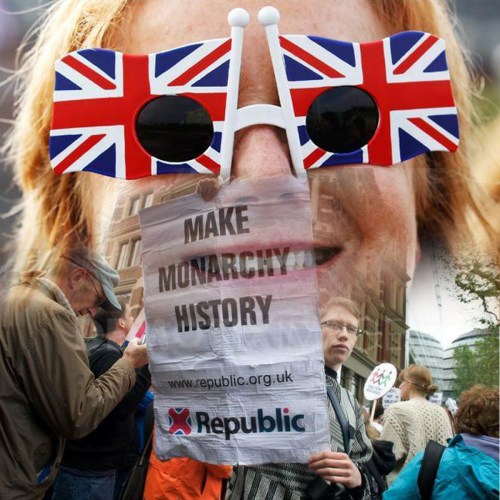
A few demonstrators in London on the Diamond Jubilee Flotilla Day kept away on a safe distance from the real royal event by fences and police… sunglasses were not needed on this pouring rain day ~ republicanism – also –  has a long history in Britannia, or should I not use the Roman Imperial name of this province and use the oldest name for the whole island instead: Albion? One must keep in mind that formerly speaking the United Kingdom still has an act promulgated in 1848 (Treason Felony Act) which makes the call for abolition of the monarchy a criminal act, which at that time was to be punished by deportation to Australia. The existence of this act and it’s anti-European Constitution status has been called into question several times, like in the year 2003 by The Guardian and its call for a referendum on whether Britain should become a republic.

click picture for the British republicans web site

Patrick Blower’s cartoon for the Evening Standard, 11 Nov 2002, ten years ago, in the days the British monarchy was once more under discussion…

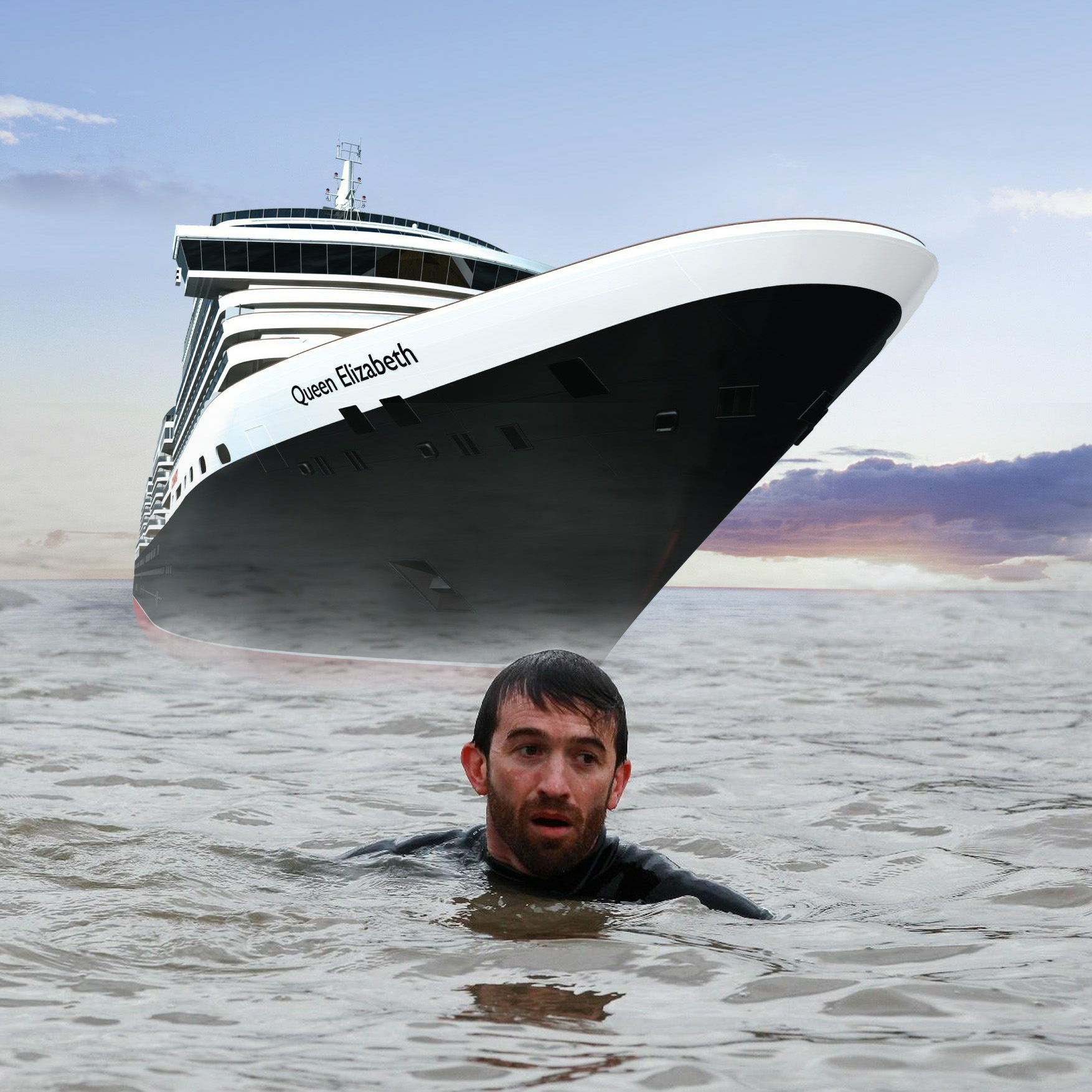
The unseen participant is Trenton Oldfield who swam into the line of rowing boats during the yearly river Thames Oxford/Cambridge rowing competition on April the 7th this year and caused quiet a stir with his non-violent direct action. The Diamond Jubilee Flotilla of today would have been yet another excellent occasion for his daring protest swimming, but I failed to spot him in the live coverage by the BBC, yet in my mind’s eye I saw him courageously crossing the path of the ‘ship of state of the United Kingdom’… I am sure that Trenton Oldfield has been put under special surveillance during this River Thames event preventing him from participating. Apart from waving and cheering, the audience at such events is supposed to be not involved in the action.

click picture to go to Oxford student paper reaction they called him “a crazed Marxist”…

I had made – in the beginning of April this year – a note of his personal web pages with his extensive somehow confused ‘manifesto’ “Elitism Leads To Tyranny”   on the server of squarespace with the URL http://elitismleadstotyranny.squarespace.com/ ,  but his site had disappeared. If this is because of his own will or that of others, I can not tell. So, because I had neatly documented his ‘manifesto’ web blog (posted before his action on April the 7th 2012), I can reproduce the full text hereby for posterity. It does not mean that I do fully agree with his way of arguing, but as someone who has studied and documented ‘social movements and direct action’ for decades, I try to understand how someone choses a ‘social issue’, reasons his or her intervention, and what are the reactions. Trenton Oldfiled, worked in the tradition of the British ‘suffragette’ movement. The use of his own bare body as a weapon during an elite sport event, links to an historic action back in the year 1913 by the British suffragette Emily Wilding Davison, who threw herself during a Derby attended by the King before the king’s horse, an action that toppled the horse and the jockey and hurt herself so much that she died of the wounds. “DEEDS NOT WORDS” was the slogan of that time of the militant fighters for equal rights of women.

Trenton Oldfield does make a direct reference to the historical – catastrophic – action by Emily Wilding Davidson, he fails – though – to make a good analysis of the different meanings of that action at that time (*) and links it in too few words with the practice of what he calls “anti-imperialism activists and guerrillas” and the sabotage survival tactics of  “trans-Atlantic slaves.” Nevertheless Trenton Oldfield was on my mind today and others may have had similar associations seeing the royal pomp of the Brits and thinking about what social realities are hidden by such spectacles and how someone swimming in the pathway of a Royal Flotilla would have been a refreshing addition. That is why I choose this day to republish his somehow clumsy manifesto to honour the River Thames Swimmer Activist of the year 2012.

ELITISM LEADS TO TYRANNY  

THIS IS A PROTEST, AN ACT OF CIVIL DISOBEDIENCE, A METHODOLOGY OF REFUSING AND RESISTANCE. THIS ACT HAS EMPLOYED GUERRILLA TACTICS. I AM SWIMMING INTO THE BOATS IN THE HOPE I CAN STOP THEM FROM COMPLETING THE RACE AND PROPOSING THE RETURN OF SURPRISE TACTICS. THIS IS ‘PEACEFUL’ … I HAVE NO WEAPONS (DON’T SHOOT!) MY ONLY FEAR, IS NOT SWIMMING FAST ENOUGH TO GET IN THE RIGHT POSITION TO PREVENT THE BOATS.

 PERFORMANCE UPON THAMES

 This part of the River Thames is very well known to me having previously worked in the area. I have continued to visit it as often as possible as it is one of the London reaches I became most fond of, mostly because of its unregulated Wooded Tow Path, the expansive foreshore at low tides and the wildlife habitats in the adjacent Leg of Mutton Reservoir. It is a beautiful place, one of the more serene spots in London. Best to visit when it has been dry for a few days as the path can be very muddy and puddled.  

 Setting aside the compelling natural environment for a moment, this reach is also the site of a number of past and present elitist establishments; Fulham Palace, Chiswick House and St Paul’s Schools and a large collection of other ‘independent/public/free schools’. It is also where Nick Clegg, leader of the Liberal Democrats and Deputy Prime Minster of the Government lives with his family, despite his constituents living hundreds of miles away in post-industrial Sheffield. Most notably and most importantly for today, it is a site where elitists and those with elitist sympathies have come together every year but one for the last 158 years to perform, in the most public way, their ambition for the structures and subsequent benefits from elitism and privilege to continue. (They even list in the programme which public school the rowers attended before Oxford or Cambridge)

 The boat race itself, with its pseudo competition, assembled around similar principles of fastest, strongest, selected …etc, is an inconsequential backdrop for these elite educational institutions to demonstrate themselves, reboot their shared culture together in the public realm. It is also inconsequential to the performance that the overwhelming majority of the population continue to remain interested in their own lives and disinterested in the boat race. The boat race, while accessible to everyone, isn’t really advertised or promoted as something for the general public to attend, you know when it’s on because it is part of the social networking calendar. This is a public event, for and by the elites with broader social relations aims. The fact that it happens in the public realm (visible) almost exactly as it has done for the last 158 years also becomes important; the untouched; the unchanged is significant. Most standing alongside the Thames today are in fact the pumped-up though obedient administrators, managers, promoters, politicians and enforcers; functional, strategic and aspirational elites. The transnational-corpo-aristocratic ruling class (invisible) haven’t turned up today and would never consider doing so, despite the best endeavours of Bollinger, Xchange and Hammersmith & Fulham’s mayor.

 HISTORY IS A WEAPON

 When hasn’t elitism lead to tyranny? When hasn’t the belief of being ‘more’ than another person led to tragedy? Who benefits from elitism? One won’t be surprised to learn the etymology of the word ‘elite’ derives from ‘the elected’ … unfortunately not elected by democratic means, but rather, elected by god. Yup…‘elected’, ‘selected’, ‘chosen’ … by god … inherited. When has this understanding of oneself or by a group of people ever been a good thing? When has this understanding not resulted in tyranny? Is tyranny surely not the inevitable outcome? And in contrast, when hasn’t the pursuit of equality, not resulted in these long passages of tyranny being overcome, even if temporarily?  

 Everyone will remember some of their history lessons … where people have been taken advantage of by people that believe themselves somehow better, more entitled than another individual or group of people. Most recently this has included the enclosure and eviction from the commons, transatlantic slavery, imperialism and colonialism, fascism, holocausts, genocides and dictatorships and migrant labour camps. It is difficult to grasp, as many of us are still heady and have strong memories of the previous ‘boom’ decade, but we are in the middle of the early stages … or we have just about reached the precipice of another era of mass enslavement and the large scale enclosure of ‘Our Public’. What is happening in the UK, for example, is not ‘privatisation’ but a contemporary demonstration of full scale enclosure of Our Public. Couldn’t happen again … why not? Why wouldn’t something different but similar happen again? What policies, what institutions, exist to prevent something similar from happening again? What evidence is there that this isn’t happening? When did Our Public last experience an injection of its own readily available dose of agency and liberty?

 To enclose and to enslave requires the audacity, cunning and daring to take advantage of our natural kindness, our belief in others, our respect for authority, our desire to please, and our apprehension about ‘causing waves’, our hope for all to have a better life, somehow. It also depends on our disbelief, despite having experienced it, that other people would purposefully set out to harm us for their own advantage. More recently we have also been encouraged, though the evidence displays the opposite much of the time, that a whole raft of institutions exists that work to prevent human catastrophes like our right to protest being denied, detention without trial or charge, the monopolisation of  industries, and essentials like food and water. These institutions were established to prevent slavery, genocide, indentured labour and groupings of indices of deprivation and poverty from occurring.  It is likely many in the western Baby Boomers generation (large percentage of the UK population), who have benefited so much from these institutions, are finding it very difficult to consider that these institutions might now be turning against them, their children and their grandchildren?

 Could what is happening in the UK (and around the world); the state of exception with Olympics, the wholesale removal of countless civil rights, the project to create fear and suspicion of others, the transfer of our money into the vaults of a handful of corporations, the ongoing wars, the pomp and ceremony for unelected official anniversaries, the amazingly high unemployment, the devastation to public services such as health and education, the isolation of education due to high fees, the entangled corrupt relationship between the media, police and politicians, the racism, the increasing misogyny, the forced labour in supermarkets, the spying on our emails, skype calls, the control of food production and distribution and the reductions of tax burdens for the richest … could these all be best understood as the process of enclosure? Do we resist now setting out to avoid something akin to slavery and imperialism? Or do we hesitate and find ourselves and our children without agency once again and in a long battle to gain it again? How long might it take and how many lives might this demand?

 CIVIL DISOBEDIENCE

 There is a concerted effort to disintegrate ideas of Our Public; to atomise and divide us. Only yesterday did a British government minister suggest that citizens should ‘shop’ (dob-in) people they know to be organising or attending a protest related to the forthcoming Olympic Games. Along with the brutality the police and military are prepared to use against organised peaceful protestors, it seems it might be time to employ ‘little war’ / ‘guerrilla tactics’.

 My swim into the pathway of the two boats today (I hope) is a result of key guerrilla tactics; local knowledge, ambush, surprise, mobility and speed, detailed information and decisiveness. There is no choice but to be apprehended in this action. I know this area very well and have planned the swim as best as I can, taking into account all the local knowledge I have gained over the years. Guerrilla tactics could be summarised as; ‘preparation, creativity, daring and attrition’.The aim of employing these tactics is to shift from being a ‘victim’ … of having things done to one, to being the ones setting the agenda, placing elites more and more on the back foot, increasing their costs, causing confusion, fermenting internal mistrust, creating embarrassment (a Tory’s worst nightmare?), frustration and manifesting a vulnerability. This will provide the time and space for an ongoing development of post-elitism, post-capitalist thought and debate.

 Our current disorganisation and indirection is an advantage. In the past, guerrilla tactics have been employed by small groups of people. Today there is the opportunity to also undertake this alone, as an individual. Part of my inspiration for today’s action comes from a protest action that took place 99 years ago – when Emily Davison ran into Epson Derby race. On the 4 June 1913 Emily ran into the horse that the king had entered. She died from the injuries sustained from action. She was demanding rights for women. It was an individual act born of a political and philosophical position. This action is also part inspired by the anti-imperialism activists and guerrillas. This includes trans-Atlantic slaves who not only forced their freedom by revolting but undertook tactics of breaking tools, working slowly, acts of sabotage, feigning illness and maintaining their cultures. They found ways to continually undermine the system in small and large ways.

 We all need to make a living and sometimes we do this by taking jobs we disagree with or find out are likely to detrimental to our children’s future. Being in these jobs also provides us with a great opportunity to employ civil disobedience and guerrilla tactics.  It is the chance to match the personal and the political. Security guards are possibly in the best position. Examples of actions might include:

 · Setting off Fire Alarms in buildings where we work, perhaps at strategic times, when a particular meeting is meant to happen that will agree the cutting of services, for example? (This action seems morally okay as all the emergency services happily deployed vast numbers to participate in the filming of a Bond movie the other weekend on Whitehall).

 · If you work in a private company or government department that is helping enclose Our Public perhaps you could work slowly, make mistakes, loose documents, sending large documents to clog up email accounts?

 · If you are a taxi driver can you take the passenger the slowest possible and most expensive route?

 · If you are a plumber can you ‘store up’ a problem in the office of a conservative think tank office you have been called to?

 · If you have a tow truck company can you park in front of Nick Clegg or David Cameron’s driveway, accidentaly? Could you tow their car away?

 ·  If you ride a bike and it’s difficult to find somewhere to lock your bike (as bike racks are taken away), can you lock it the one of the corporate bikes which now litter our streets everywhere?

 · If you clean the bathroom of someone that considers themselves elite or is an elite sympathiser, like a right wing professor, can you never put loo paper in their bathroom?

 · If you work in a restaurant where elitists eat, can you serve the food once it is cold or cook the wrong food?

 · If you are a builder repairing the house of an elitist can you also bug it and share the footage and audio online?

 · If you are a pest controller and you are called to the office or home of an elitist or elitist sympathiser can you fail at destroying the pest and possibly introduce new pests?

 · Can you take up the time of a ‘VIP’ you work for by arranging time consuming meetings, asking as many questions as possible? Can you make them late?

 · If you work in a call centre, can you refund people and find the best discounts?

 · If you are a student and attend a talk, can you challenge the professors? Can you take the stage and highlight to the audience the work they have done in contrast to academia?

 · Are there networking events designed for the elites and their sympathisers where you could let off a stink bomb?

 · If you work in audio-visuals for meetings/conferences could you put up the wrong slides, or turn the correct ones upside down and remove cables, rendering the equipment unusable?

 · Could you plan your own government or council made up from people you admire and trust – in similar vain to Football Manager and publish it on the internet?

 · Are there events like today’s boat race that you could do something similar to Emily Davison with? Is this possible in the lead up to and within the Olympics itself?

 This is a special call to security guards. The elite depend on you the most. Without you they are nothing.

 Copyright © 2012, TRENTON OLDFILED. 

A 1911-1912 typical banner of the British suffragette movement with the action paradigm “DEED NOT WORDS” and a later depiction of the action of Emily Davidson throwing herself before the King’s racing horse.

—-
(*)
– The Women’s Suffrage Movement: A Reference Guide, 1866-1928 By Elizabeth Crawford has many references on the complicated history of Emily Wilding Davison and several pages can be read on line via GoogleBooks.

– Another good source is “A Suffrage Reader: Charting Directions in British Suffrage History By Joan Ryan, Laura Ugolini, also available on GoogleBooks.


The latest Facebook ‘app‘ is of German origin: the Zuckerberg Thumbscrew… an old device of restrain and pain put to new use after the recent FB IPO demise.

There is also an improvised cheap app version of the ‘Zuckerberg Thumbscrew’ which can be found at any hardware store…

There is a flipside to everything including the Facebook singular thump-up-like-strategy and the likejacking/clickjacking that comes with such commercial deviation of social media.

click book cover to read a limited selections from one of the many books how the Zuckberg empire works… “The Like Economy: How Businesses Make Money With Facebook” by Brian Carter (*) Click book cover for GoogleBooks link

BE AWARE: what you and me may see as something semi-privat and social is of course nothing else than selling our vanities to the advertisement industry, or is it more a schizophrenic situtaion with us users also profiting from the profit of Facebook by having handy communication tool for “free”?

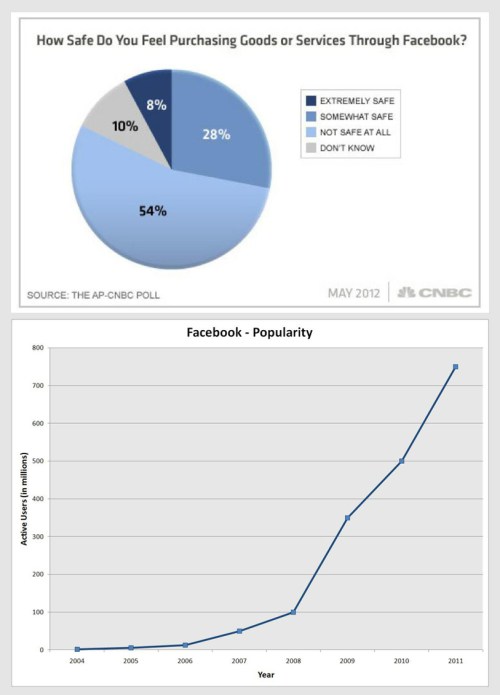
“In 2011, Facebook made $4 per user per year. To earn its market cap of $100 billion today, it would have to earn five-times that figure per user. This sets up a tug-of-war over user information.”

Click stats to go source web page “Facebook’s Value: What’s the Price of a Billion People Watching Each Other?” by Derek Thompson of ‘The Atlantic’.

——
(*) To find it in a library nearby  go to worldcat.org for this book and fill in your country

GREXIT Zeus throwing his thunderbolts through the Euro-pean aether (*)

——-
(*) Grexit: Grexit is a slang term introduced in 2012 in world business trading. It is a portmanteau combining the words Greece and exit, referring to the possibility that Greece could have to leave the Eurozone, and thus would have to readopt their old currency, the drachma. The term was introduced by Citigroup’s Chief Analysists Willem H. Buiter and Ebrahim Rahbari on the 6 February 2012.

D66 stelde zeer kortgeleden voor – via parlementslid Wouter Koolmees – om de 36 urige werkweek terug te draaien naar een 40 urige en ook Tweede Pinksterdag af te schaffen. Dit alles om de productiviteit van de Nederlander op te schroeven en zodoende ‘de algemene deelname aan het geluk’ dat in gevaar dreigt te komen door de economische crisis, veilig te stellen. Mij zweeft daarbij van alles voor de ogen, zoals ruime een eeuw aan arbeidersstrijd voor de achturige werkdag met het edele doel “acht uur werken; acht uur rusten; acht uur vrij” en de even edele gedachten die volgens de Christenen in de vorm van de heilige geest – na de opstijging van Christus – jaarlijks over de aarde uitgestort worden: “vriendelijkheid; goedheid; vreugde; vrede; geduld; liefde, vertrouwen, zachtmoedigheid.” Dat is zoveel van het goede dat daar echt wel twee dagen voor nodig zijn. Hebben die Democraten die in het jaar 1966 zijn blijven steken en zich daar nu aan proberen te ontworstelen, geen oog voor de verworvenheden van arbeidersstrijd én de gulle gaven van daar boven? Beseffen zij wel wat het betekent om dat alles in de waagschaal te stellen? Want, als we nu met een parlementaire pennenstreek de 36-urige werkweek weer terugbrengen naar een 40-urige, dan ligt het voor de hand, dat met al die crisissen die nog op de loer liggen in de toekomst, we al snel terug bij af zijn, via de 48-urige werkweek tot bij het slavenbestaan van de 66-urige werkweek. Zou dat de ultieme verborgen betekenis van die cijfers in die rare partijnaam zijn, D66?

hit the picture for a full size view

A nice sunday with lots of sun and people enjoying the outside calm of town, or letting some of the outside world in through opening their windows, should be a peaceful and enjoyable thing, where it not for the endemic (*) Buzz Bikers driving their purposely loudest possible  roaring motorbikes (**) through the inner town – especially – to ventilate themselves and their ego’s.

My mind game is imagining the BuzzSwat in action, applied with the same mercy urbanised humans tend to have for an annoying buzz-fly:  SWATTT!

The local police is invisible – seems to enjoy football matches on television in their stations – and something like an ‘Anti-Bikers-Buzz-Squat’ has never been thought of in this permissive city, once home of the bicycle-beer-café with peddling drunken tourists having a good drink and shout (***). Bikers, also,  can freely van their egos around here in Amsterdam.

This message will also be send to our burgomaster who is the first mayor of this town in decades who shows some – hesitant – concern of how “his” city sounds…

We do have all the technology needed to pick these ‘guys’ (no noisy girls on bikes as far as I can see, some but only on the back seat) from the road: sound sensors, fast cameras, helicopters, name it. I am not a biker so I do not know if these bikes have one or modes of operation, within the official noise limit, and outside these limits. If the exhaust system of these bikes have been tampered with, a kind of ‘art of noise’ tuning, to produce maximum effect, the motorbikes are in an illegal state and should be taken off the road on the spot. If the noise production can be hidden at one moment and still be produced at another, a combined system of instant sound and image capture could be used, to collect the needed proof for prosecution and seizure.

I think it will be necessary to also check the motorbike trade for selling and altering such “leisure” products. Motorbikes purposely made noisy, that has no other sense than produce the joy some people must feel, to terrorise their fellow citizens, by temporarily possessing the space and time that is shared with others with the noise they make.

The BUZZ Bikers are criminals stealing the civility of public space.

The poetics of noise, a picture I made March 11. posted on my Facebook page (seems to have vanished there thanks mr. Zucker…) this year when we had a few days of softer weather announcing a spring that was – in hindsight – slow to come. First nice sunday of the year… forget about listening to the birds, “roarrrrr” the bikers take their monsters out for a ride.

Picture I made May 22. when we had a first nice summer temperature evening… and it was spoiled by a constant parade of these motor devils… (posted on that day on The Limping Messenger)

————–
(*) Endemic (as in “disease”) n. : a disease that is constantly present to a greater or lesser degree in people of a certain class or in people living in a particular location

(**) The police of the city of Amsterdam do have special actions and brigades against the disturbance of young scooter drivers, being both a danger because of wild driving and a nuisance because of the noise produced. Also scooters are so high on the wish-list of youngsters that the ones that are not fortunate enough, will steal them. I have witnessed these squads several times and noticed that especially young Moroccan guys were singled out as they seem to excel in breaching a few laws while driving these fancy scooters (though a xenophobic bias can be not excluded at the same time). I asked an officer of such a squad once why they did not also target the noise of the more affluent big motorbike drivers and the hellish noise they produce, as well as super high speed traversing through the inner town, often passing several police stations without any counter action. I was told, that this was “not a priority.”

(***) After years of complaints, beer-bike-cafés have been – almost – forbidden since after a whole series of court cases. The discussion was whether or not a bicycle-beer-bar was still a bicycle or not. A court decided that the maximum width of a bicycle or tricycle was 1,50 meter. Most of the versions going around where more than this measure limit, though inventive entrepreneurs did develop a beer-cycle-bar that stays within the law-limit.

See also my two earlier articles on
– 25/5/2009: ‘Cycling Cafes’: Cycling Cafes and Drunken Skippers in Party City Amsterdam
3/6/2009: Cycling Cafes down the hill in Amsterdam

This is old news about a book by the Argentinian author Ceferino Reato who managed to interview the former Argentinian dictator Jorge Rafaela Videla in prison and for the first time having Videla speak about the real numbers of people killed by his regime in his vision (7 to 8 thousand persons). The book was published in Argentina a few months ago, but it merits special attention in the Netherlands because the Dutch Royal House has a family relation with one participant in the Videla regime. This relationship has been constantly half denied and underplayed. The policy of the Dutch Royal House and Dutch governments is one of low profile on this issue, in the hope it will be forgotten.

When I checked today  the Dutch library system I did not yet find a single copy in any Dutch public library (available or on order), including the Royal Library of the Netherlands. I will certainly write the last institution  about this omission! (*) “Disposición Final”(final disposal)  is the military jargon – of the Argentinian generals and government – for the murder of those that were seen as a danger to Argentinian society.

click picture for full view

Titulo: Dispocición Final (**)

Autor: Ceferino Reato

Editorial: Sudamericana

ISBN: 9789500738958

Publicado: 13/04/2012

Wondering if the Dutch/Argentinian Royals did read this book already, a book in which the former boss of the father of Princess Maxima Zorregieta – Jorge Rafael Videla (1925-) – confesses finally his involvement with thousands of disappeared people during his government, a government in which Jorge Zorrequieta (1928-) proudly was participating as Minister of Agriculture, but Dutch authorities have refused to start a formal inquiry on his involvement. The picture shows Jorge Zorreguieta during a baptising ceremony of one of his granddaughters. If only he would have been so sentimental when participating in the murderous Videla government…

Jorge Zorreguieta remained outside of prison but when, as said by some, his position was only marginal why did he not speak out about his association to a government that was described by an Argentinian judge – María Elba Martínez in December 2010 – as being the perpetrator of “state terrorism” (***)

Jorge Rafael Videla serving life time sentence in prison

Jorge Rafael Videla as President of Argentina with his Minsiter of Agriculture Jorge Zorreguieta during a state parade in the years of the Argentinian dictatorship. (****)

—-
(*) The Dutch Royal Library is the national library of the Netherlands and has its buildings in The Hague, the town that is proud to be “a world centre of human rights” with its international courts on government crimes and the Peace Palace.

(**) There is a GoogleBooks version of the book “Disposición Final” on the internet and a search fro Zorreguieta does not produce any hit, which does not mean that it is possible that a member of the Videla government of that time would have been totally ignorant of the “state terror” unleashed.

(***) Barrionuevo, Alexei (23 December 2010). “Argentina: Ex-Dictator Sentenced in Murders”. The New York Times 23 December 2010.

Yapp, Robin (22 December 2010). “Former Argentine dictator Jorge Videla sentenced to life in prison”. The Telegraph (London)

(****) One of the many articles on attempts to persecute Jorge Zorreguieta also for his role in the Videla regime can be found in this article of the Argentinian newspaper Pagina|12 (9 September 2011)

Illustration of the “Erlkönig” by Ernst Barlach (1870-1938); artist signed photograph of Fischer-Dieskau dating from the early fifties; radio is a Philips BX360A produced in period 1946-1947 as we had in our living room, also called “zingende plank” (singing board (slice of timber) as the front was made of recycled wood covered with woven textile. Click picture for full view…

Dietrich Fischer-Dieskau (1925-2012) (*) died today… and in my head I hear his Schubert version of Goethe’s ‘Erlkönig’ (Elf-king) as I heard it often as a boy on the radio:

 “Mein Vater, mein Vater, und hörest du nicht,

Was Erlenkönig mir leise verspricht?” –

“Sei ruhig, bleibe ruhig, mein Kind;

In dürren Blättern säuselt der Wind.”

(“My father, my father, and don’t you hear

What the Elfking quietly promises me?”

“Be calm, stay calm, my child;

The wind is rustling through withered leaves.”)

In the end the father racing with his horse through the darks woods, notices that his son – who was ill and hallucinating seeing beings his father did not see -has died in his arms…

 Dem Vater grauset’s, er reitet geschwind,

Er hält in Armen das ächzende Kind,

Erreicht den Hof mit Müh’ und Not;

In seinen Armen das Kind war tot.

(It horrifies the father; he swiftly rides on,

He holds the moaning child in his arms,

Reaches the farm with trouble and hardship;

In his arms, the child was dead.)

The word “tot” that ends the song, hardly been pronounced by the mouth of Fischer-Dieskau, is dramatically cut off by his lips in a split of a second.

I am listening now to the song again, but not on the radio but on the music streaming service of ‘spotify’ (**) and so  we will keep hearing Fischer-Dieskau’s voice through the never “withering leaves” of our digital age.

—–
(*) And.. yes I know Dietrich Fischer-Dieskau had to join the Hitler Jugend when he was 10 years old, like all German boys of that time, and yes he did perform during the war in Berlin, his first public concert, which is common knowledge, but better to say in these days, far removed from World War II, in which some people may be more touchy than their parents about an unescapable past. The Guardian has a very nice 2005 interview by Martin Kettle on-line with Fischer-Dieskau from which I quote the war passage here:

Fischer-Dieskau was, is, and will always be a Berliner. He has lived through some of the great city’s best times and most of its worst. This most refined and intelligent of artists began his career in circumstances from hell. In early 1943, aged 17, his first public performance of the greatest of all song-cycles, Schubert’s Winterreise, given in the town hall of the Berlin suburb of Zehlendorf, was interrupted by the RAF.

 “We had a terrible bombing of the city that day,” Fischer-Dieskau recalls, “and the whole audience of 200 people and myself had to go into the cellar for two-and-a-half hours. Then when the raid was over we came back up and resumed.” I ask him whether he can remember where in the cycle he began again. “It was Rückblick [Backward Glance],” he grins. “So we looked back to the part already completed.”

 As a conscript soldier he was captured by the Americans in Italy in 1945 and spent nearly two years as a prisoner-of-war. “I believe it forces you to straighten out your thinking at an earlier age than you would otherwise do,” he says. “You have to survive. You have to stay focused, otherwise you will not live. That was my first thought.”

 It was this German experience of suffering and war that partly led Benjamin Britten to invite Fischer-Dieskau to sing in the historic premiere of his War Requiem in Coventry Cathedral in 1962. Britten’s letter – “with great temerity I am asking you whether you would sing the baritone” – tells us something both about the composer and about the grandeur that Fischer-Dieskau had attained in the musical world by then. But Fischer-Dieskau’s memories of the event are mainly about Britten’s nerves.

(**) this is a paying service for subscribers at a small fee, a different version can be heard and seen on youtube all with the last word ‘tot’  and a last chord by the piano (this version, especially the ending, differs from the recording I listened to on ‘spotify’; each performance by Fischer-Diskau must have differed and his mastery must have laid in his ability of recreating a composition in so many ways).

‎”Flux de bouche” we say in dutchified French, whereas the French say “flux de paroles”, ‘flood of words’ in English. For all those who are following the French TV news (‘Le Journal de France 2 sur TV5’ here in the Netherlands) that is what is awaiting us with the new Parti Socialiste Prime Minster (PS/PM), Jean-Marc Ayrault, who was interviewed yesterday first time by anchor man ‘le toupet’ (our tv-divan pet name for David Pujadas, because of his well groomed hair that seems not to be all his). Ayrault certainly creates a ZAPMOMENT with his autonomous avalanche of memorised catch words making one forget what again was the question posed by the interviewer… It will be a verb soon ‘ayrauliser’ and – by mere chance – it is meaningful as the surname ‘ayrault’ is an older French spelling of ‘herault’ or ‘herald’ in English. Indeed ‘a herald’ does not answer questions, a herald proclaims!

As is often the case with a new dignitary the ‘homophone’, or ‘homonym’, or transliterated versions of his name into other languages, do produce some embarrassment, in this case in Arabic speaking countries, where his name is conceived as the name for the male sex organ (like the name of late Dutch Prime Minister Kok, is perceived as ‘cock’ in English).

Ayrault on his first introductory interview on France 2 news did not get any embarrassing questions – though – from ‘le toupet’, like one about his local ‘favoritisme’ scandal during his office as a mayor of  the town of Nantes, triggered by a municipal contract for a news and publicity service without a public tender. This was fifteen years ago, and it did produce a six-month suspended prison sentence and a fine for Ayrault in 1997. Ayrault did not appeal against this ruling at that time.

As François Hollande did announce during his campaign that his new government would consist of impeccable persons only, tens of thousands professional and self-proclaimed defamers where sitting behind their computers and waiting for the moment the first nomination would appear from the confines of the new master in the Élysée, to cut & paste it into their favourite internet search engine. One of the first to post their resulted defamation was the fifth column of Sarkozy with their Facebook page “Non au PS” (has just 8.753 likes). Their home banner reads: “NON AU SOCIALISTES; NON AUX COMMUNISTES; NON AUX MODEMS, NON AU VERTS; NON A HOLLANDE ET LA GAUCHE” (‘MODEM” is ‘Mouvement Démocrat of François Bayrou; “Verts” is Green Party; “GAUCHE” is left). It is claimed that the post below did get the eager inquiry machine rolling, though the exposed  disgraceful event must have been public knowledge anyhow.

“- The first (premier) “prime minster” nominated with a condemnation of 6 years of prison; – 62 years, must be pensioned by now like he advocates for others.” Click picture to check out the Facebook page with other examples of bashing the socialists.

In times we are progressively losing our ability to remember, because of electronic memory devices that have taken over that function, the instant recall of cases from the past by our ubiquitous digital machines, does pose a problem. The ‘waning of time’ ceases to exist. Forgetfulness which is a social device leading to leniency and clemency , forming the basis of human cohabitation, is made impossible. A “minor affair” from the past is easily turned into a ‘major’ one in the present.

We need to come to terms with this new social phenomenon. I would say that a conviction in the past of someone running for public office, is not necessary a negative thing. A convicted person, who has done his or her term, or who has been given a provisional sentence, can not be excluded from participating into politics or government all his or her life. Also, such a person may have gained – because of a punishing sentence – a better insight in the realities of life, in some cases even better than all those impeccable careerist bureaucrats. The fact that the past of Ayrault could be checked so easily renders his case ‘transparent’, though some sources (Le Monde 15/6/1996; a pay archive link) suggest that the legal construction of the publishing tender in Nantes, were “rather opaque.”  The French web site “@rrets sur l’image” of May 11th 2012 has a detailed overview article on the case with this long title: “AYRAULT ET LA “BOULE PUANTE” : UNE AFFAIRE DE 1997 REFAIT SURFACE – Mais la presse n’a pas mis le nez dans ses archives pour en fournir les détails” (Ayrault and the stink bomb: an affair of 1997 surfaces again – But the press did not put its nose in its (own) archives to supply the details about it).

Scrutiny of acts and proclamations of the new Prime Minster is enhanced by all such bad publicity, which may hopefully help him sobering his ‘flux de paroles’.

click picture for full size

—–
The text just for web search machines:
for a super lotery ticket the latest iphone unemployment payment withdraw all you money from the bank for work to become a movie star to be repatriated your suitcase a meal an id-card a museum for water 

Of toch wel?

Van Agt lijkt nu een beminnelijke ex-wielrennende Minister President met een groot hart voor de Goede-Palestijnse-Zaak, maar dat was ooit heel anders.

er valt nog heel wat in te kleuren voor september 2012 nu het VVD kwartet kompleet is….

klik plaat voor grotere versie


NB De kleurplaten van Mark, Geert en Rita zijn beschikbaar op www.kleurplaten.nl.  (“voor iedereen die graag kleurt”) Hero heeft nog geen prent, vandaar hierbij een kladversie om vast te oefenen:

klik voor grotere formaat kleurplaat

“HET KUNDUZ KWINTET KABINET” dat klinkt wel lekker…. zo ook het volkslied dat geopend wordt met HET KUNDUZ AKKOORD. Jack de Vries is druk in de weer op de dépendance van zijn JSFighter lobby-bedrijf. Talloze campagne-artikelen worden bedacht, getest en onvoldoende bevonden, want Jack doet het professioneel… Iemand leverde zojuist – anoniem – dit afgeschreven test-exemplaar voor een Tshirt bij mij af. Jack doet het ‘pro-deo’ met de goede hoop op een herintreding als Minister van Defensie in Rutte II om die JSF zaak netjes af te kunnen ronden. Lancering van het Tshirt was gepland voor tafelheer Jack bij De Wereld Draait Door… maar de VARA floor-manager vond dit een brug te ver.

Opinie artikel in De Volkskrant van 9 mei 2012 – klik op plaatje voor het volledige artikel

Vier citaten uit dit artikel van Timor El-Dardiry en Paul Teulen, economen en lid van ‘Ensemble’, een progressief-liberale denktank die voorstellen aandraagt ter bevordering van intensieve politieke samenwerking tussen ‘de progressieve partijen’. De auteurs constateren dat er sprake is van een “verspillende wedloop” om “positionele goederen”  en dat in de huidige economische crisis meer gerichte middelen dan het  pats-boem verhogen van de BTW op consumptiegoederen voor iedereen, noodzakelijk zijn.

De loonbelasting verstoort de arbeidsmarkt doordat deze de wig tussen loonkosten en nettoloon vergroot. Dat is slecht voor werkgelegenheid en arbeidsparticipatie, en daarmee ook voor de integratie, emancipatie en het opvangen van de vergrijzing. Het is vreemd dat we iets belasten waar we juist zo graag méér van willen zien, en dat we mensen geen keuze laten om met ‘beter’ gedrag de belasting te ontwijken: de simpelste manier om geen loonheffing te betalen is om thuis op de bank te gaan zitten.

… de BTW is, in tegenstelling tot de inkomstenbelasting, geen progressieve belasting. Afgezet tegen bruto inkomen is de BTW zelfs sterk degressief: de allerrijksten betalen relatief het minst, de allerarmsten het meest. Natuurlijk kun je daar voor compenseren door de inkomstenbelasting progressiever te maken (zoals de Kunduzpartijen beloven), maar dat zal slecht uitpakken voor de arbeidsmarkt. Beter is het om een progressieve belasting op consumptie in te voeren.

… er is eigenlijk geen goed excuus om ons huidige belastingstelsel maar ongemoeid te laten. Dit stelsel is namelijk een ware ongeluksmachine: oneerlijk, slecht voor economie en milieu, en een onnodige inperking van onze keuzevrijheid.

Hoe méér we consumeren, hoe méér we uitgeven aan ‘positionele goederen’. Dit zijn producten waarbij het vooral gaat om de exclusiviteit en de sociale positie die ze verschaffen. Denk aan P.C. Hoofttractoren, haute couture, jachten, villa’s op toplocaties of de hipste clubs. Als iedereen hier méér aan uitgeeft, blijft de sociale rangorde intact en gaat niemand er dus op vooruit. Er kan er maar één de grootste villa hebben op die ene toplocatie. Voor midden- en lage inkomensgroepen is deze verspillende wedloop zelfs schadelijk, omdat veel schulden worden aangegaan om mee te kunnen doen. Juist deze groepen zijn dus gebaat bij inperking.

Mijn korte reactie binnen de maximaal 500 tekens-limiet van De Volkskrant op haar web site, wat natuurlijk onvoldoende is om een publieke discussie op gang te brengen. (*) :

BTW = belasting op TOEGEVOEGDE WAARDE, vermeerderde waarde door arbeid. De onwenselijkheid van het belasten van arbeid is correct. Maar, hoe het begrip ‘waarde’ te definiëren? Ik mis het sleutelbegrip voor meer ‘gelijkheid’: ‘arbeidstijd’ als uitdrukking van de waarde van producten en diensten. Een principe al op het einde van de 18e eeuw bij egalitaire denkers te vinden. Gelijkschakeling van arbeidstijd-waarde dient de prijs van consumptie te bepalen dat = niet liberaal, maar sociaal.

Wat ik probeer aan te dragen is een heel oude discussie en het oerbegrip daarbij is de realisatie van ‘gelijkheid’ door het middelen van de waarde die door verrichte arbeid wordt voortgebracht, met als maatstaf het ‘arbeidsuur’: zoals twee eeuwen geleden al geopperd en geprobeerd door Owen (1771-1858) met het ‘arbeidsgeld’  ook wel ‘verbruiksbons’ genoemd . Later werd iets soortgelijks ook voorgesteld door Marx (1818-1883) die het heeft over ‘arbeidscertificaten’ die in verhouding staan tot de gelijkwaardigheid van een ieders arbeid, dit in plaats van de meest minimale bestaans- en reproductiekosten die een arbeider binnen het kapitalistisch systeem voor zijn werk geboden worden.

“Sterk degressief” zeggen de twee heren van de ‘liberale economische denktank’ als het gaat om de effecten van de verhoging van de BTW op consumptiegoederen, maar hun voorstellen gaan niet verder dan de aller scherpste kantjes van de klasseverschillen weg te slijpen, via een naar inkomen berekende jaarlijkse consumptiebelasting. Dit is niet een ontkenning, maar een bevestiging van de maatschappelijke kloof tussen rijk en arm.

Ik denk dat  het goed is af en toe niet te schromen om klassieke inzichten en voorstellen voor een meer gelijke samenleving aan te halen, hoe ver weg en onbereikbaar zulke ‘geïdealiseerde voorstelling van zaken’ ook mogen zijn. Hoe dikwijls hielden zulke maatschappelijke experimenten maar een korte tijd stand, of  werden enkel ‘in naam’ doorgevoerd ? De praktijk van ‘gelijkheid’ is moeizaam. Zonder maar te hoeven tellen, kan een ieder weldenkend en geïnformeerd mens, tot de slotsom komen dat de mislukkingen en monsterlijke uitwassen van het ‘staats-kapitalisme’ en het ‘staats-socialisme’ even talrijk zijn. Natuurlijk zijn er – met enige goedwillendheid – ook “zegeningen” uit beide kampen te melden.

Zo deed het lezen van dit opinie-artikel met het begrip ‘toegevoegde waarde’ van de BTW en het beteugelen van productie en consumptie mij denken aan de theorieën van de Groep van Internationale Communisten, kortweg G.I.C. (**), die voor de Tweede Wereldoorlog actief was in Nederland, met name in Amsterdam. Zij legden hun ideeën vast in een gestencild geschrift “Grondbeginselen der communistische productie en distributie”  uitgegeven in het jaar 1931. Ikzelf heb een heruitgave uit 1969 van Boucher (***). Ik blader er even in en – in weerwil van het donkere marxistische taalgebruik  – valt mijn oog toch op enkele passages, die een historisch spiegelbeeld geven van de beginselen waarop de hierboven geciteerde liberale economen hun argumentatie stoelen. Ik geef die citaten hier – enigszins ingekort – weer:

De loonarbeid is de uitdrukking van het feit, dat er een scheiding is van de arbeid en het arbeidsprodukt, van het feit, dat de arbeiders noch over het produkt, noch over het produktieapparaat iets te zeggen hebben. (…) Deze opheffing [van de loonslavernij] kan alleen daarin liggen, dat de scheiding van de arbeid en arbeidsprodukt wordt opgeheven, dat het ‘beschikkingsrecht’ over het arbeidsprodukt en dus ook over de produktiemiddelen weer aan de arbeiders komt. [p.26-27]

De eerste voorwaarde, om een gemeenschappelijke beschikking over het produktieapparaat mogelijk te maken, is daarom, dat de produktie zich naar algemeen geldende regels voltrekt, regels waarop ‘alle’ maatschappelijke werkzaamheden moeten berusten. (…) De vrije producenten moeten daarom gelijke ‘produktievoorwaarden’ voor alle producenten scheppen. (…) De ‘gelijkheid’ is hier geen ethische categorie, maar een economische: ze wil niet anders tot uitdrukking brengen, dan dat de produktie in alle bedrijfsorganisaties naar dezelfde regels verloopt… [p.29]

De ruil der goederen komt niet op een willekeurige grondslag tot stand, maar ze worden in een bepaalde verhouding geruild. De ruil komt tot stand op de grondslag, dat ze ‘dezelfde’ hoeveelheid maatschappelijke arbeid belichamen. Deze hoeveelheid arbeid is hun waarde. [p.101]

De reproductie van de arbeidskracht kan voor ons alleen betekenen, dat het maatschappelijk produkt gelijkelijk wordt verdeeld.  Bij het vaststellen van de produktietijd worden de arbeidsuren der direct bestede arbeidskracht in hun werkelijke hoeveelheid in rekening gebracht, zodat iedere arbeider het werkelijke aantal arbeidsuren, dat hij aan de samenleving gaf, er ook weer in de vorm der individuele consumptie aan kan onttrekken. De arbeider bepaalt door zijn arbeid ‘direct’ zijn aandeel in het maatschappelijk produkt. [p.116]

… de ‘Associatie van vrije en gelijke producenten’ [maakt] tegelijk de ‘Associatie van vrije en gelijke consumenten’ noodzakelijk. Zoals  de produktie door de bedrijfsorganisaties collectief geschiedt, zo verloopt ook de distributie collectief: n.l. door de ‘coöperaties van allerlei aard’. In deze coöperaties vinden de individuele wensen der consumenten hun collective uitdrukking. En doordat in het communisme de ‘tussenhandel’ wegvalt, en de coöperaties direct op de bedrijven gekoppeld zijn, worden de behoeften, zoals deze zich in de coöperaties openbaren, ‘direct’ op de produktie overgedragen. [p.207-208]

De gedachte aan een economisch stelsel waar productie en consumptie ten dienste staan van de gemeenschap, met wegneming van de centrale drijfveer van winstmaximalisatie, kan niet anders dan een gunstig effect hebben. Gunstig, niet enkel voor het sociale, maar ook voor het biologische milieu.

De elektronische communicatiemiddelen die ons nu ter beschikking staan maken het mogelijk om te denken aan een op een andere basis georganiseerde maatschappij, uitgaand van de gelijkwaardigheid van een ieders arbeid. Dat zal zeker geen kopie opleveren van staats-socialistische, staats-kapitalistiche of andere autoritaire corporatieve  samenlevingsmodellen, zoals die wij die nu kennen. Ik doel enkel op het gebruiken van enkele kernbegrippen over menselijke arbeid en hoe de producten daarvan gedistribueerd worden en die begrippen aan te passen en opnieuw in onze veranderde tijd te plaatsen.

De directe meetbaarheid van omstandigheden en dingen en de wijze waarop zulke gegevens verspreid en gekoppeld kunnen worden aan het hele scala van economische en sociale processen in onze samenleving, kunnen de hierboven geciteerde utopische gedachten van 80 en meer jaar geleden, concreet maken.

Ideeën in de geest van  ‘een consumptiebelasting voor de rijken’ blijven brave goedbedoelde pogingen van verwaterde 21ste eeuw  liberalen die nog niet de moed hebben om eens naar de oorsprongen van van het door hen beleden ‘liberalisme’ terug te gaan. Ook daar, aan de liberale bron, valt veel radicaals te ontdekken dat – opnieuw in onze tijd begrepen – tot een revolutionaire  herinrichting van onze samenleving zou kunnen leiden.

—-
(*) De Volkskrant heeft – ondanks een nieuwe digitale krant redacteur – nog niets begrepen van de mogelijkheden voor goed publiek debat op hun website, zoals bijvoorbeeld wel te vinden is bij de Britse The Guardian. Er is geen lijn te ontdekken in het Volkskrant-beleid, wanneer wel of niet op een artikel door de lezers gereageerd kan worden. Het ‘tekstkooitje’ van 500 tekens maakt het vaak onmogelijk iets anders te doen dan boos ‘te vlammen’, of het ter berde gebrachte met een enkel woord te ondersteunen. Een inhoudelijk argument is nauwelijks te maken. Reacties tussen lezers onderling (die boven het reguliere digitaal afbekken uitgaan, zijn door deze beperkingen ook uitgesloten. Kortom betuttelend en kortzichtig redactioneel beleid. Droevig omdat De Volkskrant toch pretendeert bij te dragen aan opinievorming en lezers soms oproept te reageren.

(**) Zie tekst “De Groep van Internationale Communisten Persoonlijke herinneringen uit de jaren 1934-1939” door Cajo Brendel (1915-2007) de nestor van het ‘raden communisme’ (niet te verwarren met het ‘partij-communisme’ en het staats-communisme zoals dat van de Sovjet Unie en Rood China) in Nederland, die ik goed gekend heb.

(***) Afkomstig van mijn boekenplank ooit eigendom van een andere  radencommunist en vriend Gerard van de Berg (1909-1997).

Waarom lees ik die krant altijd zo slordig (aflevering 4)

click picture to see original web page of De Volkskrant

—-
NB ‘kurduz-coalitie’ c.q. ‘kurduz-akkoord’ ook wel ‘wandelgangenakkoord genoemd: “Er zijn verschillende namen voor het akkoord. De term wandelgangenakkoord is ontstaan doordat minister De Jager van Financiën en de fracties in de Tweede Kamer voortdurend heen en weer liepen door de wandelgangen van het Tweede Kamergebouw. Vandaar de naam wandelgangenakkoord. GroenLinks noemde de partijen die het met elkaar eens waren de regenboogcoalitie[9]. De partijen trokken eerder samen op toen het ging om de politietrainingsmissie in de Afghaanse provincie Kunduz[10]. Vandaar dat deze coalitie ook wel de Kunduz-coalitie wordt genoemd.”

[citaat van een Nederlandse Wikipedia pagina die genomineerd is om verwijderd te worden, met ander woorden het is een nog zwevende term]

p.s.
Het akkoord  begint na een weekje al vals te klinken, zoals in meerdere dagbladen te lezen valt, zoals in NRC/Handelsblad….

met de hakken over de sloot

click picture for full size view

niet verder springen dan je stok lang is


In Dutch we have the expression ‘Met de hakken over de sloot’ (literal: with your heels over the ditch) meaning to jump over a ditch and by the narrowest of margins land on the other side.

There is another saying in Dutch about jumping over ditches that criss cross its flat and muddy countryside: ‘niet verder springen dan je stok lang is’ (jump no further than the length of your stick). With an electorate of 51,9  % (or a tiny bit less or more in the final totals) and a turnout of almost 80% (as far as I can find out now) it has not been a ‘landslide victory’ for Hollande. If one thing is sure, the length of his stick will be limited.

A comparative view of French presidential elections over one century: 1913 – 2012… politics beyond once’s own nation.

“Pensez à moi d’abord” (think first about me) was the caption of this front page picture citation published by Le Petit Journal in 1913… the picture refers to the behind the scene scheming of political parties at the eve of new presidential elections during the constitutional system of the Third Republic (1870-1940).

The French parliament

But what about the “think about me first” in the context of European politics?

The European parliament

Think first about me! This is the wish that France addresses at the congress goers of Versaille. (this refers to party meetings in Versailles at the eve of the election of a new president in January 1913 (Point Carré) and refers to the scheming of political parties behind the scene, whereby party interest came before national interest, as usual).


It is not so much who wins the French elections, but what is lost to all French voters once again in the ‘super presidentialism’ of a system installed fifty years ago with a manipulated referendums (1958-1962) that created the Fifth Republic with ex-general De Gaulle – in power already – making his rule even more powerful. Le Cinquième République, a legal coup-d’état as it was seen by some in that time (as expressed in “Le coup d’état permanente” by François Mitterand 1964, who as a Machiavellian figure did not hesitated later to make use himself of these Gaullist inspired constitutional powers  – after a first failed bid for power in 1965 – during two long presidencies lasting from 1981 to 1995, with the presidential terms of seven years, since 2002 changed to terms of five years)

Whoever wins coming sunday, this shadow of De Gaulle and his military and Bonapartist  inspired  top down constitutional rule is still looming….

How far away is the concept for a more democratic and ceremonial role of the French president, as a figure that helps bridging differences, with parties that are no longer captives of central-presidential-command and a parliament and prime-ministre that finally regain control and give space for more consensus and interaction with the electorate, putting an end to the frequent practice of rule by presidential degree?

Such alternative democratic concepts exist already for decades. Criticism of  the the 5th Republic system is more often voiced “a regime that has become more and more monarchical with the passage of years” and ideas for a Sixth Republic that assures “political control by citizens and their representatives” are circulating. A detailed plan in French can be found on the web site of  the Convention pour la 6e République.

Cartoon on a socialist poster against the first referendum to change the French constitution and give more power to the president in 1958, marked by the Algerian revolt against French colonialism. From top left to bottom right the captions: 1) De Gaulle has been carried to power by the rebellion prepared by his friends, and encouraged and relaunched by his appeals of 15 and 19 May forcing parliament to sing to his tune (‘faire chanter’ = also black mail). 2) The constitution is made to fit De Gaulle. His ministers are his doubles (art 6-8-23) , the assembly can do nothing against him. 3) Urne/Ballot box; Dissolution/dissolve; He could impose laws by calling new referendums and dissolve parliament at his will (art. 11,12). 4) He could assume all power by declaring “the institutions in danger”: imitating Charles X and renewing Napoléon III (art 16).


I was reading yet another article about the case of the Chinese dissident Chen Guang Cheng (陈光诚) in Le Monde today which mentioned that his case may be head lines in the world, but not so in China itself (it almost sounds like a definition of what ‘a dissident’ actually is). Chinese media if mentioning the case at all are referring to him as “a marionette of the USA.”

The article brought some emblematic pictures to my mind and so I did an image search on Google on marionettes and ‘puppets on a string’ and the last one brought me the image that opens this small note. Paper puppets that when they act become puppets on a string. It is a typical ready-made image to be sold to web sites for may different uses. So I will put the allegory of the picture to my own use here….

Click picture to do a Google search on: ‘puppets on a string’

With the Chinese dissident case in the head lines of the “free world” we seem to be back all the way in the Cold War and its definition and use of ‘dissidents’ who would raise issues felt  as a danger to the existing rule in their own countries. There are always many more dissents around in far away countries than we will ever hear about, protesting paper puppets hidden from our view. The ones that manage to come on stage are the ones that will get strings attached to them, if they want it or not. The hand of the puppet player may change during the performance.

Smart and lucky dissidents would manage at one moment or another to get their message across their state  borders and raise enough attention elsewhere to create – at some moment in time – an opportunity to be shuffled into what is supposed to be a heroic exile.

The same kind of dissident criticism at home can also be applied to similar circumstances in any of the dissident hosting countries, but as courtesy and realism makes an exiled dissident cautious, exiled dissidents tend to be silent about their host. This is the sad fate of who – in order to safe his own life – is forced to become a hero-dissident, who will nevertheless have a hard time to defend her/himself against accusations of being just a marionette of a foreign power. The possible hosting country of Chen Guang Chen – the United States of America – does have a long long history of schizophrenic political morality and changing interpretations of the the word ‘freedom’. It is unavoidable that the shadow side of a rescuing power will reflect on a rescued dissident.

The manipulating hand of state power with the people as multiplied paper puppet marionettes in the picture is reflecting in the floor space and so the position of the expelled dissident elsewhere becomes a mere mirror image.

Chen Guang Chen – when he manages to get out safely – is said to get the opportunity to study law in the United States. He is not the first and certainly not the last getting such a chance. Imagine when all the world dissidents would gather in the United States and study, discuss and further their insight by exchanging experiences. Then, the mere quantity of dissidence could create a new quality and such a combined insight in world political matters could reflect back onto the United States itself. The marionettes would come alive and become players without strings.

Na de kranslegging op de Dam ter gelegenheid van de Nationale Dodenherdenking spoedde de premier (*) zich geheel alleen naar de Hollandse Schouwburg aan de Plantage Middenlaan om daar deemoedig een krans te leggen voor “een onbekende premier.” (**)

—–
(*) Documentatiecentrum Nederlandse Politieke Partijen van de Rijskuniversiteit Groningen: “Naam: Rutte, Mark Leefjaren: 1967- Annotatie: historicus (studeerde geschiedenis RU Leiden); VVD-politicus; was o.a. staatssecr. Sociale Zaken en Werkgelegenheid (kabinet Balkenende I, 2002-2003) en staatssecr. Onderwijs, Cultuur & Wetenschappen (kabinet Balkenende II, 2003-2006); minister-president kabinet Rutte/Verhagen (2010-)”

(**)

Mark Rutte legt een krans bij de gedenkplaats voor een onbekende soldaat in Moskou tijdens zijn driedaagse bezoek aan Rusland. Foto AFP / Natalia Kolesnikova. Bron: 20/10/2011 NRC; klik plaatje voor originele context.

Nachrift

Mijn zoektocht naar de “historicus” Mark Rutte is nog niet ten einde, en aangezien ik eerst geen doctoraal scriptie van Rutte kon vinden in de catalogus van de Universiteits Bibliotheek Leiden, belde ik maar eens met het Documentatiecentrum in Groningen, of zij hun biografische gegevens ook controleren. Zij zeiden hun gegevens te ontlenen aan het Parlementair Documentatiecentrum van de Universiteit van Leiden. Daarmee heb ik gebeld en wacht nog op antwoord. Wel vond ik een journalistiek hagiografisch artikel van 5 augustus 2010 in het ‘Historisch Nieuwsblad “Rutte was voorbeeldige geschiedenisstudent” van de hand van Janna Overbeek Bloem en ontdekte ik dat de recente blunder van de Minister President  die geen weet heeft van ‘De Hollandse Schouwburg’ (voor zover ik goed genoeg gezocht heb) géén reactie van dit Nieuwsblad op dit nieuwsfeit opgeleverd heeft.

klik op plaatje om het artikel te lezen