Feeds:
Posts
Comments

A good format for recycling older texts and illustrated studies seems to be there almost. After the PDF format navigation and presentation enhancements, there are now on-line readers which offer the same and more functionality. A disadvantage of the PDF format is that when it is not just a few pages, but many, or even hundreds or a thousand pages or more, one has to wait till the downloading of the remotely stored PDF file has finished before reading is possible. One is often not sure if a chosen PDF file is really interesting enough and the browsability  of web pages, the option to quickly scan an information object for it;s possible interest, is not there. I have tested now two systems that offer free posting of documents scribd.org and issuu.com and though the interface of issuu.com is more elegant, its lack of being able to add metadata (bibliographical information is the old term) to an ePublication (the term SCRIBD is using = iPaper) made me choose for scribd.org. The latest text I posted is a study from 2001 on literary psycho-geography of Edo/Tokyo…

I have implemented here a special embedded link to the software of my blog (WordPress) that ‘streams’ the rendered (scaled) pages directly into a WordPress blog. To see the full functionality it is better and click the link button to the SCRIBD site itself.

To my great surprise I discovered on scribd.org one of my favorite books on the enlightenment by Jonathan Israel “Enlightenment Contested- Philosophy, Modernity and the Emancipation of Man 1670-1752”, a full thousand or so pages… which may be on the limits of what this ePublication service is intended for. Nevertheless the uploader states his postings of books “are intended for educational and familiarization purposes only” and calls people to buy the book when they really intend to use it (the selling price is between 55 and 70 dollars at the moment) and what we have here is a fully searchable version of the book; just try out the right hand corner search box of the neat and very fast scribd.org web interface and you can hop through the thousand pages guided by a simple search term; like I did with the name “van den enden” (Franciscus van den Enden 1602-1674, one of the inspirational masters for Spinoza who started his liofe in Antwerp and was hung for conspiracy against the French state in 1672 in Paris a very much undervalued radical thinker with his free comonwealth as described in “Vrye Politieke Stellingen” 1665 and similar proposals to establish a free community  in what was than called “Nieuw Nederlants” in 1665).
Have a try on it as long as this fabulous historical text can be searched at will and with such neatly contextual display of search results, something far beyond the old book and its paper index is on show. It is an interesting question whether authorship rights and copyright property of a publisher may be called in question by such free internet availability. In this case the content of the book frequently speaks about ways of common property, natural rights and equalitarian practices. Our new technologies of reproduction and distribution – as is shown concretely with the link below – do make it possible to freely share that what has only to be produced once (scientific and technological knowledge); it breaks down the barriers between a privileged academic class with its members only access to information and ‘free learners’ – like myself – that claim equal chances of being informed. For as long as it lasts, enjoy the book-link below here… and also you can even in this small format nicely do a search, that options is somewhat hidden so I add here a screendump with an explanation how to do all that..

Click on the arrow down icon, indicated by a red circle and enter there your search term.

Click on the arrow down icon, indicated by a red circle and enter there your search term.

Now see how neat such a search (even in a small window) can be accessed. The full screen version will show you the contextual search terms in a right hand column, as I have described in the text above.

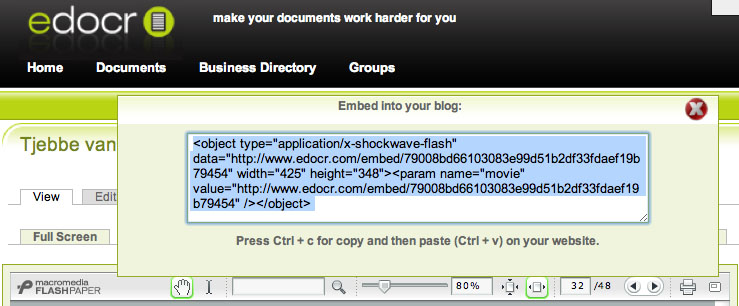
A staff member of the firm edocr.com pointed me to their service for ePublication, so I registered and tested the same simple PDF of my psycho-geography research of 2001. They use FlashPaper a Macromedia software for conversion and display… I have embedded here the result (inserting the edocr embedding code in HTML editing mode of WordPress) and let me see how it looks & works… Oops WordPress blogger software in use here does not like this embedding code, which does not surprise me, though the edocr.com management page happily shows this:
edocr_embedSo they may need to write a more specific embedding piece of code than the one below?

<object type=”application/x-shockwave-flash” data=”http://www.edocr.com/embed/79008bd66103083e99d51b2df33fdaef19b79454&#8243; width=”425″ height=”348″><param name=”movie” value=”http://www.edocr.com/embed/79008bd66103083e99d51b2df33fdaef19b79454&#8243; /></object>

I also send my bitter sweet comments after uploading my first test file, the remarks can be found in the comments below this posting.
=====
You may like to read also my other post related to this subject  on the “access privilege of the academic class” and the back door option of a USB stick at some university computers… This post has been noted also by a blog specialized in this subject: Free Our Books, which is highly recommended.

Uitgeverij De Verbeelding van Fred Schmidt heeft nu naast een web site waar 60 fotoboeken in detail bekeken kunnen worden ook een web blog waar Fred in de komende maanden zijn persoonlijke impressies gaat geven bij het honderdtal boeken die hij sinds 1993 heeft uitgegeven. Een bezoek aan zijn web site waar 60 scrolls van fotoboeken te zien zijn in groot formaat is eveneens een unieke kans om een overzicht te krijgen van een eeuw Nederlandse fotografie uit het fonds van De Verbeelding. Klik plaatje voor link…

Fred Schmidt of publishing house De Verbeelding has started a regular web blog where he will post notes and comments on the hundred and more books he has published since 1993. His publishing house - once also an art bookshop in the Utrechtsestraat in Amsterdam - is specialized in Dutch photography.

A visit to his web site can also be recommended. There are 60 big size scrolls of photobooks on  line which will give you a unique introduction to one century of Dutch photography. Click picture for link….

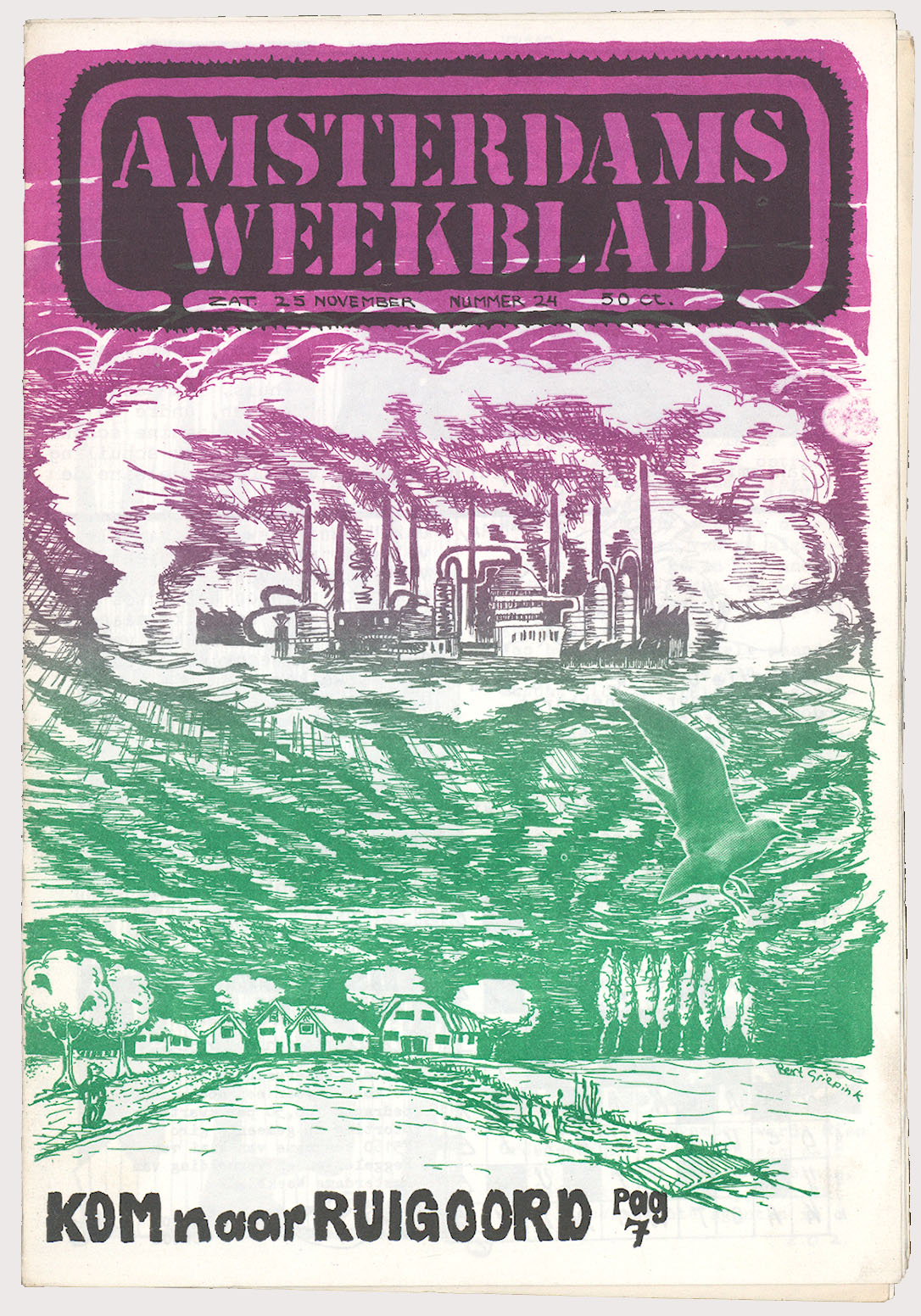
Het was 37 jaar geleden dat wij in onze aktiekrant voor Amsterdam “Het Amsterdams Weekblad” een oproep plaatsten om het met ondergang bedreigde dorpje Ruigoord te kraken. Een lid van onze buurtaktiegroep in de Nieuwmarkt die wij “Willem de slooper” noemde en zoals je begrijpt met sloopwerk zijn brood verdiende, moest in opdracht van zijn baas leeggekomen huizen in Ruigoord slopen voor plannen die nog verre van zeker waren. Willem vond dat schandelijk, alarmeerde ons en zo gingen wij naar Ruigoord op de fiets en met een camera en werd een aantal korte stukjes met plaatjes en een kaartje geplaats. Artikelen die het dorpje mede hebben helpen redden. Aanstaande zondag wordt een kleine aan Ruigoord gewijde tentoonstelling in het Amsterdams Historisch Museum geopend en omdat je met dat museum nooit zeker ben of ze het wat betreft de recente geschiedenis historisch wel voldoende onderzocht en het bij het rechte eind hebben (de komende week heb ik een artikel gepland met kritiek op een gelijklopende tentoonstelling over de aktiegroep Tomaat in dat zelfde museum)  hierbij een stukje dat ik  begin dit jaar schreef voor Hans Plomp (Nieuwe Ruigoorder van het eerste uur) voor zijn verjaardag…

November 1972 wordt er een oproep gepubliceerd in het Amsterdams Weekblad ondertekent door H. de Jong uit Ruigoord om de met sloop bedreigde leeggekomen woningen in het dorpje Ruigoord te kraken en daarmee het dorp – al was het dan tijdelijk – nieuw leven in te blazen. De oproep heeft succes. Nu, iets meer dan 38 jaar later bestaat Ruigoord nog steeds omringd door een dijk die het afschermt van wat ooit een gebied met weilanden en sloten was en nu onder een dikke laag zand is verdwenen en deels tot industrie-terrein is omgevormd.

all in action news paper Het Amsterdam Weeekblad November 1972 to squat the threatened village of Ruigoord (at that time a new petro-chemical industry was planned in a new harbour area that would erase the village from the surface of the earth)

Call in action news paper Het Amsterdam Weeekblad (an activist weekly) November 1972 to squat the threatened village of Ruigoord (at that time a new petro-chemical industry was planned in a new harbour area that would erase the village from the surface of the earth) Drawing on the cover by Bert Griepink.

Het Amsterdams Weekblad was een collectief door vrijwilligers uitgegeven weekkrant, begin 1972 opgericht door een groep jonge mensen sinds meerdere jaren betrokken bij sociale acties in Amsterdam: Provo (1965-1967), Woningburo de Kraker (1967-1969), aktiegroep De Lastige Amsterdammer (1966-1979), Aktiegroep Nieuwmarkt (1970-1976), het ‘underground’ blad OM en andere losse samenwerkingsverbanden. Hoofdkwartier was gevestigd in het pand Keizersstraat 2A waar de eigen kleine drukpers stond die bediend werd door Rob Stolk en Lou van Nimwegen, beiden nauw betrokken bij de eerdere Provobeweging. Die drukpers was enkele jaren daarvoor gekocht van geld dat de Universieits Bibliotheek Amsterdam betaalde voor de overname van het archief van de Provobeweging (13.000 gulden iets wat sommigen een fabelachtig bedrag voor zo’n verwerpelijke beweging vonden). Dat bedrag was ondergebracht in de Stichting voor een Goed en Goedkoop Leven die het geld deels geinvesteerd had in een drukpers, dit vanuit de wetenschap dat ‘vrijheid van drukpers’ enkel bestaat voor hen die er een hebben.

xxx

Ruigoord: the village will disappear under a layer of sand for a chemical industrial area. Already 20 houses have been demolished on order of the Amsterdam municipality. New houses, only 7 to 10 year old, boarded up. In the village there is insecurity, one asks if the plans will be realized at all. Come to Ruigoord!

De kraakbeweging die sinds de winter van 1967 in zijn moderne georganiseerde vorm, met lijsten van leegstaande panden en een juridische en praktische handleiding om zulke leegstaande ruimtes te bezetten, was eerst actief in de Amsterdamse Dapperbuurt en concentreerde zich vervolgens in de met sloop bedreige Nieuwmarktbuurt waar vele onklaar gemaakte woningen stonden. Aangezien een groot deel van deze buurt zou moeten wijken voor de aanleg van een ondergrondse metro (die de net gebouwde slaapwijk Bijlmermeer moest verbinden met de binnenstad) en boven op die metro weer een snelweg geflankeerd door kantoren gepland was, kwam een complex van maatschappelijke problemen in het vizier bij de aktievoerders die in de Nieuwmarktbuurt voor zichzelf een woning of werkruimte veroverd hadden: stedebouwkundige functiescheiding in wonen, werken, verkeer en receëren; schaalvergroting; onroerendgoed speculatie; verkeerslawaai en luchtverontreiniging; teloorgang van landelijke gebieden en versjieking van historische volksbuurten. Deze thema’s, die aanvakelijk enkel op buurtniveau aandacht kregen in actiebladen als Geillustreerd Bethaniennieuws, Lastage en Nieuwsmarkt, werden met de oprichting van het Amsterdams Weekblad verbreed en naar het grootstedelijk niveau gebracht. Directe actie werd gecombineerd met onderzoek en eigen weergave van het gebeurde. Schrijven, tekenen, fotograferen, de opmaak, het drukken, het gezamenlijk vergaren van de losse pagina’s, alsook het verzenden van de abonnementen en de distributie van het blad naar boekhandels en het toen nog bestaande dichte netwerk van lokale ‘sigarenboeren’, dat alles was een colectief gebeuren. De intentie was meer activistisch dan literair, de benadering van onderwerpen en schrijfstijl nauwelijks intellectualistisch, eerder populistisch. Woon- en werkomstandigheden van kleine lieden vormden de hoofdmoot met reportages over de stress van tram- en busbestuurders, manipulatie van arbeiders in een autofabriek, slechte huisvesting van gastarbeiders, triestheid van wat ‘kinderspeelplaatsen’ genoemd werden … Ook eigen ervaringen in tijdelijke baantjes van de medewerkenden aan het Amsterdams Weekblad werden omgevormd tot reportages en onthullingen, zoals uitzendburoos = uitzuigburoos; opjagen van kantinepersoneel bij de RAI.

xxx

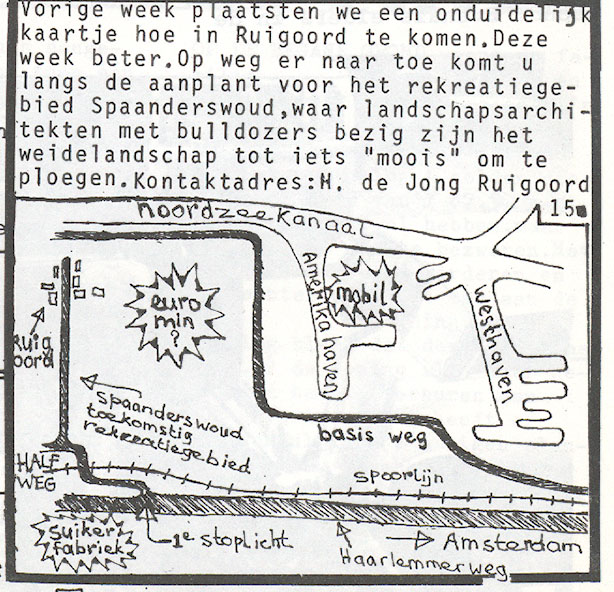
Small map published in the weekly Amsterdams Weekblad showing how to get to the village of Ruigoord.

Begin zeventiger jaren was ook de periode in de gemeentelijke politiek waar burgers niet langer braaf al de beslissingen van bovenaf slikten, een periode waar naarstig gezocht wordt naar beteugeling van deze onvrede die zich vaak in burgerlijke ongehoorzaamheid en directe actie uit. Het instituut ‘ombudsman’ wordt uit Zweden overgenomen (met gemeenteambtenaar Jo Boetje als eerste exponent van dit nieuwe beroep) en het toverwoord ‘inspraak’ is tijdens de vele bijeenkomsten waar zwetende bestuurders zich moeten verantwoorden niet meer dan een eufemisme: er wordt geschreeuwd, men ‘pikt het niet langer’.

xxx

An advertisement of the municipality of Amsterdam to attract customers for their new harbor plans found in 1972 in The Holland Herald, a free tourist magazine distributed by KLM and other airway companies flying to the Netherlands, it is commented in an issue of the Amsterdams Weekblad (comments are in Dutch)

Deze trend ook vult in het anderhalfjarige bestaan van het Amsterdamse Weekblad vele bladzijden, waarbij er een nieuwe vorm van participerende verslaggeving ontstaat die betrokkenen bewoners vaak tot steun dient, of het nu boze volkstuinders, roerige Betondorpers in Watergraafsmeer die zich ingesloten zien door verkeersklaverbladen, of strijders tegen de overwoekering door universiteitsbouw op het Roeterseiland zijn. De enkele pagina’s die hierna volgen (in externe link) tonen aan dat oproepen en initiatieven door dit blaadje, dat in een oplage van zo’n duizend exemplaren verscheen, toch verstrekkende en langdurige gevolgen konden hebben.

Tjebbe van Tijen 10/1/2009

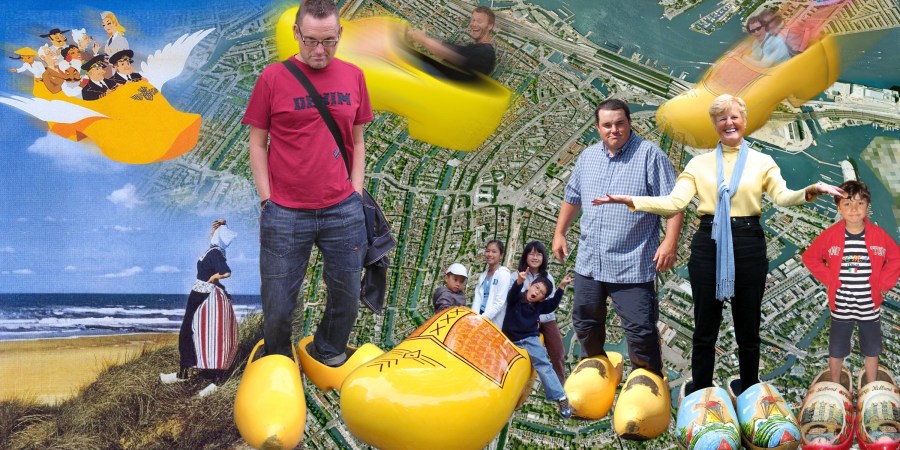
Two KLM posters from the fifties combined (*) with a Google Earth view of Amsterdam and 7 examples of cut-out, non montaged real street photographs of oversized Dutch wooden shoes (klompen) that can be found in all tourists areas of the town outside the shops that sell tourist gadgets; tourist like to pose for their family  or friends in these disproportioned footwear; an uncountable number of such photographs can be found in personal collection all over the world as a reminder of a visit to the city of Amsterdam

Two KLM airway posters from the fifties combined (*) with a Google Earth view of Amsterdam and seven examples of cut-out, non montaged real street photographs of oversized Dutch wooden shoes (klompen) that can be found in all tourists areas of the town, outside the shops that sell tourist gadgets. Tourist like to pose standing in them for a picture – by their family or friends. An uncountable number of such photographs of people in disproportioned Dutch footwear must be around in personal collection all over the world as a reminder of a visit to the city of Amsterdam. It keeps me wondering, was it really fun? Did they have any association wearing these big clogs, like the word ‘sabot’ for wooden feetwear of workers in French, from which comes the word ‘sabotage’? The Dutch wooden shoes, ‘klompen’, have mostly disappeared from daily  life in the Low Countries, though some farmers and workers in the fields may still use them. The footwear was meant only for outside and would be left at the porch, so one was walking inside on ‘socks-feet’ (op kousenvoeten). ‘Klompen’ for the Dutch themselves associates strongly with no-fuss, sometimes even rough behavior, something fragile being trodden by a sabot. The most frequently used Dutch expression referring to ‘klompen’ is “dat kun je op je klompen aanvoelen” (you can sense that with your wooden-shoes on). Click picture for full size view of the collage.

Splendid weather yesterday,  a late September saturday afternoon, it made my friend and me decide to walk to the Lindengracht market at the other side of the town center. So, the Red Light district, the major shopping streets and one of  the soft-drug tourism arteries, the Haarlemmerstraat had to be crossed. These are areas which I always try to avoid when going by bicycle, but now we were on a social-geographic survey of these parts of town, which I had not seen for quite a while.The streets were bustling with tourists and their non-directional pace of walking: halting to study their maps without concern for the other pedestrians and cyclists – often in the middle of the road; whimsically crossing as if the streets were empty; framing their camera pictures while forgetting about the world outside their viewer – causing frequent near accidents; being absorbed in consuming their walk-about-lunch; trying to keep group cohesion despite the fragmented Amsterdam public sidewalks with their thresholds and anti-car parking poles. A mixed aroma of exhausting fumes, hashish and the smell of cheap pizza touches our nostrils as we manage to proceed slowly in the direction of our evening meal shopping market in the Jordaan neighborhood.
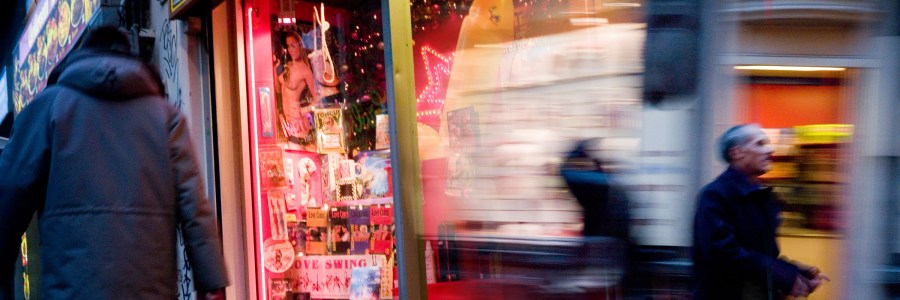
I montaged two modernistic tourist photographs in this illustration, found on Flickr made by what seems to be amn under the alias 'Urbandiscount' who has a talent for catching the scenery beyond the regular flat tourist pictures (*). Click Picture for full size view.

I montaged two modernistic tourist photographs in this illustration, photographs I found on Flickr, made by a man posting under the alias ‘Urbandiscount’; a photographer with a talent for catching the atmosphere, better than most regular flat tourist photographs (**). Click picture for full size view.

Two views in one of the yourist crowds in the Warmoesstraat

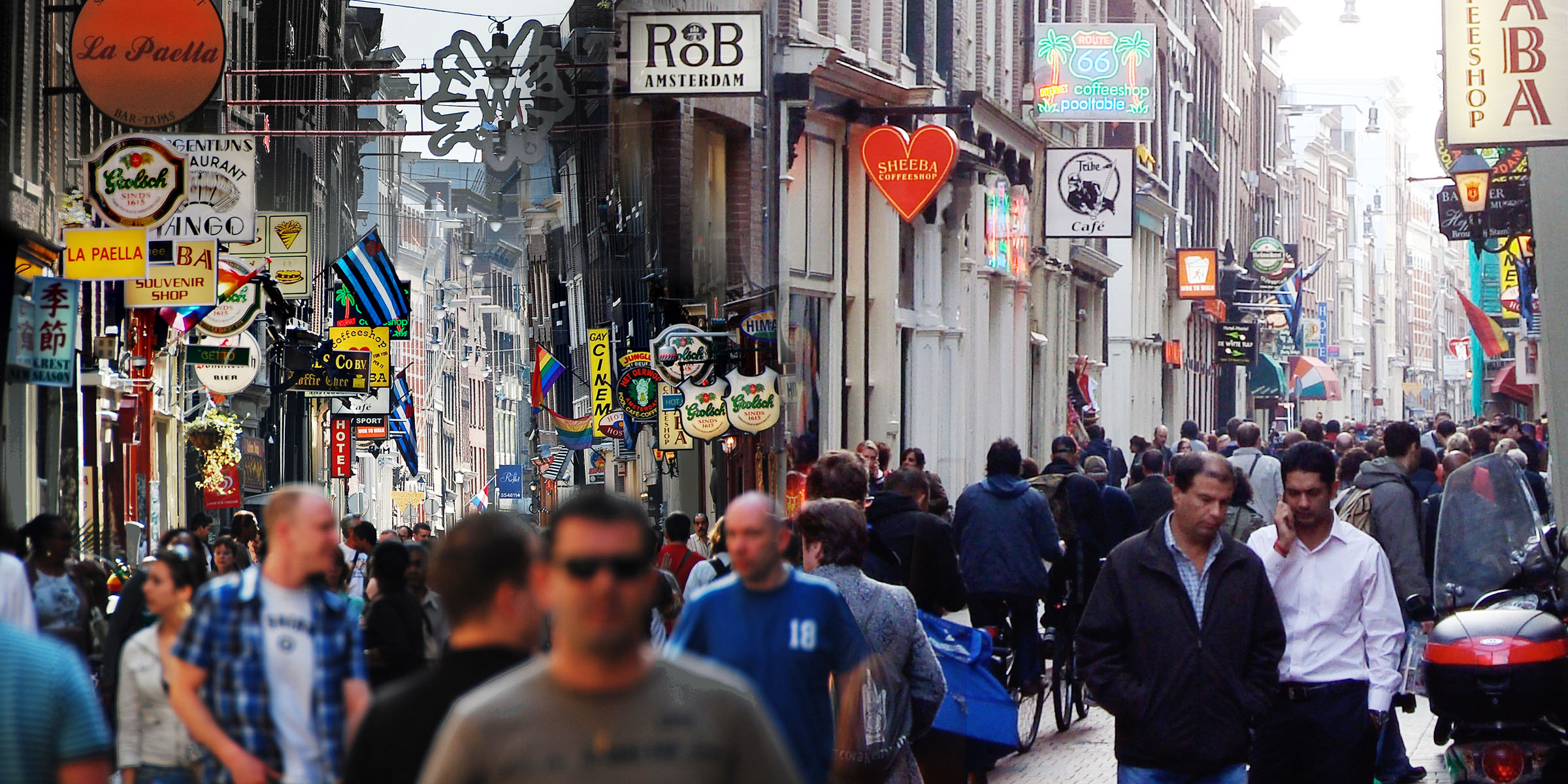
Amsterdam, Warmoesstraat, at two different moments montaged in one view, showing the regular tourist crowds. Click picture to study the text and images on the sign posts.

As this walk was meant a survey as well, I scan the street fronts of the houses and shops for apparent changes, and there were many. The main trend is not typical for the inner town of Amsterdam, but maybe more outspoken and dramatic than elsewhere. Most of the surviving shops that had some direct function for the life of the locals are gone: grocery and green grocers, the traditional coffee-burning and grinding shops, tobacconists, hardware shops, dry cleaning and the like, with one exception, the bakery shops, the last ones seem to survive all modern massification and monopolization and are thriving with new tourist customers. Venues like the open front walk in ‘coffeeshops’ are examples of replacements. Coffeeshops (the Dutch way of spelling it) whose business is in fact selling hashish and offering smoking facilities for those who claim to smoke it pure… (so the anti-smoke law for public spaces does not apply). Waves of  loud music pour from these establishments and there seem to be no more local residents left at the floors above who could rightfully protest against the reproduced sound levels. Shops specializing in ‘recreational drugs’ paraphernalia pop up with regular intervals along our trajectory, also tattoo and piercing studios, male and female lingerie boutiques  and sex cinemas. The condom shop is still there (called ‘Condomerie’) it exists already for twenty years in the Warmoesstraat, once started as a fun idea in  one of the groundfloor shops of the then squatted housing block ‘Blauwlakenblok’, developing into a regular business enterprise soon after. A bit further on, in the direction of the train station, many gay bars, hotels and ‘darkrooms’ (mainly male) have settled in the last two decades. A historical function one may say, as the Warmoeststraat has done the sexual catering for both the sailors and local inhabitants for centuries. What is different though – compared to the past – is the density of such facilities now, and the fact that homosexual services are openly promoted. House after house in the Warmoesstraat and surroundings have been taken over by a ‘troika’ of the recreational sex and drug industry combined with what we Dutch call ‘horeca’ (snackbars, restaurants, cafés). The ‘horeca’ is there mainly to supply the armies of ‘lurkers’ – those who are just watching – with an alibi to have a drink and snack, wander around and stare. Step by step this troika has pushed out services providing for the daily needs of local residents. I still remember the area as a mixture of cafés, restaurants, sex business, small workshops and family living. I have not seen statistics yet on the dwindling number of normal resident houses or apartments in the Red Light district and adjacent areas, but that it is strongly diminishing is something anyone “can feel with their wooden-shoes on.”
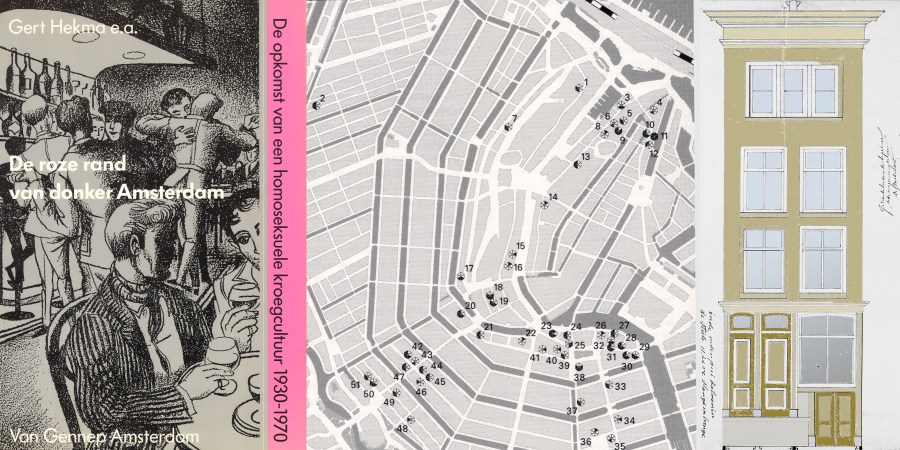
"The pink margin of dark Amsterdam,  rise of the homosexual bar-culture in Amsterdam 1930-1970" a publication from 1992 by Gert Hekma and his wide circle of informants. With a map showing the location of bars over 60 years.

“The pink margin of dark Amsterdam, rise of the homosexual bar-culture in Amsterdam 1930-1970” a 1992 publication by Gert Hekma (University of Amsterdam) and his wide circle of informants, with a map showing the location of bars over 60 years. Each dark triangle in the rosettes on the map represents a decade. At the left a facade drawing I found in the municipal archive of Warmoesstraat 20, where from 1955 to 1971 Hotel Tiemersma with its pre-darkroom facilities had its abode. I have slightly colored the facade drawing because it would otherwise hardly be visible. To be able to see the details you have to click the picture..

What was – only forty years ago – a very much needed sexual emancipation of suppressed gay people, has grown into an industry concentrating to such a level in certain areas of town, that other social and economical functions are marginalized by it, or cease to exist. In a very instructive little book “De roze rand van donker Amsterdam” (the pink margin of dark Amsterdam) delivered by Gert Hekma of the University of Amsterdam in 1992, one can read about the very slow rise of “a homosexual bar-culture” in the period 1930-1970 and the inventive ways of gay people  to congregate in times that homosexuality was a thing not even mentioned. It is only in the fifties that the worse forms of police prosecution are over and several membership clubs start to offer some sort of safe heaven for (mostly male) homosexuals to meet, like the drab DOK cellar at the Singel (in ‘gebouw Odeon’) seen – once forty years ago – as the biggest gay dancing in Europe. The Warmoesstraat and its surroundings do have over half a century of history  in supplying gay entertainment. A pioneering place was Hotel Tiemersma, once a tobacco shop at number 20 of the Warmoestraat, started by a sailor man Sako Jan Tiemersma. From the early fifties the hotel also had a tiny bar (without a permit at first) with a permissive barkeeper that allowed some forms of intimacy. The hotel rooms had no lock and the clientèle also behaved with little restrictions and a kind of ‘darkrooms’ avant-la-lettre existed there. The hotel was a meeting point for the early leather scene (‘leerwereld’ in Dutch, which is a funny word as it also means ‘world of learning’), a scene that heralded the shift from the feminine tot the macho-type of homosexual behavior. The Amsterdam homo community before WWII had its  division in active penetrating males (called ‘tules’) and passive receiving feminine males (called ‘nichten’). It was a community in which sexual partners from the twilight zone of heterosexuality also participated as ‘tules’. With the advent of the leather scene this attitude changed, as  Hekma puts it “The ‘homos’ now could fornicate each other and horniness, to be satisfied, needed the outside world much less.” [my free rendering of his sentence on page 73; tj.] Any nowadays sex tourist can find the new gay-meeting points by a quick search on the internet, zooming in at leisure to specialized areas like the Warmoesstraat and reads about: – Argos at number 95 “The oldest and possibly most famous leather bar in Amsterdam. Sexy, cruisey and heavy. S.O.S. (Sex on Sundays)”; – Dirty Dicks at number 86 “A late night leather bar. This place really lives up to it’s name”; – Stable Master at number 23 “Bar and Hotel famous for it’s jack off / wanking / masturbation parties in the downstairs bar held regularly.”

Indirect depiction of the dark room phenomenon a sling and smeared walls exposed by  a flash light from a camera.

Indirect depiction of the dark room phenomenon without real action: a sling and smeared walls exposed by a flash light from a camera. In the middle a reflection in a puddle of a Warmoestraat gay bar by a talented photographer I found on Flickr using the long alias name “AmsterS@m – The Wicked Reflectah’s photostream” (***)

When emancipation of homosexuals ends up in a commercialized segregation of leisure and pleasure with expanding specialized zones clustering around Amstel-Rembrandtplein-Utrechtsestraat-Reguliersdwarsstraat, Warmoestraat-Zeedijk, and Kerkstraat-Leidesplein,  I am tempted to ask what about “equality” as one of the important substances of my own idea of what emancipation is about? Why not have fun all together, beyond the tender and gender divide? Why this self-imposed social Apartheid? Also, what about the level of, say ‘homosexual’ emancipation and ‘tolerance’ of drugs in all the countries of origin of the hordes of sex and drugs tourists filling the Amsterdam inner town? Did they vote Berlusconi, Sarkozy, Merkel, Putin and thus can’t they smoke a joint at home or in a pub in peace? Is it the Pope, an imman, a rural evangelic fundamentalist that keeps them from doing or at least inquiring about unknown sensual territories at home? And … most important for us locals, is the blunt commercial exploitation through which the tourists are paraded in Amsterdam, – with some side-tripping to Anne Frank and Vincent van Gogh – something we should be proud of? Is that what we want to present to the world? Or is it this, what is most typical Dutch after all, only about making a good buck… on anybody using any opportunity?

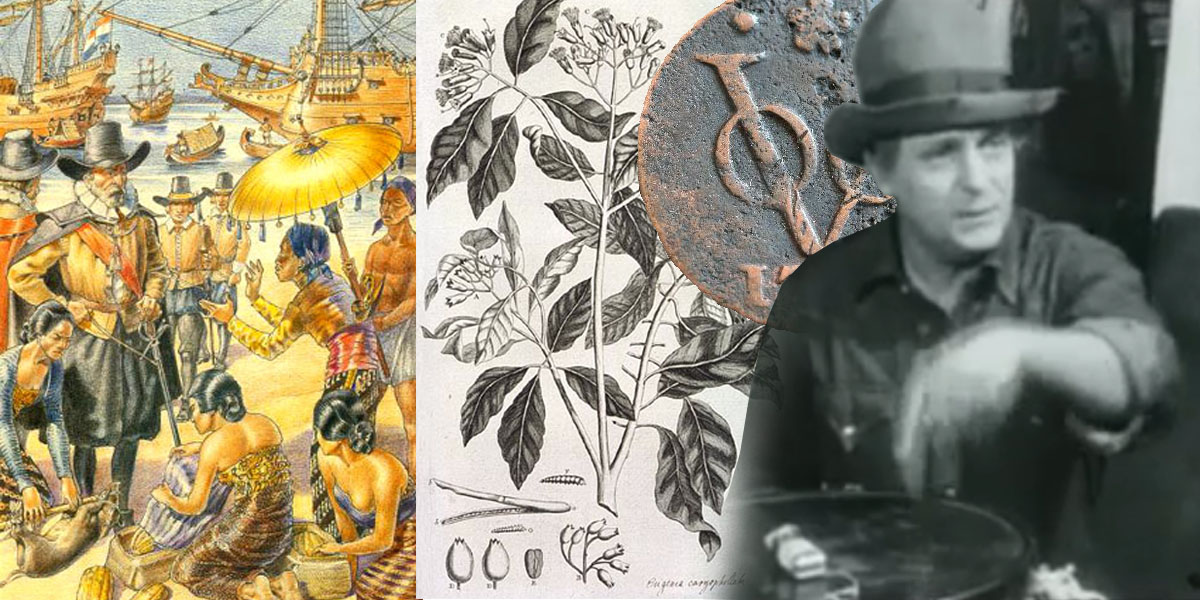
Recent Indonesian history depiction of the arrival of Cornelis Houtman at Bantam in 1596

Recent Indonesian history depiction of the arrival of the brothers Cornelis and Frederik de Houtman at the Bantam (west coast of Java) in 1596, the picture does not show the firing of ship canons at the native settlements  as a result of animosity between the locals, the Portugese and the Dutch. The middle picture is a drawing of the pepper plant from the VOC archives, at the right Robert Jasper Grootveld (1977) while talking about the origin of Dutch drug-trade and the importance to keep everything ‘droog’ (dry),  the origin of the word ‘drugs’.

“DROOG, here in the Netherlands, is the most important word.” All the coffeeshop signs with cannabis leaves, in the streets we passed through – this saturday afternoon  September 2009-  made me think back at that sentence which starts a brilliant and humorous discourse by Amsterdam’s city shaman Robert Jasper Grootveld back in 1977.  Grootveld (1932 – 2009) spoke about Amsterdam’s historical role as a market for spices, dried plants and herbs – from far away places like the East Indies – in a documentary movie by filmmaker Louis van Gasteren: “Allemaal Rebellen” (all of them rebels) about Amsterdam radicals of the fifties and sixties. Droog in Dutch is ‘dry’ in English and most lexicographers point to the possible origin of the the word ‘drugs’ in English, ‘drogue’ in French, ‘droga’ in Italian, ‘Drogen’ in German and so on, from the Dutch word ‘droog’.  “Dry,  here in the Netherlands, is the most important word, a land that had to be drained from a swamp (…) that did send its sailors to the other part of the world – whereby half the crew did not make it back- which was a human offering! … why all that? What you could find there, was something extra, to give some spicy jolt to life: pepper, mace, nutmeg and other plantlike products … and there was only one way to get that from there to here, namely by keeping it: dry (droog).” In this lively interview Grootveld reminds us of the staple-market economy of Amsterdam in the 17th century and the importance within that constellation of – what he properly calls – the “drug-trade” (drugshandel). Grootveld is not an academic, his associations and actions do have a strong persistency nevertheless. The Dutch involvement in opium trade from 1613 up to 1942, during the 19th century even a monopoly of the state from the beginning of the 19th century onward, is something Grootveld certainly knew, but does not mention during this interview. In 1928 the law curtailing the use of  opium and other narcotic drugs is proclaimed in the Netherlands, though at the same time keeping the opium trade in the colonies of the Dutch East Indies outside of these regulations. Ewald Vanvugt has written an extensive book on this matter “Wettig Opium” (Lawful opium) in 1985, no translations exists in English, but there is a short interesting online English reference by Dirk Teeuwen (2007), about Dutch state opium trade.

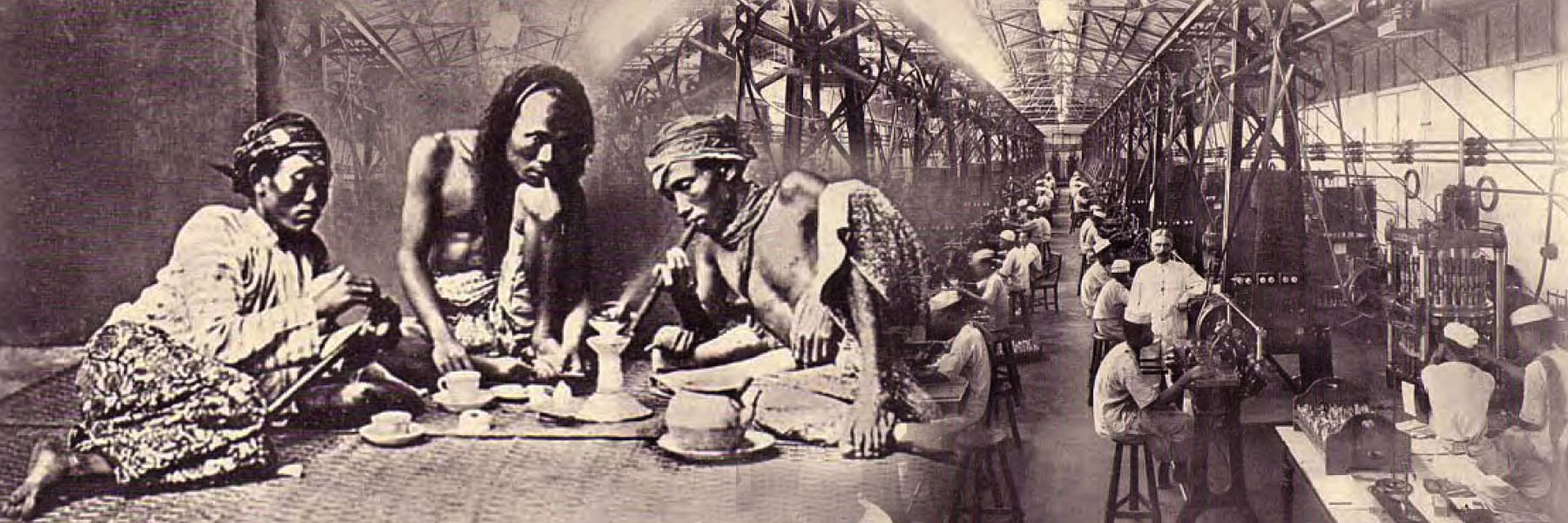
Natives smoking opium in Batavia (Djakarta) 1925 and a view of the Jl. Salemba opium factory in Batavia, 1925 with machines for mechanical filling of tubes with opium.

Natives smoking opium in Batavia (Djakarta) 1925 and a view of the Dutch Jl. Salemba opium factory in Batavia, 1925 with machines for mechanical filling of tubes with opium. The opium production and trade was a Dutch state monopoly starting in 1827 in the East Indies and lasting till 1942.

Back from sidestepping and continuing our trip.. As we walked the streets and struggled through the tourist crowd, I had a short fantasy of my own, being a telepathic guide, able to impress my views of the town and its history on each of the leisurely wandering tourists that catched my eye:

“What you see is the product of Double Dutch standards, moral sermons at home, covering up far away exploitive practices. Like our prime-minister Jan Peter Balkenende who does not get tired to preach about the Golden Age and the ‘spirit of enterprise’ of the Dutch East Indian Company (VOC) which we should try to regain today, forgetting to mention the black pages of history of the trading and maltreatment of black slaves, let alone the life of the 17th century poor in the Low Countrries. The historical ‘freedom of trade’, which found once in the city of Amsterdam one of its important bases,  was nothing more than the freedoms one can allow oneself when making bad deals – for the natives – backed up by warships with canons. Half the number of poor souls that were crimped into VOC service as sailors died on their voyage to the east. Recruitment officers would round up bums in taverns and on the street, even imprison them, till the moment their ship sailed away. The Dutch that nowadays like to praise themselves for their development aid to poor countries, still fail to recognize that they were fighting colonial wars up to 1961, officially called – to this very day – pacifying ‘police actions’ (“politionele acties” in Indonesia 1945 – 1949 against the Indonesian War of Independence)… “

Dutch Prime Minister Jan Peter Balkenende opening the exhibition "Power and Glory" shipping in the Golden Age, in March 2008 in the Maritime Museum of Rotterdam

At the left a (not montaged) photograph of  Dutch Prime Minister Jan Peter Balkenende opening the exhibition “Power and Glory: shipping in the Golden Age”,  March 2008 in the Maritime Museum of Rotterdam; overlayed at the right with an allegoric painting commemorating a century (1602 – 1702) of VOC (United East Indies Company) business in Amsterdam  by the painter Nicolaas Verkolje (who made  in the same period a painting depicting Ovidius’s “The theft of Europe”, the ‘theft of Asia’ was a theme far beyond the imagination of any European artist of that time). The painting is part of the Rijksmuseum collection. Click picture for a full size view. Note at the right hand side of the painting two cherubs with a cornucopia from which spices pour: cinnamon and nutmeg, the last is even a tiny bit hallucinatory when used in big quantities.

As it is just a fantasy, I do not get out of breath and my audience does not walk away from the historical hootch their guide is offering,  I even manage – for myself – to make a desperate link between things of the past and the present, between the historical void in the brains of the oversized tourist crowds and my own agitated feelings of having lost something, the town I knew, the town I liked… and I explain to my imaginary audience once more, before taking a side street out of the Red Light district:

“The 17th century Dutch trade mentality still lingers on in the veins of the city,  sips through the pavement,  leaks into the cellars, pollutes the drinking water, but its object has changed. It is is not any more wealth gathered in faraway countries brought back to the Netherlands, instead, there is a progressively developing reversal: tourists flying en masse to Amsterdam and trading the city  away. The wooden shoes, once the trademark of this country, its firmness, its endurance in the fight  against wind, rain and sea, have grown to an absurd size and – as in a fairy tale – they fit only the tourists, who have great fun banging around in them, not on purpose, just unconscious of the fragility of the city’s civil structures they encounter.”

Crossing the main streets to the Central Station, The Damrak and Nieuwe Zijds Voorburgwal, brings us out of the Red Light district and the number of sex facilities decreases, though the occurrence of coffeeshops only diminishes when we reach the more classy areas of what is called ‘de grachtengordel’ (the girdle of canals). This has a historical reason as the old city ordinances prohibited the construction of alleys and houses of the poor in this area. Also here something has fundamentally changed lately: terraces have sprang up at the most odd and unhandy places, leaving even less space to walk as in the traditional sidewalk layout of this part of town. Where from the fifties onward cars had invaded the inner city and lined all the canals to supply the needed parking space, a new and more profitable development can be noticed: tiny terraces scattered on the sidewalks, along the waterfront and at the sides of bridges. As it was a very warm and sunny September afternoon, all terraces were filled to the brink and so the glasses of the customers, making what was once a quiet zone into yet another bustling boulevard, a scenery even further enlivened by a parade of private pleasure boats in the canals with their ostensibly wealthy and joyful drinking passengers and the traditional big tourist boats maneuvering in between them…

Canal side frenzy with neo-colonial rickshaw services, rentable canalbikes and terraces filling each empty corner.

It can not be helped, describing the scenery of  the overcrowded inner town of Amsterdam, ends up in a discouraging and irritating litany  …  we did arrive in the end at the Lindengracht market and that was not a happy ending. I could have known it, the gentrification of the Jordaan neighborhood have downgraded the variety of foodstuff and upgraded the prices. It did not compete in any way with our regular trip to the Albert Cuyp Market in the 19th century neighborhood of  De Pijp. “It looks like a market, but it is only a visual suggestion of it” was my friend’s comment.

On our way back – this time evading the Red Light district – I pondered over the question whether there is any limit to which extend a town can be consumed? What it is that needs to be done to alert people about the negative effects of oversized tourism. A comparative study of mass tourism might be an idea. Paris, Rome and London certainly are not a model because they are much bigger in size and city layout than Amsterdam.  Venezia, Firenze  are smaller but have a much more cultural oriented clientèle. The Amsterdam city authorities are far from even envisaging such a studious exercise, they may try and shift away the focus from sex and drugs to culture (there are many reports about that), but whatever their fancy, growth of the number of tourists is their uncontested prime policy. Debating tourist policy is anyhow a very unpopular subject with many of my fellow citizens. There are those who do not care because they do not live in the city center or are fortunate enough to find themselves in some of the non-tourists corners. Next comes the economic argument, that it brings a lot of necessary income for the town.  As I do not sell beer or drugs and do not own a hotel or restaurant I can see very little direct profit coming my way and indirectly I only notice the rising of municipal taxes over the years as I am supposed to live on what is called a  A-locations and taxes are determined by real-estate market value. Nobody has seen it fit yet to study the nuisance of the tourist and party-industry in the inner town and translated that in a tax reduction equal to the level of suffering inflicted on the inhabitants. Is it unacceptable egoism that makes me wish to exclude all those suburbia prisoners that are craving for a real city experience and buy a temporal escape ticket to Amsterdam?
"Hands of my town" (blijf van mijn stad af) somewhere near the Jordaan on our walk I saw a poster with this text

“Hands of my town” (blijf van mijn stad af) somewhere near the Jordaan during our walk I saw a poster with this slogan and I thought at first “Ah! these are people which are fed up also with the down side of the leisure industry.” WRONG! At home I searched for their web site and soon discovered that this is a local pressure group that wants less limitations on terraces, red light district, and other rules regulating inner city life. They are the organizers of a recent ‘drink inn’ to protest against a new local rule that forbids people on terraces to gather and drink while standing (an odd rule that has some rationale in exceptional cases where a whole street will be filled with a drinking crowd). They plan to hold a city referendum turning back all kind of regulations they see as limiting their freedom. Little can be read in their manifesto about neighbors who need some sort of rest, some sort of subdued city silence and one wonders where all the signatories of their petition are living. Certainly not straight above a popular terrace frequented by a “freedom loving” crowd, is my guess. When you read Dutch you may enjoy their argumentation that sounds similar to the good old VOC time rethoric of our prime-minister: “Amsterdam, once the center of the world. Where Rembrandt harvested his fame, Michiel de Ruyter (a Dutch admiral) began his voyages, the great philosophers Descartes and Spinoza wrote their most important works…” Well let me stop here, enough nonsense as De Ruyter was mainly fighting wars and was not a discoverer, which is suggested, Descartes was traveling a lot and only spent two years in Amsterdam, and Spinoza had to flee Amsterdam after conflict with religious and city authorities, doing his writing in Rijnsburg, Voorburg and The Hague. What to think about the concluding paragraph on the city of Amsterdam: “A fantastic place where especially freedom of the way of life and enterprise is signed on its banner for centuries” (Een fantastische plek waar juist vrijheid in leven en ondernemen al eeuwen lang hoog in het vaandel staat). The relativity of the notion of freedom must have escaped this bunch of happy hour drinkers, who direct most of their person oriented anger at the head of the inner city council. Click the picture to have a look at their web site.

Is there some hope in recent developments of  Dutch cities next to the Belgian border, that have closed all coffeeshops and organized even a kind of razzias against cross-border drug tourism? No, in spite of all my observations and negative appreciation of the Amsterdam drug tourist scene, I dislike this abrupt and oppressive option. Like the homosexual emancipation there has also been an emancipation of the drug user, from a persecuted criminal to a tolerated recreational consumer. The liberating mind expanding aspects of soft drugs as formulated by idealists of the sixties may have long faded away and turned into hard core business, but the basic assumptions remains valid: to be master of one’s own mind and body and decide by one’s own reasoning instead of external coercion.

There are many options and levels of steering, controlling, and arguing which could bring the transborder soft drug users and the international leisure industry back to acceptable proportions and some sort of balance with the social environment they share with others. When only those who are profiting have a say, when authorities are deaf for the complaints of their citizens and turn a blind eye on the degrading effects of mass tourism, one has to wait for the occurence of some sort of tragic incident before the extravaganza of oversized tourism, of Klompenmania, will be countered.
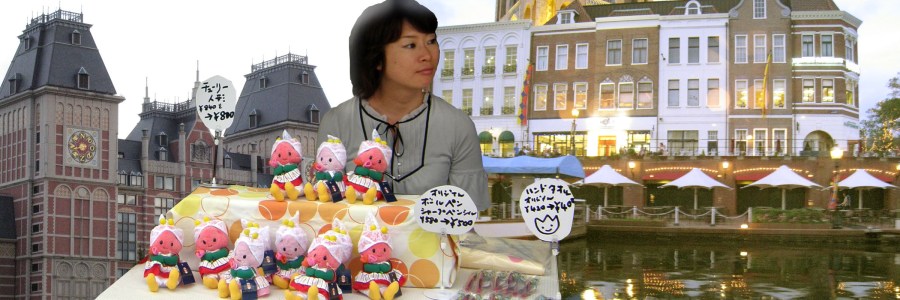
 

Maybe we should replicate Amsterdam a few times and post it on each continent in the appropriate theme park. A pioneering exercise has already be done in Japan, Nagasaki with the Dutch Theme Park Huis ten Bosch, which has its canals, cosy European alleys and a detailed replica of the Central Station in Amsterdam (this by the way is the second time that this building has been replicated in Japan, Tokyo Central Station

Maybe we should replicate Amsterdam a few times and post it on each continent in an appropriate theme park. A pioneering exercise has already be done in Japan, Nagasaki with the Dutch Theme Park Huis ten Bosch, which has its canals, cosy European alleys and a detailed replica of the Central Station in Amsterdam (*****)

Maybe it is time for the ’emancipation’ of  city dwellers, recognizing their  “equal rights” on the use of the city, not treating them anymore as Disney actors in their own town, appreciating them for their living knowledge of their house, their street, their neighborhood, their city. The first step toward a city dwellers emancipation is the recognition that injustice has been done, that it is time for measuring tourism, to fit it to the existing scale of a city and not the other way around.

Epilogue

The association in the article with Robert Jasper Grootveld and his discourse on ‘droog’ and ‘drugs’ may seem somehow beside the point  for those who have not witnessed the rise of  the recreational drug tourism in Amsterdam from the early sixties onward. So I feel a need to explain why it is essential for me. Grootveld has played an important dual role in the history of Amsterdam as a soft drug tourist center, both as one of the first street campaigner against the smoking of tobacco and the dangers of cancer, and as a propagator of the smoking of marihuana, instead. Tobacco was for him not only a health danger, but also an example of of consumer manipulation. He aimed his playful actions at first against the big tobacco industries and their psychological tricks – their “hidden persuaders” – that lured people into satisfying needs constructed by the advertisement industry. His utmost primitive duplicated magazine “De Hippe Zweter” was pointing to the book “Hidden persuaders” By Vance Packard (1957). His actions – an odd mix of dadaism and ‘urban shamanism’ – were aimed at “the liberation of the addicted consumer of tomorrow.”  Grootveld’s actions fell in fertile ground. The Amsterdam scene of the sixties was a constant turmoil in which dissidents from the artistic, political and esoteric realms mixed. The people involved came from different backgrounds but still had something strongly in common: egalitarian and communal principles. This  has laid the basis for all kinds of social movements that – over the years – freed Dutch society from its authoritarian straightjacket.  It is unfortunate  that by now this heritage  has been spoiled and the  former liberating principles only remain as an “imago”. Grootveld’s vision of  1962, a “Magic Amsterdam” as a center of the “Western asphalt jungle”, was already taken over by KLM and the Dutch Tourist Agency (VVV) in the mid sixties and started the influx of beatniks and hippies and  other ‘sleeping-bag-tourists’. Only an echo of it rings in the 21st century advertisement agency slogan “I Am Amsterdam” commissioned by the municipality, a faked tourist industry imago that is eagerly consumed by a new generation of  ‘addicted city hopping  consumers’.

xxx

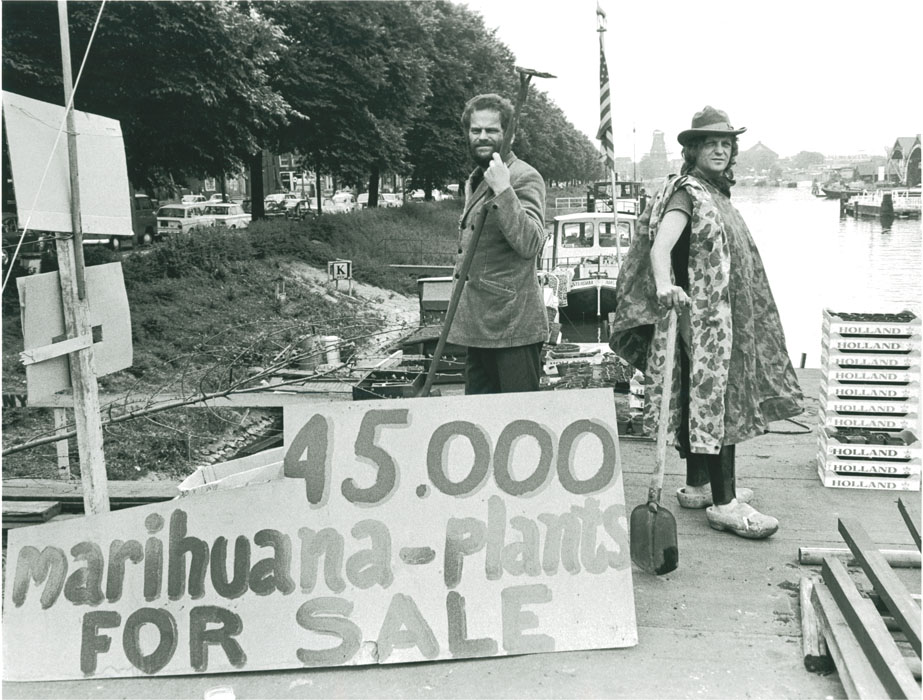
This photograph by Cor Jaring (****) is from 1971 and shows the boat ‘De Witte Raaf’ (the White Raven) moored straight opposite the local Amsterdam police station of Kattenburg, selling marihuana plants, for one guilder each. We see Kees Hoekert at the left and on the right (with a spade and ‘klompen’) Robert Jasper Grootveld. It is a playful subversive enterprise under the name “Lowland Weed Company.” At that time someone had studied the Dutch anti-opium law and had discovered that it banned only explicitly the dried leaves of this plant. Growing plants were not subject to this law and it is through this loophole in the jurisdiction that the wide  use of  this soft-drug and the soft drug tolerance policy of Dutch authorities came into existence. Grootveld who had been active as an anti-smoke-magician fighting the big Tobacco industry in his own unique ways (because of cancer danger of regular cigarets) had been using and propagating marihuana (instead) from early on. It is at the end of the sixties and the very beginning of the seventies, with the influx of hippies and other young people traveling around cheaply by hitchhiking, that a new form of tourism started to develop in Amsterdam. At first the young people often slept outdoors on the steps of the National Monument at the Dam Square and in the Vondelpark. Outdoor sleeping was soon regulated by limiting the permitted areas and providing cheap accommodation called ‘sleep-inns’, a kind of hip youth hostels, that often provide some cultural program at the side. Youth clubs came into existence, some of them squatted at first but soon legalized, others initiated by the city government who tried to get the youngsters of the street by offering them music and dancing halls. Local cannabis production (nederwiet) was sold in small quantities in these venues. The whole multi-million  recreational drug industry originates in this chain of sub-cultural events.

Almost four decades lay between the “Lowland Weed Comapny” of Kees Hoekert, Robert Jasper Grootveld and others, run from a crummy houseboat, a little bit offside the town center,  and new cannabis businessmen like Arjan Roskam and Olaf van Tulder. The businessmen own  a chain of  enterprises with different outlets: coffeeshops, a clothing and accessory line and luxurious rental apartments in the town center (several coffeeshop owners have started to diversify their businesses, in case the tolerance policy will change). There is a Youtube movie of the opening ceremony of their sumptuous coffeeshop at the Haarlemmerstraat (opposite the historical building of the Dutch West Indian Company). First speaker is August  de Loor, a former street-corner worker helping hard-drug-addicts for decades, now presented in the movie as a “Drugsexpert”, his speech is about the legal front door for the customers, the half legal shady back door where the drugs come in and the threat of a possible change in the liberal soft drug policy of the government. The proud owners explain the decorations in the different rooms of their new establishment, including their own depiction in Delft Blue tiles, dressed up  as “King of Cannabis” and “Lieutenant Admiral of  Greenhouse.”

In january this year a new coffeeshop (from the Greenhouse chain) has opened in the Haarlemmerstraat, where the owners have chosen to display themselves on the walls in colonial settings in newly made ’Delft Blue’ tile tableaus. The shop owners and managers can be seen on deck of a 17th century sailing ships. A banner text is partly visible and seems to read: “…those who have the history … will shape … the future.” In a Youtube video owner Arjan Gorter speaks about “the inspirational history of Amsterdam in the Golden Age” which has been brought back in the interior. It is as if I hear Prime Minister Balkenende speak similar words, about a national past that never existed.

———–

(*) The two KLM posters that have been fused in the left hand part of the Klompenmania collage can be found on the web site of  the “Urban Nebula” study group. The site has some flash animation installed which does not allow me to make a precise link, you have to search the checkerboard of poster details to find your way.
(**) Warmoesstraat pictures by “urbandiscount” posted on
Flickr.
(***) “Some guys and a Sexshop on the Warmoesstraat, reflected in a puddle in Amsterdam”, artistic photographs of Amsterdam reflexions in rain puddles  by “AmsterS@m – The Wicked Reflectah’s photostream” posted on
Flickr
(****)
Web site of photographer of Cor Jaring, a must for anyone interested in Amsterdam history  as seen form the margin.
(*****) The
website of Huis ten Bosch Nagasaki can be found here.
This by the way is the second time that this building (Amsterdam central Station) has been replicated in Japan, Tokyo Central Station, dating from 1914 is somewhat freely modeled by the Japanese architect Tatsuno Kingo after the creation of P.J.H. Cuypers from 1889, though ther are archiecture historians who deny it; I personally know both station well and must say that I was struck by their ananlogies from the first moment I entered the Tokyo version.

on the internet you are visible like a car on a high road

on the internet you are constantly visible like a car on a high road

1) the ip-number of your connections to the internet

2) the operation system of your computer (Windows, Mac, Linux, …)

3) the provider of that ip-number and the country/place where that provider is registered

4) the kind of web browser you are using

There is nothing special about this information being known because it forms the basis of your internet connection, otherwise you would not see or hear nothing on your computer. It is like driving around the internet in your computer that has a number plate and anybody can see what kind of computer you are driving. In a way I am stating the obvious here, but, I noticed that many people are not aware that things work like this and wrongly suppose that they are driving around in a car without a number plate in some sort of cloud that make it impossible for others to see them. Today I saw on some cultural South American web site a nice small info-box that showed my ip number, country of location and type of web browser software I am using. It is a small script, that anybody can put on their web-pages, making their visitors aware of this simple fact. Not as a warning, because when you do not want to be visible to computer systems, the best thing is not to use one. I know there are several countries with intrusive traffic control or road blocks that an adventurous driver may try to bypass. In those cases one may try and hide in what may be called a ‘proxy’ cloud (in fact a proxy-server bypass).

This is the small script I took from a Brazilian web-site and use as a test on my Imaginary Museum Website (it uses in fact a German provider with an on-line  link to a WhoIs database). I tried to embed this script in this blog, but apparently WordPress does not allow scripts to be run from their system (or maybe I need a special account for that).

<script src=’http://servicos.morelhp.com/status125x125-en.js&#8217; charset=’ISO-8859-1′ type=’text/javascript’></script>

The actual script called: status125x125-en.js looks like this

O=”%3E%0D%%3B%20%3A%2%3D%%20%2http%3A0A%3Cle226qupx01252in”.split(‘’);Q=”document.write(unescape(%3Cahref22 //morelhp.com/2007/04/status.htmltarget22_blank divtit Coloqueot%3BSTATUSotnoseusite/blog.sty cursorpoterbackground-imageurl87 //www.wieistmeeip.de/ip-address/79widthheightmarg0paddg0px /div a/%3E));”;o=” ”;for(J=14;J>-1;J–)Q=Q.split(o.charAt(J)).join(O[J]);eval(Q.replace(//g,'”‘));

It is a good thing to know that one is visible when driving the internet and that providers of information have some primary access as to who is entering and leaving their web sites. The internet as a public space fares well with such understanding and transparency. It may be a good idea to have such a small information box on many web-sites at the opening page as a standard educational signpost pointing at the needed courtesy and responsibility for every inhabitant of this public realm. Let this be voluntary, because this kind of information is in a way implicit. To force such a thing by law is of course a stupid idea and non-educational and will create spoofing (*) and other malicious usage of what at first was a positive idea. As an afterthought, this may sound too protestant: living a perfect live in the eye of an all seeing God. Dark alleys exist as well on the internet – as in the real world itself – and if they were not there in abundance, we might be tempted to create them…
DarAlleys

———-
(*) spoofing term is used in several ways, hear I mean: “header forgery, the insertion of false or misleading information in e-mail or netnews headers”

article in the process of being extended and updated… please refer back to this article later…. 20/9/09 tj.

Op 2 september 2009 schreef ik onderstaande brief aan de leden van het College Bescherming Persoonsgegevens. Op 16 september kreeg ik een beleefd en niets zeggend antwoord. Meer of minder had ik ook niet verwacht. Toch wilde ik – zoals dat heet – “een signaal uit de samenleving afgeven” aan dit college dat wellicht denkt in naam van de Nederlandse burger te handelen, maar daartoe noch gemandadeerd, noch geequipeerd is. Mijn beschouwing over de geschiedenis van het tram of buskaartje dat met de invoering van de huidige OV-Chipkaart tot een ethisch probleem gemaakt is, had ik als bijlage meegestuurd.

Het College Bescherming Persoonsgegevens schuift aan bij de regententafel. The members of the Cuncil for the Protection of Personal Information joins the table of the Dutch 'regenten' (governers, commissionars).

Het College Bescherming Persoonsgegevens schuift aan bij de historische regententafel. The members of the Council for the Protection of Personal Information joins the historical table of the Dutch 'regenten' (governers, commissionars). Van Links naar rechts/from left to right: mr. dr. J. Beuving; mr. M.W. McLaggan-van Roon; mr. J. Kohnstamm; M. van Son; de binnenvader H. Linteloo; D. Nolthenius. (Re-production by courtesy of the Rijksmuseum, Amsterdam) Click Picture for full size view.

——————————————————————————————————————-

From: Tjebbe van Tijen <email@adres>

Date: 2 September 2009 17:48:28 GMT+02:00

To: info@cbpweb.nl

Subject: Aanbeveling aan de college leden van het CBP voor een andere vorm van debat en besluitvorming en advisering

Aan de leden van het College Bescherming Persoonsgegevens

l.s.

Onderstaande uitgebreide tekst begint met de geschiedenis van de strippenkaart en eindigt met een evaluatie van uw college in het perspectief van de discussie over de OVchipkaart. Ik zou het op prijs stellen als u de moeite wilt nemen van de inhoud kennis te nemen. Mijns inziens is de samenstelling van uw collece te eenzijdig en de focus teveel een juridische. Ook is de wijze van samenstelling/benoemding van uw college verre van democratisch te noemen hetgeen, als u zelf geen initiatieven neemt om uw taak door een breder maatschappelijk platform te laten dragen, uiteindelijk tot een publieke confrontatie over uw functioneren zal leiden. In mijn visie is het debat over privacy veel meer een ethisch en historische dan een juridische kwestie en ik zou ook willen voorstellen in deze zin tot een herschikking van uw taak en werkwijze te komen. De gevolgen van de huidige vrijwel ongebreidelde toepassing van positie-registratie-systemen, daar aangekoppelde databanken en de interactieve hanteerbaarheid van gecombineerde informatiestromen, was bij de oprichting van uw collecge niet geheel te voorzien. De huidige praktijk zou u moeten brengen tot een heroverweging van uw mandaat en beschikbare middelen. Uw college is niet echt geequipeerd om een historisch gegrondveste ethische evaluatie van de digitalisering en tabellisering van de samenleving aan te gaan. Het verschil in gewicht ingebracht door overheden en bedrijfsleven vergeleken met dat van de aan deze systemen onderworpen burgers, is volledig uit balans. Uw timide suggesties voor de OVchipkaart zoals te lezen in uw aanbevelingen uit het jaar 2005 getuigen wel degelijk van inzicht in de materie, maar zijn uiteindelijk onvoldoende scherp geformuleerd om zoiets als het OVchipkaartplan te doen aanpassen.

Het door mij beschreven detail, over het feit dat een anonieme 65+er kaart niet verkrijgbaar is moge daar een voorbeeld van zijn. Lees nog maar eens uw eigen aanbeveling na over het voorkomen van economsich gemotiveerde dwang om een toch maar een gepersonaliseerde in plaats van een anonieme kaart te kopen.

Kunt u zo vriendelijk zijn om mij ook een bevestiging van ontvangst van dit schrijven, alsmede een bevestiging dat dit schrijven doorgestuurd is aan alle leden van uw college, te sturen?

Bij voorbaat dank en met vriendelijke groet,!

hoogachtend

Tjebbe van Tijen

Amsterdam 2/9/2009
——————————————————————————————————————-

From: “Disseldorp-Happel, mw. A.A.M.” <…@cbpweb.nl>

Date: 16 September 2009 09:58:17 GMT+02:00

To: <email@adres>

Subject: Van Tijen/Aanbeveling CBP

Den Haag, 16 september 2009 
Ons kenmerk e2009-02268

Geachte heer van Tijen,

U geeft in uw e-mail aan het College bescherming persoonsgegevens (CBP) een historische schets van verschillende privacy-gerelateerde verwerkingen aan de hand waarvan u het CBP aanbeveelt om over te gaan op een andere vorm van debat, besluitvorming en advisering.

Het CBP heeft met belangstelling kennis genomen van de inhoud en bedankt u voor de moeite die u hebt genomen om dit onderwerp onder de aandacht te brengen. Uw melding stelt het CBP in staat zijn werkzaamheden optimaal te kunnen uitvoeren en het zal bekijken op welke wijze het uw signaal bij zijn activiteiten kan betrekken.

Het CBP vertrouwt erop u hiermee voldoende te hebben geïnformeerd.

Hoogachtend,

——————————————————————————————————————

The Achilles heel of the European Electronic Pasport system. Click picture to see full size.

The Achilles heel of the European Electronic Passport system. Click picture to see full size.

Een nog verdergaande inbreuk op een ieders privacy is in aanmaak: het verplicht laten registreren van de vingerafdrukken van iedere Nederlander voor een nationale databank – en in het huidge tijdsgewricht daarme ook beschikbaar voor internationale databanken (EU, USA). Een registratie die gekoppeld gaat worden aan het afgeven van een nieuw paspoort. Het paspoort-project ooit begonnen om vervalsing beter te kunnen bestrijden, groeit uit tot een opsporingssysteem  waarbij iedere burger – tot op kinderen toe – gemaakt wordt tot verdachte van elk mogelijk nog te plegen of in het verleden gepleegd misdrijf.

From the age of twelve children will also have to give their fingerprints. Biometric information of face and fingers of younger children - from their birth on till twelve - is not yet seen as viable with the actual state of the technology

From the age of twelve children will also have to give their fingerprints. Biometric information of face and fingers of younger children - from their birth on till twelve - is not yet seen as viable with the actual state of the technology.

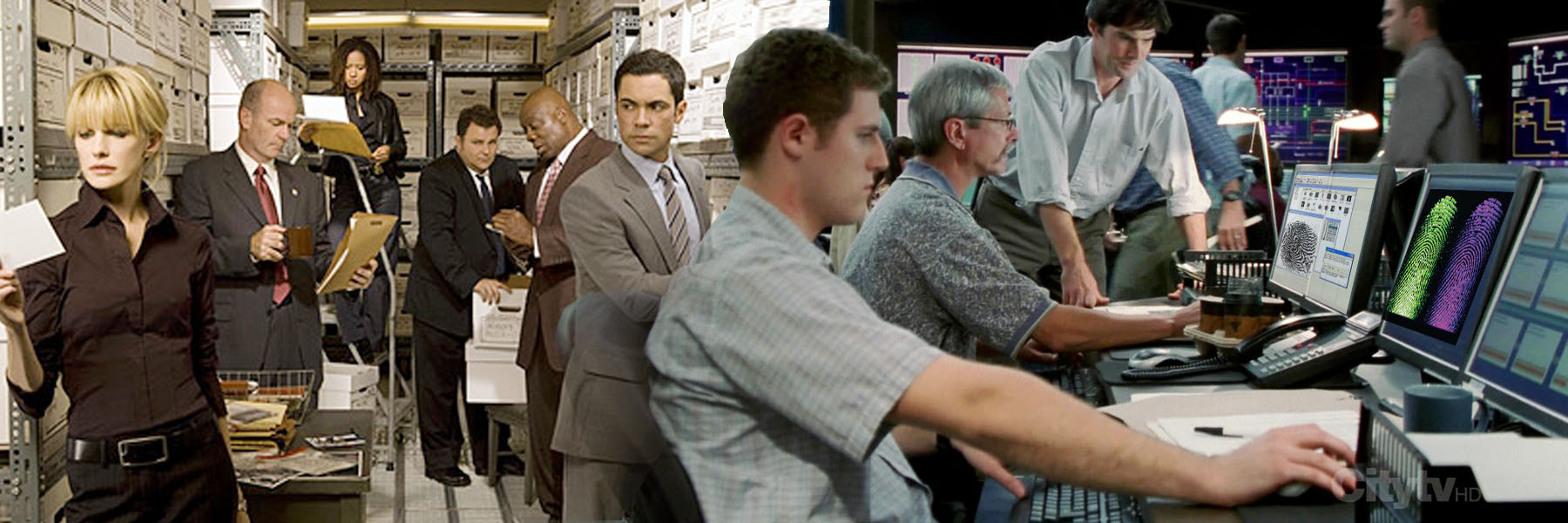
In theorie en daarmee ook in de praktijk is het in de nabije toekomst mogelijk dat met de volautomatische beschikbaarheid van de biometrische gegevens van vingers en gezicht van alle Nederlanders,  ieder dossier met een “koude zaak”  die enige biometrische gevens bevat tot een “hete zaak” gemaakt kan worden, met een simpele druk-op-de-knop van de  ‘Cold Case Machine’.

The cozy days of 'Cold Case' archive searching as a human affair are over, when national and international biometric database will be available to police and other public safety bodies. What awaits us is a quantative shift that will bring us a new "quality"

The cozy days of 'Cold Case' archive searching - by a humane detective collective with individual responsibilities - are over. The emblematic US television series with its shelves full of cardboard boxes, each of them holding a collection of authentic papers and other evidence objects, will show us - in hindsight - the advantage of a local and restricted set of information. The singularity and isolation of such a physical box-archive makes it into something that is stabile over time and can not easily be tempered with. When information materials will be digitized, replicated and distributed over networks and actively combined with national and international biometric digital data, problems of authentication will occur. The effects of failure, fraud and mistakes, that are part of any human made system, will be sysThe logic advantages of networked digital systems, might prove to be more of a problem maker than a problem solver.

Gelukkig is er enig protest en ook effectief handelen, door de Vereniging Vrijbit – waarvan ik spontaan vandaag lid geworden ben – zij hebben  op 2 augustus 2009 bij Het Europese Hof voor de Rechten van de Mens een voorlopige voorziening aangevraagd, in afwachting van een bodemprocedure bij hetzelfde Hof, die de Nederlandse staat ervan moet weerhouden om de vingerafdruk dwang door te voeren. Inmiddels (vrijdag 18 augustus 2009) is dat verzoek door het Hof afgewezen en kan de Nederlandse Staat ongestoord van start gaan met het aanmaken en opslaan in een centrale databank van de vingerafdrukken van iedere staatsburger  (van mij zijn die vingerafdrukken er al sinds lang, veertig jaar geleden genomeneen na arrestatie als toenmalig woningkraker en buurtactivist, met zo’n inktrollertje, een vies plankje en een papieren formulier). De Vereniging Vrijbit zegt nog een een zogenaamde ‘bodemprocedure’ bij het Europese Hof te hebben lopent (kon deze nog niet terugvinden op de website van het Europese Hof), maar het is twijfelachtig of een paar nationale protesten, de sinds het jaar 2000 in gang gezette Europese persoonscontrole-machinerie, nog kunnen stoppen.

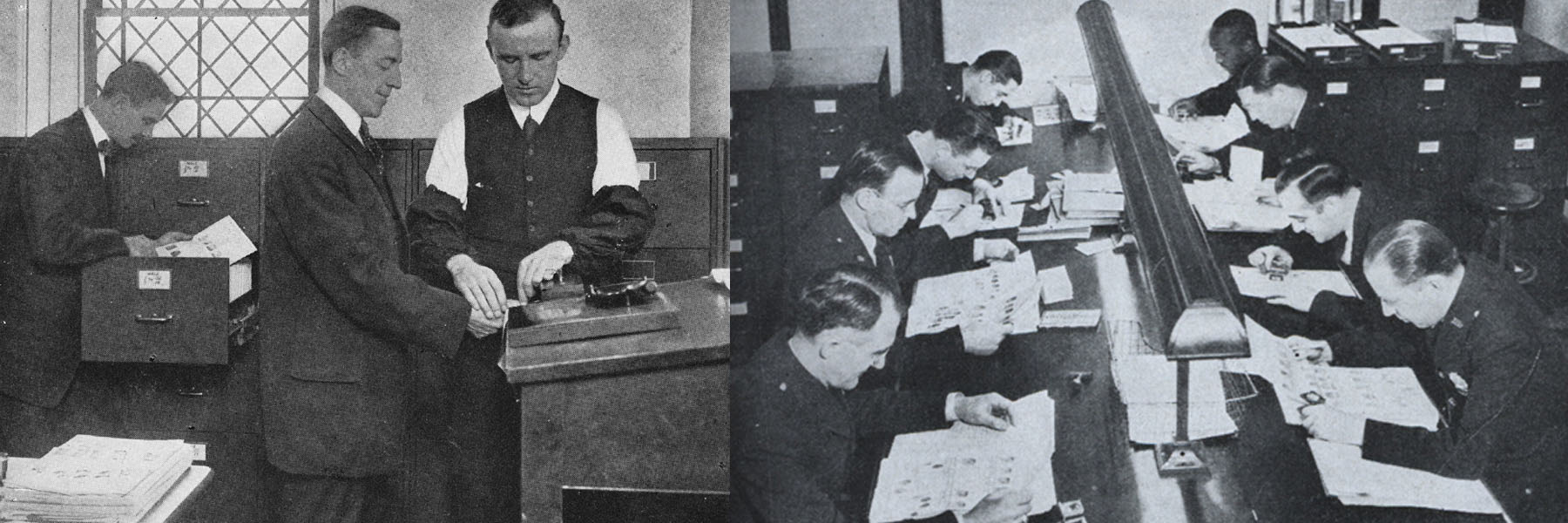
Een vingerafdruk gereedschapskistje van een Brits Eugenetisch Laboratorium uit 1911, de Big brother Award toegekend door ... aan ... en het handige apparaatje dat de Japanse regering recentelijk heeft ingezet om van iedere niet Japanse resident een vingerafdruk te kunnen maken. Dit laatste heeft tot protesten geleid zonder dat dit inbloed had op de werkzaamheden.

A fingerprint tool box of the British Eugenic Society dating back to 1911. The principle of fingerprints as a signature dates back to ancient Mesopotamia and China. Cases of use of finger and hand imprints as proof of identity in court cases are known from millennia back. Organized use of fingerprints - in the modern sense - goes back to the end of the 19th century and systematic police application was first done in Great Britain, followed by the Police of New York. Until recent fingerprints where mostly associated with the capture of criminals or the identification of lost persons and where not at all linked in the popular mind with totalitarian systems. The logo of the "Big Brother Award" combined with a fingerprint is from very recent (The BB-awards exist since 1998 and are given to control-compassionate authorities or institutions by national branches of the international non-governmental organization Privacy International). The George Orwell concept of a person or entity 'Big Brother' who by tele-surveillance is watching and controlling everybody, is now sixty years old and its original associations with Stalin and Hitler have faded. More and more non-conspicuous devices for registration and surveillance are introduced every day, like the cute Japanese machine at the right, in use at the main airports of Japan. Recently all foreigners residing in Japan have been obliged to give their fingerprints and there was some protest by those who (still) felt to be treated like common criminals.

xxx Click picture for a full size view.Ook het College Bescherming Persoonsgegevens was uiterst kritisch over de vingerafdruk-verplchting, met name over de opslag en inzet van die gevens (advies aan de Staatsecreatis van Binnenlandse Zaken van 30 maart 2007) maar dat advies heeft uiteindelijk geen enkele invloed gehad op de voordracht van de verantwoordelijke minister en de leden van ons parlament. Lees even met mij mee wat het CBP te zeggen heeft….

Ingevolge Verordening (EG) nr. 2252/2004 van de Raad van 13 december 2004, Pb EG L 385 is Nederland verplicht biometrische gegevens op te nemen in de reisdocumenten: eerst de gezichtsopname en later twee vingerafdrukken. De verordening verplicht evenwel niet tot het opnemen van deze gegevens in een administratie, centraal of decentraal. Biometriegegevens voor identificatie- en verificatiedoeleinden zijn uitstekend bruikbaar door deze op te slaan in het document zelf zonder deze gegevens op te nemen in een (centrale) database. Bij serieuze grootschalige toepassing en gebruik van biometrie zullen er alleen al door de intrinsieke fouten in biometrie veel personen serieuze nadelen ondervinden van valse meldingen van die toepassingen. Uit de in 2005 afgeronde biometrieproef en daarop volgende evaluatie, gedaan in opdracht van het ministerie van Binnenlandse Zaken en Koninkrijksrelaties, bleek dat in 3% van de gevallen er iets mis ging. Gesignaleerde tekortkomingen worden (mogelijk) deels opgelost door twee extra vingerafdrukken op te nemen. Welke correctiemaatregelen men ook neemt: intrinsieke fouten zullen blijven bestaan met alle gevolgen van dien. Het is dan ook de vraag of het grote vertrouwen dat in biometrie wordt gesteld met de huidige stand der techniek terecht is. [vet gezette regel door mij tj.]

xxxx

xxxx

Het duurde even, maar in april 2008, werd in een gezamenlijk wetenschappelijk onderzoek “Fingerprinting Pasports” van de Radboud Universiteit van Nijmegen en de Lausitz Universiteit in Senftenberg, Duitsland, bewezen dat betere controle en bescherming tegen identiteitsdiefstal – de voornaamste reden voor het invoeren van het nieuwe Nederlandse paspoortsysteem met biometrische gegevens – het tegenovergestelde resultaat boekte. Curieus genoeg was dit onderzoek medegefinancierd door twee Nederlandse overheidsinstanties (het Ministerie van Economische Zaken en de Nederlandse Organisatie voor Wetenschappelijk Onderzoek (NWO)). Ik citeer hier het abstract van de onderzoekers Henning Richter, Wojciech Mostowski en Erik Pol:

Passports issued nowadays have an embedded RFID chip that carries digitally signed biometric information. Access to this chip is wireless, which introduces a security risk, in that an attacker could access a person’s passport without the owner knowing. While there are measures in place to prevent unauthorised access to the data in the passport, we show that it is easy to remotely detect the presence of a passport and determine its nationality.

aaaaa

A successful design, deployment and operation of biometric systems depends highly on the results for existing biometrical technologies and components. These existing technologies as well as new solutions need to be evaluated on their performance. However it is often forgotten that the biometric (iris, finger, face e.g.) is only one part of a fully deployed application. As biometric (sub)systems are often not designed with security and or privacy in mind, system integrators will need to address the requirements of the deployed application in this light. The fears and concerns of a significant segment of the user population need to be addressed as early as possible in the design process, to ensure that appropriate mechanisms are in place to reassure such users. These concerns may relate to privacy or to safety issues, which may be addressed in part through legal and regulatory measures. This article discusses the requirements, design and application scenario’s of biometrical systems in general and the introduction of a new biometrical passport in The Netherlands.

zzzzz Click picture for a full size view.

zzzzz Click picture for a full size view.

Dit totaal gebrek aan invloed van het College Bescherming Persoonsgegevens is niet incidenteel, maar structueel (zoals ook blijkt uit hun advies over (overbodige) opslag van OVchipkaart gegevens dat eveneens niet nagevolgd is). Trekken – na deze twee recente démasqués -de Dames en Heren van die commissie daar de enige juiste conclusie uit: OPSTAPPEN? Nee dus. Dat is jammerlijk, want door te blijven zitten en niet hun mandaat terug te geven aan degenen die hen aangesteld hebben, geven ze al die overheidsbeslissingen die tegen het beschermen van onze privacy ingaan een brevet van  gecontroleerde democratische goedkeuring door een “onafhankelijk College”. Zo staat het op de website van het CBP:

Onafhankelijkheid van het CBP
Het CBP houdt toezicht op de naleving van wetten die het gebruik van persoonsgegevens regelen. Het CBP houdt dus toezicht op de naleving en toepassing van de Wet bescherming persoonsgegevens (Wbp), de Wet politiegegevens (Wpg) en de Wet gemeentelijke basisadministratie (Wet GBA).

Het College bestaat slechts uit drie leden die bij “Koninklijk besluit” benoemd worden:

mr. J. Kohnstamm, voorzitter

mr. dr. J. Beuving, plaatsvervangend voorzitter

mr. M.W. McLaggan-van Roon, lid van het College

Er is dus geen enkele sprake van enige democratische procedure van aanstelling, noch van enig vorm van vertegenwoordiging van bepaalde gelederen van de Nederlandse bevolking. Het is niet meer dan ouderwetse Hollandse ‘regentenpraktijk’, waarbij degenen die het toch al voor het zeggen hebben de bestuursbaantjes aan elkaar toewijzen en er angstvallig voor waken dat geen anderen toegang tot zulke ambten krijgt, of althans enkel nadat personen van buiten blijk hebben gegeven voldoende gezagsgetrouw te zijn (dit is wat bij “Koninklijk Besluit” naar mijn inzicht betekent (in die zin is er in driekwart eeuw  met een gelijke constatering van historicus Jan Romein nog niets veranderd in ‘de Lage Landen’ (**)).

De premisse van toezichthouden waarop dit College is gebaseerd is haar grootste zwakte. Haar taak is slechts het toezicht houden op naleving van dat wat door volksvertegenwoordiging en regering in wetten is vastgelegd. Zou het nog zo zijn dat het CBP alle Nederlandse wetten en door Nederlandse Staat ondertekende internationale verdragen zou kunnen toetsen aan principes van bescherming van de persoonlijke levenssfeer, dan zouden wellicht ethische en morele bezwaren ingebracht kunnen worden die nu achterwege moeten blijven.  Toetsing van privacy-deelwetgeving op mensen- en grondrechten behoort niet tot de taak van dit College. In hun opdracht staat het heel simpel: “naleving van wetten die het gebruik van persoonsgegevens regelen.” Meer is het niet. Zij mogen enkel kijken naar en adviseren over sub-wetjes die niet meer dan een regelement zijn waarin de toepassingspraktijk beschreven wordt.

Dit verklaart  waarom het CBP enkel uit juristen bestaat. Het juridische – op het niveau van het CBP – wordt gezien als iets wat ‘objectief meetbaar’ is en volgens ‘formeel juridische standaarden’ vastgelegd in de Nederlandse jurispredentie. Subjectieve overwegingen,  dat waaruit datgene wat uiteindelijk beschermd dient te worden – de persoonlijke levenssfeer – bestaat, kunnen niet aan de orde komen. Het hebben van een toekomsvisie op basis van bekendheid met de historische ontwikkeling van adminstratie- en controlesystemen, is niet iets waarvoor juristen opgeleid worden. Inzicht in de wijze waarop bestaande sociale verhoudingen beïnvloed of versterkt worden door technologische vernieuwingen is niet iets waarvoor een weldenkend mens bij een jurist ten rade zou gaan (hoe goed ook  zo’n jurist op het eigen vakgebied kan wezen). Ergo, de bescherming van onze persoonlijke levenssfeer tegen de beveilingsindustrie en haar opdrachtgever  de overheid, bestaat helemaal niet. Het ‘juridiseren’ van de huidige privacy problematiek kan niet anders opleveren dan een gereduceerd inzicht in de krachten die spelen in de moderne informatie-maatschappij. Privacy-bedreigingen worden gevoed door twee gedachten, een moderne en een oude: dat met het huidig menselijk kunnen heel het leven voorspelbaar en regelbaar is en het spiegelbeeld van die redenering, de angst voor het ongewisse en het noodlot dat ieder moment kan toeslaan. Het bewust zaaien van angst als machtsmiddel (terrorisme) en de verborgen blijvende of  onverwacht oplaaiend geweldadigheid van enkelingen, zijn altijd moeilijk beteugelbare krachten geweest. Het inzetten van hoog-technologische controlemiddelen in dit krachtenveld  zijn vaak niet meer dan bezweringsrites van hoogpriesters voor hun geloofsgemeenschap. Erger nog, de nu immens populaire rite van het aanleggen van een databank van alle mogelijke verdachten of allen die bescherming dienen te genieten, ontaard voor xxx

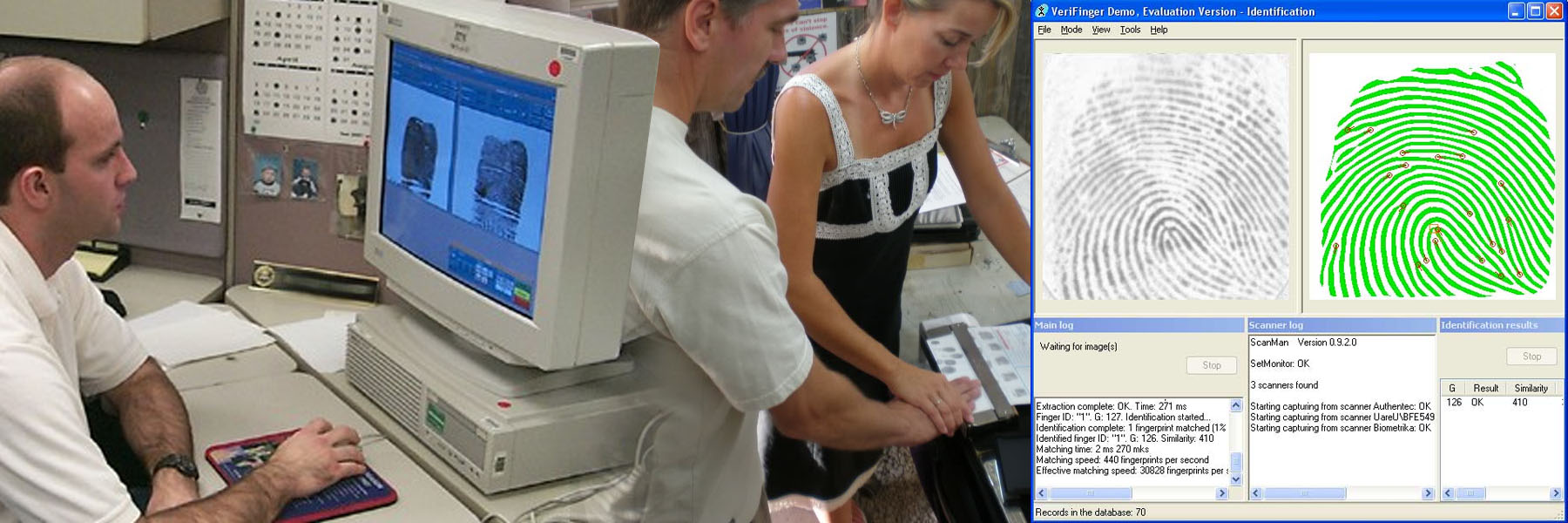
Fingerprint mania how fear creates a market for control systems that can be spoofed easily by people with bad inetentions while the mjority of good intenioned people will feel oppressed by such mechanisms

Fingerprint mania how fear creates a market for control systems that can be spoofed easily by people with organized bad inetentions while the mjority of good intenioned people will feel oppressed or alienated by such mechanisms. These are electro-mechanical secluding space devices that are surrogates for direct social control

Juist daar waar het gaat om het beschermen van het ‘persoonlijke’ is een toetsing nodig waarin fundamentele menselijke waarden, te weten de harmonische relatie tussen individu en gemeenschap, centraal staan en juristerij er enkel is om die waarden te bevorderen en in stand te houden. Persoonsbescherming is gediend bij stimulering van sociale samenhang en het vermijden van maatregelen die vervreemding in de hand werken.  Het gevolg van de toepassing van nieuwe technologie kan zowel bevrijdend als onderdrukkend zijn, afhankelijk van specifieke maatschappelijke verhoudingen. Een nagestreefd doel kan enkel met middelen bereikt worden, die ook in overeenstemming met dat doel zijn. Bescherming van het individu en veiligheid worden uiteindelijk niet gediend door onbeheersbare controlezucht.  De huidige ontwikkeling van informatie- en communicatie-systemen draagt een dubbel vermogen in zich:  bevrijding én onderdrukking. De bevrijdende potentie van deze nieuwe technologieën krijgt nog onvoldoende aandacht.  Dit is een positieve visie,  die tegenover de nu aan ons opgedrongen beperkende en onderdrukkende maatregelen gesteld kan worden. De taak van belangenafweging – van volksvertgenwoordiging en adviesorganen – behoeft meer dan één maatschappelijke visie, wil er gewogen kunnen worden. Het meeste gewicht lijkt nu gelegd te worden in de schaal van wantrouwen, angst en controle.
———-
(*) Popular mechanics 1934 on fingerprints: Signatures can be forged, but not a fingerprint. To speed up the search for a particular set of fingerprints, a system of classifying them by certain whorls, lines and other marks has been evolved. In a recent test, the exact record of an unidentified person’s fingerprints was located within three minutes in a file containing more than 1,500,000 records. The New York city police department has been collecting citizens’ fingerprints for several years. Between 15,000 and 20,000 persons volunteer each month. Other cities are taking up the work. The Department of Justice in Washington is the clearing house for most fingerprints. The master criminal file contains 5,000,000 records. The civilian file will be separate. Instead of a stigma, the record will be a form of personal protection.
(**)  Jan Romein schreef over het regentendom in zijn populaire geschiedenisboek uit 1934 “De Lage landen Bij De Zee”:
“De heele samenleving in de eeuwen der Republiek ligt besloten in twee woorden: ‘heeren’ en ‘volk’ en het is niet alleen historisch verhelderend de maatschappij dier dagen van uit dat oogpunt te bezien, maar ook na te gaan hoe die voorstelling in het verleden terugrijpt en zich tot in het heden voortzet.” [p.340]
“De heeren ‘zaten op het kussen’, d.w.z. ze regeerden niet alleen, maar ze regeerden uitsluitend in hun eigen belang en steeds hechter wortelde de sociale ethiek die dit room-van-de-melk-scheppen tot een geboorte-recht maakte.” [p.358]
“Het sprak vanzelf, dat de heeren met het geld en de macht ook het recht in handen hadden (…) [p.358]
N.B. Jammer genoeg is dit historisch zo belangrijke boek van Jan Romein nog niet in de Digitale Bibliotheek van Nederland (DBNL) opgenomen, zodat ik hier geen link naar de volledige tekst kan maken; wel heb ik bij DBNL een verzoek ingediend om dit boek op de lijst van publiek toegankelijk te maken primaire bronnen van Nederlandse geschiedenis te plaatsen. Van jan Romein staat op DBNL wel
deze overzichtspagina...


Two days ago I went to a combined theatre performance and action meeting in the Brakke Grond in Amsterdam in support of the the Libyan migrant Ahmed Al-J. (also referred to as Ahmed Issa) who has been at the center of years of court cases and juridical and technical researches about a fatal fire on October 27, 2005 in a detention center at Schiphol airport for migrants, waiting for the result of their appeal against planned extradition.  Ahmed had at first been labeled by the court as the main culprit, because of a burning cigaret in his cell that set the whole section of the center aflame an left 11 people dead. Recently he has been acquited of this charge, as a whole series of management and construction mistakes have come to light, as result of a  series of inquiries and counter-inquiries. I will not further detail this case too much here as the facts are widely known by now. The incessant support for the traumatized migrants by several action groups (of which at least two should be mentioned here Migrant To Migrant/M2M and All Included), lawyers and some politicians, have had some concrete results, but the essential question of who is to be held responsible for the fact that a single cigarette in a prison-like new facility can lead to so many victims, has still not been answered in a satisfactory way. Singling out the Libyan migrant and his cigaret has allowed to keep out of focus the planners, management and local authorities who have to control the safety of this detention facility (located at Schiphol Oost, originally build to house drug smugglers captured at the airport). Many see this as a form of scapegoating.

Detail of painting (1854) "The Scapegoat" by William Holman Hunt (1827-1910)

Detail of painting (1854) "The Scapegoat" by William Holman Hunt (1827-1910) Exiled animal that bears the sins of the Jewish people (according to the Old Testament) a white goat with woolen threads between his horn like a trickle of blood, symbolizing purity, prefiguring the Messiah wearing the crown of thorns. For the whole painting and a more detailed description at the Hungarian Web Gallery of Art, click the picture...

Ahmed Al-J. who has now officially been exempted from responsibility for the death of 11 people, has found no clemency for his ordeal of the last four years (of which he spent two in prison). He has been ordained to be sent back to Libya. This in spite of the fact that he and his lawyer have appealed against this decision by the ministry for migration affairs. If he is still in the Netherlands at the moment of me writing? This I do not know.

Another depiction of a purifying ritual by driving out a scapegoat that carries the problems and sins of a community, with the goat like demon Azazel in the middle and a recent poster of the Free Ahmed Isa campaign, which reads: Schiphol keeps on burning (blows the fuses). "Thus the goat will bear al my  faults.." Ahmed Isa  scapegoat. Campaign Free Ahmed Issa.

Another depiction of a purifying ritual by driving out a scapegoat that carries the problems and sins of a community, with the goat like demon Azazel in the middle. Antique Greece knew a similar ritual whereby pre-selected persons (a slave cripple or criminal), called 'pharmakos' (Greek: φαρμακος) would be expelled from the community at the occurence of a disaster or at pre-configured days of purification. The word 'pharmakos' later became a term for a healing potion or drugs, hence 'pharmakeus' and nowadays 'pharmacy'. At the right end a recent poster of the Free Ahmed Isa campaign, which reads: Schiphol keeps on burning (blows the fuses). "Thus the goat will bear al my faults.." Ahmed Isa scapegoat. Campaign Free Ahmed Issa.

Back to the theatre evening where three short performances were given, each of them by one actor in a monologue form. One by an Iranian migrant with a  dance like performance about three generations of men being called into wars, especially referring to the mass slaughters of the Iran-Iraq War. Another,  an attempt to give some insight in the inner soul of the protestant christian former Minister of Justice Donner who had abdicated because of his formal responsibility for the burned down detention center and is put on stage trying the Catholic system of confession to find redemption. The last actor was a descendent of a maroon  tribe of run-away black slaves in the former Dutch colony of Surinam, who did a sort of ‘winti-pré’ (Surinam form of voodoo) about the officialdom hypocrisy embedded in the idea of “Dutch free citizenship.”

After these performances there was a modest attempt at discussion and a question what could or should be done. This brought into my mind a series of recurring odd associations during the last months and weeks, with Libya as a binding factor.

Here we had an absolute non glamorous, low profile most probably economic motivated migrant from Libya who had had lots of bad luck and had been forced into unwanted infamy and fame (Ahmed always have tried to keep his face hidden when entering court, and has tried hard to keep any picture of  his face out of the newspapers). While elsewhere another Libyan – also both infamous and famous – Gaddafi (*) has been stealing again the international news shows. After having been re-introduced on the international stage, late 2007, by French President Sarkozy his star has been rising again. Sarkozy maneuvered the French state oil and energy company ELF/Total in a successful barter with Gaddafi exchanging wrongly accused Bulgarian nurses and a Palestinian medic for new Libyan energy supplies and other favoring economic contracts.

It took another year before another President, Silvio Berlusconi, could not resist the historic opportunities and the money and energy reserves of Colonel Gaddafi and invited him for yet another reconciliation visit. The ‘acte the presence’ of the Libyan leader was once more overwhelming, but what stroke me the most was his show with a historical photograph pinned on his uniform, next to the battery of color-codified military medals, rubbing Italy’s colonial history straight in the face of its actual president at the very moment of his arrival. Then, shortly after, Gaddafi popped up as a guest at the G8 meeting and had a tête-à-tête with British prime minister Gordon Brown. Again a barter was made, this time a rightly accused and convicted countryman of Gaddafi, Abdelbaset Ali Mohmed Al Megrahi, the Libyan convicted of the Lockerbie bombing, who in exchange for a Libyan energy deal, was abducted from the independent nation of Scotland – where he did his twenty years prison sentence – to be flown back to a glorious reception in Tripoli as a lost national hero.

Welcome party at Tripoli airport of

Welcome party at Tripoli airport of Abdelbaset Ali Mohmed Al Megrahi, one of the Lockerbie terrorists convicted to twenty years of imprisonment, relieved from prison for humanitarian reasons as he has a terminal stage of cancer on August 22, 2009. Gaddafi commented to the international press on the British prime minister and the Scottish parliament, calling the freeing "a courageous humanitarian gesture."

All these events and the images of them displayed in the media got connected in my mind – against all odds – with the case of the Libyan migrant in the Netherlands, who will await no happy crowds, who may need to fear for his well being once returned to his country. Visions came to me, in that Amsterdam theatre, where the question was posed what could be done for Ahmed Al-J…. I saw Ahmed being picked up by the Libyan leader with all his post-revolutionary pomp, the humiliation of the Dutch authorities, the oily business deals that would certainly be made on the side…. and a need arose to visualize all this, if it would not happen in real, to have it at least performed as a concrete fantasy on my and your screen… and some derivations following the history of the historical photograph pinned at the uniform of Colonel Gaddafi….


It is ex-minister of Justice Jan Hein Donner who has the honor to accompany Colonel Gaddafi

It is ex-minister of Justice Piet Hein Donner (middle left) who has the honor to accompany Colonel Gaddafi (middle right) during the inspection of the guard at Schiphol Airport, commanded by new strategic NATO commander Jeroen van der Veer (left foreground), with in the far left corner Profesor Pieter van Vollenhoven (chairman of the Transport Safety Board and member of the royal family) with his camera ready, to see to it that everything is handled correctly. Van der Veer wears the traditional green beret of the Dutch marines in his new military role at NATO, after having served with Royal Dutch Shell for three decades, last as Chief Executive Officer. Donner, who resigned in 2005 as minister of Justice after the fire in the Schiphol Detention Center that left 11 people dead - but was taken back in grace shortly after for another role of Minister of Social Affairs- wears the governmental decorations of repeated service to the nation, the 'orange earmuffs' (with the inscription: "non audi et alteram partem"). Van der Veen - in expectation of energy arrangements at the side - has instructed a multi-national battalion to unfold the standards of ENI, TOTAL and Shell as a subtle hint for the Colonel that nothing is for free in this world. The center of attention Ahmed Al-J. - the man who has recently be acquited from the charge of being responsible for the the fatallities of the detention center fire - does not attend the ceremony yet . He is waiting in his residence at the Schiphol Oost Detention center for the Colonel and his cortege arrive through the high security gate and to finally deliver him from Dutch state hospitality.

You are invited to study the above high resolution picture in all its details by clicking on it;  a new window will open that allows you to have both an overview and also to study the details by clicking once more, which will show the picture full size;  if possible try to enlarge your browser window to the maximum size; if needed use the sliding bars of your browser to pan through the big size tableau picture.

Gaddafi had pinned a color photograph of the Schiphol fire to his uniform in a demonstration that the wounds of the neglect of the migrant detenees by the Nterlands still run deep.

Gaddafi had pinned a color photograph of the Schiphol fire of the year 2005 to his uniform in a demonstration that for him the wounds of the neglect of migrant detenees by the government of the Netherlands still run deep. Gaddafi later told the journalists that this tragedy was "a cross for the Dutch Nation" without making any allusions to a tragedy that could have been called 'his own cross': the Lockerbie disaster of 1988 with its 270 casulaties. Happily minister Donner was still wearing his earmuffs at that moment, so a direct diplomatic embarrassment did not occur. Gaddafi has used similar emblematic tactics during his recent historical visit to Italy in June 2009, where he pinned to his uniform a historical photograph of Omar Al-Mukhtar, the Libyan resistance fighter during the colonial era who was hanged by the Fascist military government in Tripoli, a picture that showed Al-Mukhtar in chains at the time of his arrest in 1931. Click photograph for a full size view.

Ahmed Al-J. waiting at the gate of the Detention Center for Migrants Schiphol Oost, nicely refurbished after the disaster of October, 25 2005

Ahmed Al-J. - for years consequently keeping his privacy with minimal means - waiting at the gate of the Detention Center for Migrants Schiphol Oost (nicely refurbished after the disaster of October, 25 2005, with protective high fences and electrical wires), being confused about where and what is the inside and outside of Dutch Control Society. Click the picture for a full size view.


zzz

June 14, 2009 Italian prime Minister Silvio Berlusconi and Colonel Gaddafi at Ciampino airport, Rome. A step to turn several pages of the past, from the Italo-Ottoman War from 1911-194 (which war saw the first aerial bombardments in history with bombs thrown by hand by Italian pilots on human settlements), the fascist occupation and colonization of Libya in the thirties and forties of last century and the American air strikes on Tripoli and Benghazi in 1986 in retaliation of Libyan (at first alleged and hard to prove) involvement in a series of terrorist attacks in Europe in the previous years (Achille Lauro cruise ship hijacking, Rome and Vienna airport attacks, West-Berlin disco visited by American servicemen).

xxx Click picture for full size view.

The photograph Gaddafi was wearing at his arrival in Italy in June 2009. It shows the main leader of the resistance - Omar Mukhtar (Arabic عمر المختار ‘Umar Al-Mukhtār) (1862 - September 16, 1931) - against the Italian fascist colonization with its white supremacist violent policy that started in the year 1922. Before, there had been a period of Italian competition with what remained of the Ottoman empire in the North of Africa. A period with changing alliances between tribes and occupiers developing into some sort of civil war in the end. Omar al-Makhtar (also written as Umar...) was a Cyrenaican muslim tribesman that led for several years the struggle against Italian occupation. When he was finally captured in 1931 his importance and influence was so great that the Italian general Rodolfo Graziani choose to hang him in front of 20.000 forcefully gathered tribesmen. Good statistics of the number of victims of these decades of violence are hard to find. Some indication can be derived from the statistics on the Italian policy of area control, involving a concentration camp system in which a hundred thousand Libyans were imprisoned. Historians have estimated that more than half of these prisoners did not survive and some have labeled these gruesome events the "Italian Holocaust" (**) Click photograph for full size view.

Violence from the past  needs to be acknowledged to purge the motivation to keep carrying it into the future.

Violence from the past needs to be acknowledged by the perpetrators of it, to purge the motivation to keep carrying this experience into the future by new violent acts. Comparisons of the number of victims, caused by one and another historical event, is seen as an amoral exercise by many. Nevertheless knowledge of the scale and impact of violence is essential for our understanding of causes and finding remedies. Several tens of thousands have found a violent death during the fascist Italian regime in Libya over two decades; 270 people died in a few seconds over and in the Scottish town of Lockerbie. Forty to sixty people are said to have died in the retaliation air strikes ordered by USA President Ronal Reagan in in Libya. The highjacked ship, airport attacks and disco bombing produced a total of approximate 20 dead. Click for full size view.

———-
(*) Muammar Abu Minyar al-Gaddafi1 (Arabic: معمر القذافي‎ Mu‘ammar al-Qaḏāfī; also known simply as Colonel Gaddafi; born 7 June 1942) has been the de facto leader of Libya since a coup in 1969; some of the many alternative spellings of his name are: Gadafi, Gadhafi, Qadhafi.
(**) One of my sources on the Italian violent colonization of Libya is “The making of modern Libya: state formation, colonization, and resistance …” by Ali Abdullatif Ahmida. Several pages can directly be viewed via Googlebooks.
(**) There is a dramatized rendering of the fight against the Italian occupiers of Libya in the feature movie “Lion of the desert” with Oliver Reed and Anthony Queen; directed and prduced by Moustapha Akkad in 1979, whose fate was to be killed in the hall of an American owned  luxury hotel in Amman by a radical Islamic suicide bomb attack in 2005. It may be clear that this is – like almost all war movies – a propaganda film, this time  from a radical Islam viewpoint with a big financial aid of the Gaddafi administration, now thirty years back.

A detailed description of the movie via a link... click the picture to go there

A detailed description of the movie via a link... click the picture to go there

 "The Brief Account of New Netherland" published anonymously in 1662 in Amsterdam (later attributed To FranciscusVan Den Enden (1602 - 1674). Click picture for a full size view.

"The Brief Account of New Netherland" published anonymously in 1662 in Amsterdam (later attributed To FranciscusVan Den Enden (1602 - 1674). It is a proposal to the city councillors of Amsterdam concerning the democratic constitution of a Dutch colony in New Netherlands, a publication "in behalf of the poor people (of the Netherlands) that wanted to emigrate overseas." (Wim Klever; Foglio Spinozi; 2001-11-7). The montage picture has four elements, from left to right: - a replica of the ship of Hudson 'Half Moon' on the Amstel river in Amsterdam in the year 1909; - the cover of the 1662 publication, with in the background a montage from the Manhattan project a split visualization of the ecology of Manhattan Island thousands of years ago and the actual urbanized situation; - another newer replica of the 17th century 'Half Moon' ship (build in 1989) on the Hudson River New York. Click picture for a full size view.

This post will display in due time my belated comments on the mechanical and meaningless commemorations of Dutch officialdom, with yet another example of an attitude I have baptized under the name: “de huichelhollander” (the inner alliteration is difficult to catch in English: deceiving-dutch, hypocrite-hollander, and a Curaçao friend suggested ‘lying-dutchman’). It is the 400 years party of an English captain on a Dutch sailing ship getting lost and landing on what is now New York in the year 1609…..

Halfbloedjesland

A quick collage made for the OER magazine on the basis of a picture I did find on the cover of another Surinam related printed magazine OSO (vol.28; number 1; April 2009) and the editors have ripped this picture from some archive (I will check what the actual picture origin is, just out of curiosity) it's for a column called "halfbloedjes land" (land of little half bloods). Collage keeps a picture alive!

Last week, by email, two old friends crossed my way, bending back my time line to thirty years ago, to Surinam and Carib literature and working in Paramaribo. Henna Goudzand who I first met in Paramaribo – during the days of a sergeants state and their imposed curfew – was a colleague of my girlfriend Josien Eissens  who had taken a job to instruct new Dutch language teachers over there.

Henna  lives since long in the Netherlands and she did ask me recently to make an illustration for her new digital magazine “OER digitaal vrouwenblad“. The first issue of OER was announced on a blog about Caribbean literature and that appeared to be produced by another friend of who I had lost sight, Michiel van Kempen. At the end of the eighties  – in Amsterdam – he had been introduced to me by Henna as a possible candidate to work on a bibliography of Surinam related books from the collection of the University of Amsterdam. From 1973 till 1998 I worked as a curator of the Documentation Center of Modern Social Movements at the University Library of Amsterdam and my prolonged stay in Surinam – in 1980 – had woken my interest in the cultural heritage gab produced by the Dutch colonial history. In 1991 I had written a proposal for making an inventory of any kind of publication relating to Surinam in the collections of the University of Amsterdam. It was Michiel van Kempen, together with a colleague of mine from the library, Kees van Doorne, who did a splendid job by finding and cataloguing almost 8000 publications (including historical maps), all this within five years. The results have been published in a fat printed catalogue with an impressive index: Suriname-Catalogus van de Universiteitsbibliotheek van Amsterdam in 1995.

The last decade I had little contact with the Surinam milieu and so it is a pleasure to be connected again. Yesterday I wrote my first post  for the nice Caraib literature blog, and in the writing process I had a vision of Google helping a project of colonial “Widergutmachung” by scanning all those publications from the University of Amsterdam …. (because when I flip through the description of 8000 or so neatly catalogued books and other publications related to Surinam, such bibliographical items  always give me the sensation of visiting a Gulag camp with thousands of books suffering and moaning, waiting to be set free and communicate with all those eager readers outside the barbed wire fence of academia and copyrights).
aitomatic book scanner

Het navolgende korte bericht citeer ik met beleefde dank aan de NRC van 7 september 2009 in zijn geheel om haar inherente dwaasheid te documenteren:

SCP: bewakingscamera’s selectiever inzetten: Den Haag, 7 sept. De overheid zou bewakingscamera’s selectiever moeten inzetten. Dat zou de effectiviteit van het toezicht kunnen vergroten. Dat meldden onderzoekers van het Sociaal en Cultureel Planbureau (SCP) vandaag.

Zij onderzochten het ‘Actieplan overlast en verloedering‘, dat de overheid vorig jaar lanceerde. Toezicht met camera’s voorkomt geweld niet, maar volgens het SCP zijn er aanwijzingen dat op sommige plekken, bijvoorbeeld in parkeergarages, de camera’s criminaliteit en overlast terugdringen.

De onderzoekers waarschuwen dat er niet te veel van de camera’s verwacht moet worden. Het SCP ziet in menselijk toezicht, door agenten, parkeerwachten of zelfs horecapersoneel, veel voordelen. Uit eerder onderzoek bleek al dat menselijk toezicht vaak effectief is, stelt het instituut.”

Het is een fraaie contradictoire conclusie, iets waarvoor je gestudeerd moet hebben om hem te verzinnen (ik neem maar even aan dat bij het Sociaal Planbureau enkel afgestudeerde lieden werken) alsook bij die niet bij name genoemde instelling die “eerder onderzoek” deed.

A fragment from the vsiaul scroll Orbis Digitalium Pictus, I made last year for a conference of the Theatre Institute of the University of Amsterdam. For the whole scroll see note (*). To see this fragment full size click the picture.
A fragment from the visual scroll Orbis Digitalium Pictus, I made last year for a conference of the Theatre Institute of the University of Amsterdam. For the whole scroll see note (*). To see this fragment full size click the picture.

Allereerst moeten we aannemen dat de genoemde camera’s verbonden zijn met kabels of draadloze verbindingen die naar schermen leiden waarachter dan weer menselijke observanten zitten. Want “cameratoezicht” in de zin van het hier beschrevene is menselijk toezicht op afstand. Ik mag niet aannemen dat het om volledig geautomatiseerde bewegings- en audio-detectie gaat, want daar waar die wellicht in theorie al iets zouden kunnen betekenen (zo zijn er camera + microfoon systemen die bij overmatig geluid met een bepaald profiel zoals dronkemansgelal een waarschuwing afgeven) blijft nog de vraag wat dan de geautomatiseerde actie zou moeten zijn voor het bewakings-computersysteem. Geflitste automobilisten worden al automatisch bestraft, maar omdat met ” het voertuig van het menselijk lichaam” te doen, hebben we (nog) specifiekere herkenningsroutines nodig om de daarbijbehorende mens te corrigeren en te bestraffen. Herkenningsroutines voor specifiek mensen gaan nu nog middels wat ik voor het gemak maar even samenvat als ‘poort-situaties’: pinautomaten, scanners voor indentiteitspasjes, electro-magnetische sensors (zoals van de OVchipkaart), vingerafdruksensors, oogscanners en als laatste in de rij gezichtsherkenning (dat is tot op heden nog de zwakste schakel).

xxx
A fragment from the visual scroll Orbis Digitalium Pictus, I made last year for a conference of the Theatre Institute of the University of Amsterdam. For the whole scroll see note (*). To see this fragment full size click the picture.

Moderne vormen van brandmerken die aan zo’n automatische bewakingssysteeem te koppelen zijn, bestaan al sinds lang, maar de publieke weerstand ertegen is en zal dusdanig zijn dat deze effectieve middelen niet gemakkelijk ingevoerd kunnen worden (daar helpt zelfs geen 9/11 aan). Het bij binnentreding spuiten van een met het gewone oog onzichtbaar pufje verf met een ingebouwd uniek getal of code (een soort dot matrix code of een bepaalde unieke waarde) die dan weer optisch (infrarood) en/of magnetisch (RFID) gededecteerd kan worden, is voorstelbaar. Verplichte radio-traceerbare arm- of voetbandjes (zoals die er nu al zijn voor ouders die bang zijn hun kinderen  te verliezen en voor electronisch huisarrest) en het meest logische middel de persoonlijke mobiele telefoon (GPS). Het is wel zeker dat de laatste toepassing al daadwerkelijk in praktijk gebracht wordt bij het uitoefenen van bepaalde politietaken.

Gesteld dat individuele personen volautomatisch, effectief, gedetecteerd kunnen worden in specifiek daartoe uitgeruste publieke ruimtes, dan blijft de vraag wat dan? Wat te doen als een persoonlijke overtreding van een of andere regel door het systeem gedetecteerd is? Kan er een boeteroutine ontworpen worden met raadpleging van een register van eerdere overtredingen door sofinummer zo en zo? Het is zeker voorspelbaar dat de schuldenaarscentrale in Tiel een dergelijk register zonder enige moeite zal weten te implementeren (de hele infrastructuur daarvoor is al operationeel), maar, is een geldstraf wel een effectief middel? Zolang automatische afboeking door de overheid van bekeuringen nog niet geregeld is (en wees er van overtuigd dat een dergelijke regeling in het nabije verschiet ligt) creërt dit weer een incassotraject en ook mag aan de educatieve waarde van geldboetes gewtijfeld worden. Vrijheidsbeneming levert geen geld op, maar kost geld, dus dat is ook geen optie.

Dit moeten de redeneringen geweest zijn die de sociaal-culturele planologen van het SCP doorlopen hebben alvorens tot de conclusie te komen dat uiteindelijk “menselijk toezicht” als meer “effectief” bestempeld mag worden. De mens is immers niet langer de maat der dingen.

—————-

(*) Orbis Digitalium Pictus Scroll link.

Vodpod videos no longer available.

Bovenstaande  video met een reconstrcutie van de politie van de dodelijke rit van Karsten T. in Apeldoorn tijdens Koninginnendag 2009 wordt op dit moment door de Nederlandse nieuwsmedia verspreid (onder meer door De Volkskrant op haar web site)

Het mag kenmerkend heten dat op het moment dat de politie overgaat tot gebruik van moderne visualisatie-technieken er maar één enkele representatie gemaakt wordt, of  althans aan het algemene publiek getoond wordt. De mogelijkheden van moderne visualisatie technieken om meerdere interpretaties te tonen en die inzichtelijk en vergelijkbaar te maken worden niet gebruikt. Ik zie hier enkel een op zich redelijk geslaagde dramatisering van wat dan de meest waarschijnlijke vorm van waarheid in de ogen van de politie-autoriteiten is. Dit past geheel in de traditie van het opsporingsapparaat, maar doet geen recht aan het tot op de dag van vandaag ongewisse karakter van de aanslag van Karsten T.

In de cinematische traditie is er het begrip van meervoudige waarheid zoals meesterlijk toegepast wordt in de film Rashomon van de Japanse filmer Akira Kurasawa. Daar gaat het om vijf verschillende interpretaties van een verkrachting van een vrouw en de moord op haar man. Zelfs de gedode man komt aan het woord via een medium dat contact weet te leggen met het hiernamaals. De overeenkomsten met de zaak Karsten T. zijn evident. Ook hier komen verschillende getuigen, die het gebeuren vanuit verschillende gezichtspunten en invalshoeken hebben meegemaakt, aan het woord en ook hier wordt via een ‘medium’ (Het Pieter Baan Centrum in Utrecht) geprobeerd contact met de ziel van de overledene (Karsten T.) te krijgen.

Deze computer-visualisatie was onderdeel van de persconferentie bij het presenteren van de resultaten van vier maanden onderzoek. Zoals te verwachten werd de (mogelijke) anti-koningsgezindheid van Karsten T. breed uitgemeten op basis van wat een nauwe bewijsvoering genoemd kan worden. Heel die exercitie van getuigendeskundigen die post-mortem het zieleleven van Karsten T. weten te duiden, had dan ook wel – om het onderzoek enigszins in balans te houden – begeleid kunnen worden door het aanstellen van een advocaat voor de overleden Karsten T. die zijn zaak van zijn kant had kunnen bezien en bepleiten. In het Amerikaans als ook in het internationaal recht (zoals bij het Joegoslavië Tribunaal in Den Haag aan de orde kwam toen de beklaagde Milosovic aanvankelijk zich niet wenste te verdedigen omdat hij het hof niet wilde erkennen) is er het instituut van de Amicus Curiae, de vriend van het gerechtshof die als onafhankelijke derde in een zaak door het hof gehoord kan worden. Welliswaar kent het Nederlands recht deze figuur van ‘amicus curiae’ niet, maar aangezien er – met de uitgebreide langdurige onderzoeken – in schijn wel ‘post mortem’ vervolgd is, is het niet meer dan logisch dat het principe van ‘hoor en wederhoor’ van de reguliere rechtsgang, en de ‘rechten van de mens’, ook  hier toegepast had moeten worden.(*)

Waar is de stem van ‘de onafhankelijke derde’ in dit showproces van de Nederlandse staat? Waar staat er iets vermeld over ‘de inmenging van de uitvoerende macht’ in de procesgang door minister president Jan-Peter Balkenende die al op 5 mei 2009 op de nationale televisie publiekelijk wist te verklaren dat  de daad van Karsten T.  het koningshuis als doelwit had: “de aanslag was op hen gericht” ? Daar waar een ieder in de affaire Karsten T. zich zo vastbijt in ‘de Nederlandse rechtsorde’, had toch op zijn minst een berisping, vanuit de onafhankelijk geacht zijnde ‘rechterlijke macht’, of één van de onderzoekscommissies, van van voor hun beurt sprekende autoriteiten – vlak na het Apeldoornse drama – gegeven moeten worden.  Het is best te begrijpen dat een koningsgezind man als Balkenende zich in eerste instantie emotioneel uitlaat als hij door de pers om een reactie gevraagd wordt, dat is hem nog te vergeven. Maar de door mij aangehaalde uitspraak (zie een link naar de video in mijn bericht van 7 mei 2009) werd vijf dagen later, in alle kalmte,  gedaan in een officieel van tevoren bedacht toespraakje. Geen enkel lid van de Nederlandse volksvertegenwoordiging heeft de minister-president op dit punt berispt. En nu vier maanden later zien wij het resultaat: het concept van een aanslag op het het konklijk huis krijgt in de presentatie (dat wil nog niet zeggen in de rapporten zelf) het meeste profiel.

Wat zal blijven hangen en zich als een nationale mythe zal gaan ontwikkelen is de verdwaasde man Karsten T. die Prins Willem Alexander een “fascist” heeft genoemd, die het koningshuis haatte en die het op de koningin en haar familie had gemunt. Wie kan echter bewijzen, dat een andere mogelijke verklaring van het gebeuren, waarbij Karsten T. op spectaculaire wijze in het gezicht van de koninklijke stoet zelfmoord heeft willen plegen, niet even valabel is? Ikzelf weet niet te kiezen uit deze, de nu in de officieële rapporten gegeven conclusie en mogelijk andere scenario’s. Wat mij tot de slotsom brengt dat wat ongewis is, ook ongewis moet blijven, dat wat nu via de publieksmedia georchestreerd tot ons komt, meer ‘gewenste duiding’ is, dan ‘bewezen feiten’.

———
(
*) Het Nederlands recht kent wel een bijzondere positie toe aan de Procureur Generaal bij de Hoge Raad, die volgens sommige specialisten enigszins lijkt op die van de ‘amicus curiae’, maar dan toch in veel beperktere zin. Als het gaat om een geinstitutionaliseerde vorm van voeging in een rechtszaak van een onafhankelijke derde, dan slaat het Nederlands recht een zwak figuur. Een voorbeeld hiervan is de wijze van afhandeling van het vreemdelingenzaken en asielrecht hier ten lande en mogelijke gedwongen aanpasssingen in het Nederlands recht om te gaan voldoen aan de minimum standaards van het Europese recht.

De beelden van de overstromingen als gevolg van uitzonderlijke regenval in West Afrika en de Sahellanden van begin september 2009, die de aanleiding vormden van mijn vorige bericht in dit blog en de vergelijking die ik daar maakte met het grote verschil tussen aandacht voor lokale ellende en ellende verweg in het Nederlandse televisiejournaal van de NOS – met name met betrekking tot Afrika – deze combinatie van gebeurtenissen heeft een oorsprong in mijn jeugd. Het is de blijvende herinnering aan een boek met een bijzondere vorm van zeg maar spotprenten (want deze tekeningen hebben een geheel eigen karakter en passen niet direct in een genre vakje) van de kunstenaar Jo Spier (1900-1978). Zelfs de wijze waarop zijn naam op de voorkant van het boek – dat ik hier in herinnering wil brengen – geschreven is, heeft een grapje in zich. Er staat niet ‘Spier’ maar ‘Spie’ plus iets dat zowel een uitroepteken zou kunnen zijn als een ‘spie’, een tapstoelopend houtje om iets mee klem te zetten, ook wel in de volksmond ‘een cent’ (“geen spie hebben”). De pagina’s met de dikke burgerman in zijn dikke stoel naast een dikke radio waaruit nieuwsberichten komen, steeds met een verbeelding van de radioberichten, zijn mij altijd bij gebleven. Ik herinner me nog hoe ik als jongetje begon te lachen toen ik het las en mijn moeder erbij riep om enthoussiast “mijn vondst” – overbodig – aan haar uit te leggen. Dit was mijn eerste moment van wat nu modern-deftig ‘mediacritiek’ genoemd wordt. Er zijn nu moderne studies die academische begrippen als “disaster fatigue” en “campassion fatigue” hanteren, zoals het boek van  van Susan D. Moeller uit 1999 “Compassion fatigue: how the media sell disease, famine, war and death” , maar… hoe verrassend dat zulk een inzicht  al meer dan vijftig jaar daarvoor in het tijdperk van de radio op deze wijze verbeeld is onder de titel “afstand en medegevoel.” De beeldreeks van Jo Spier handelt over een meneer Jansen in de Van Breestraat en begint met een radiobericht over het bombardement op Shanghai in 1937 met 20.000 doden (begin van de Japans Chinese Oorlog overlopend in WWII) . Het dodenaantal neemt af naarmate het gebied van een ramp of ongeluk dichterbij komt.  De reeks eindigt met een overreden jongetje in dezelfde straat als de dikke man in de dikke stoel en dan pas komt hij uit zijn doezel, draait zich om en roept “vrouw er is een ongeluk gebeurd.”


Jo Spier tekeningen, boek uitgegeven omstreeks 1937

Jo Spier (1900-1978) Dutch artist, illustrator and advertisement designer. Pages from a book with his comments on society published at the end of the thirties in the Netherlands. Two pages in the book are an example of 'media critique' avant-la-lettre. Jo Spier introduces here the notion "distance and compassion" in the context of a bourgeois man listening to the news coming from his radio-set. The man is mister Jansen (the most common Dutch name) from the "Van Breestraat" (a most common street name). Six spoken news items are depicted while the man stays immobile, half dozing in his big comfortable chair. The news items are all about disasters and accidents and have a progression in distance and number of victims, from 20.000 death in the aerial bombing by the Japanese army of Shanghai (in 1937) to a single casualty in the very street where mister. Jansen is living. Only after this last local news item mr. Jansen moves his ass and turns around and calls to his wife: "wife an accident happened." Half a century later academics have "invented" the terms "compassion fatigue" and "disaster fatigue" to describe similar aspects of public reception of the (bad) news. The Dutch text above gives a link to the book of Susan Moeller on this subject. Click picture to see full size version.

Ik heb deze prent zojuist ook naar de redactie van het NOS journaal gestuurd ter illustratie van mijn verzoek (en ik hoor dat ook anderen het NOS journaal hierom gevraagd hebben) om de overstromingsramp in West Afrika en de Sahellanden in hun nieuwsuitzending op te nemen. In het beeldverhaal van de dikke manuit 1937  is er een verschil in tienduziendtallen tussen slachtofferaantallen ver weg en om de hoek. Het lijkt er op dat voor Afrika om in ons landelijk NOS Journaal te komen gelijksoortige grote dodentallen voor handen moeten zijn. De Watersnood ramp in Zeeland en Zuid Hollanduit 1953  moge hier ten lande met enige regelmaat herdacht worden, en buiten de oever tredende rivieren in Europa mogen ook op een redelijke belangstelling van de NOS-redactie rekenen, maar als het verderop nat wordt en dan zeker op de grens van de Sahellanden (daar hadden ze toch zo’n last van de droogte?) dan is dat een continent te ver voor hetzelfde journaal dat er meer dan één spie voor over heeft om onze waterdeskundige Prins der Nederlanden te komen filmen in een ijsgrot op de Zuidpool. Misschien moet ik wel een verzoek aan die Prins schrijven om hem te vragen of hij een klein stukje van zijn “beschikbare zendtijd” bij het NOS journaal ter beschikking van de Afrikaanse waterslachtoffers kan stellen. Zeker gezien het feit dat – zelfs middels de rechter – dezelfde prins kortgeleden heeft aangegeven ‘low profile’ te willen blijven, hoeft zo’n geste hem geen pijn te doen.

——
Dank aan Ankephien en Klaas voor de scans van het Jo Spier boek.

A series of messages of  a friend (François Laureys) on the social messaging system of FaceBook community who keeps active contacts in West Africa alerted me to extra ordinary heavy rains and floodings in Burkino Fasso and other countries in the region. I had not seen any covering of this disaster on national Dutch television, and maybe missed  it on BBC news, anyhow us Europeans are not “flooded” with African news anyhow. It can be that the editors in command of our daily supply of misery are careful about the possible ‘disaster fatigue’ of their audience, but when a local disaster occurs in the low countries we can be sure that the flooded camping outside the village of Hoeksewaard – however minor – will get full attention. A recent example was the so called  ‘Weeralarm’ (weather alarm) of our national meteorological institute KNMI because a combined storm and heavy rains were expected on August 20, 2009. Luckily the “planned” storm did not come and the heavy rains failed to materialize, so many complaints did get in form organizers of the compulsive and commercial late summer outdoor festivals, that were either cancelled or delayed. Before, such nation wide offical alarms, everybody accepted the vicissitude of the weather, but now the eager business minds must have started to think up possible damage claim schemes. The national weather institute KNMI was quick to react and has scaled down their ‘televisionized’ national alarms. Anybody with a computer in this country – my good guess is that there are even more computers than inhabitants in the Netherlands – has instant access to the continuous weather radar and its efficient didactic visualizations so a greengrocer with an outside market stall can check the radar on his iphone and take the needed measures right in time. Those are the disasters of luxury that befall us here in Europe.

Left the image of the wetaher alarm day that produced some nuissance (or splendour if you want) but was in the end a minor wetaher event and at the right the weather radar image at the moment of writing this text. Click picture for full size view.

Left the image of the weather alarm day that produced some nuissance (or splendour if you want) but was in the end a minor event and at the right the weather radar image at the moment of writing this text. Click picture for full size view.

The Facebook messages from François about Burkino Fasso where illustrated with local television coverage that has been posted in a copy on Youtube, this is just one example … there are many more videos that show the disaster. A whole series can be found  on Youtube as posted by ‘toussiana’ and also François has posted a series of still pictures on the French web site  L’Atellier de média.


The images of the inundated town of Ouaga kept appearing in my mind as there was what we Dutch call “heavy rainfall” this morning (I lived for a while in the real tropics so I know that real prolonged heavy rains do not occur in the Netherlands). At breakfeast my girlfriend mentioned the possible impact of “El Niño” and when I checked this issue, I bumped into this news item in the Guardian, stating:

Climate scientists have warned of wild weather in the year ahead as the start of the global “El Niño” climate phenomenon exacerbates the impacts of global warming. As well as droughts, floods and other extreme events, the next few years are also likely to be the hottest on record, scientists say.

Other images popped up during my internet search, mostly in British sources (so they do care a bit, may it be as part of their colonial legacy). And as said, in the article of the climate scientists, not just flooding, but also drought appeared to be an issue for the African continent, almost at the same latitude and time. Both West and East Africa are effected by the same major climate phenomenon. Emblematic pictures, very recently published came on my screen and merged in my mind. Next step was my routine check of  ReliefWeb (serving the information needs of the human relief community) an initiative of the UN Office for the Coordination of Humanitarian Affairs (OCHA, exists since f1996). Within seconds I found the maps that document both recent African disasters: flood  and drought. So what was combined in my mind I have merged in one tableau picture…

A clickable documented versions will be made in the coming days, but I like to post it in its actual state now already. Click picture for full size view

A clickable documented version will be made in the coming days, but I like to post it in its actual state now already. Click picture for full size view.

As long as the clickable version (I intend to make) is not ready these are the four sources:
– West Africa floods picture from a BBC web site: “Many homeless in Burkina deluge”
– Idem a map  from ReliefWeb in PDF format: “West Africa – Floods location (as of 01 Sep 2009)”
– East Africa drought picture from an article in The Guardian by John Vidal: “Climate change is here, it is a reality’ As one devastating drought follows another, the future is bleak for millions in east Africa.”
– Idem a map from ReliefWeb: “Drought early warning stages in Kenya, July 2009” (in PNG picture format)

I keep wondering whether the satellite instant weather maps can be  seen at least by some people in the effected African regions (though I read that most of the infrastructure of urban areas in Burkino Fasso have been flooded as well). Have there been official warnings and alarms? Could some of the effects of these natural disasters have been lessened if ther would have been some sort of  efficient communication of information? Do I see things biased, as too primitive over there?  In these parts of Africa the ownership, or even just access to a computer, seems to be limited and bandwidth and processing speed of the computers used may be insufficient to display such heavy data streams. National or regional weather institutes do they have these public accessible climate information systems? Many question I have to find an answer for. NASA Earht Observatory certainly has all the information and I could find quickly some recent visualizations of the flooding of Burkino Fasso and neighbouring Sahel countries. I will post them just here, and as the sun breaks through in Amsterdam and it is saturday afternoon, it is high time to go and buy that fish for dinner… and I can do very little with my compassion with the victims of these natural disasters. Maybe it is good to  try to stir Dutch media to give some coverage to this… but for the rest nothing more to do as a far away  urban European for the moment.

In late August and early September 2009, widespread flooding occurred throughout western north Africa along the western expanse of the Sahel. By early September, heavy rains and resulting floods killed five people and left 150,000 more homeless in Burkina Faso, The New York Times reported. In Niger, Burkina Faso’s northeastern neighbor, four days of intense rain damaged some 3,500 homes, took out electrical power lines, and caused livestock and crop losses, ReliefWeb reported.

NASA caption: "In late August and early September 2009, widespread flooding occurred throughout western north Africa along the western expanse of the Sahel. By early September, heavy rains and resulting floods killed five people and left 150,000 more homeless in Burkina Faso, The New York Times reported. In Niger, Burkina Faso’s northeastern neighbor, four days of intense rain damaged some 3,500 homes, took out electrical power lines, and caused livestock and crop losses, ReliefWebreported." Technicaal description by NASA: "The Moderate Resolution Imaging Spectroradiometer (MODIS) on NASA’s Terrasatellite captured these images of Burkina Faso. The top image is from September 3, 2009, and the bottom image is from August 28, 2009. Both images use a combination of infrared and visible light to increase the contrast between water and land. Vegetation appears bright green, clouds appear bright turquoise, and water appears electric blue. Swelling along the Nakambé River is apparent in the image from September 3. In the image from August 28, the same water channel is barely discernible. To the north, the riverbed appears nearly white, but this may result from sunglint—sunlight bouncing off the water’s surface and into the satellite sensor."Click picture for full size view.

——–
The source page for the NASA picture of the Burkino Fasso floods can be found here….

De ondertitel van deze post is een letterlijk citaat (0:40 – 0:50 min.) van een door “Karim1001” op op Youtube geplaatst telefoon-video-filmpje van het  Veronica strandfeest bij Hoek van Holland op 23 augustus 2009. Het werd gezegd tijdens het schietincident waarbij meerdere gewonden en een dodelijk slachtoffer viel. Er is weinig te zien maar destemeer te horen op deze video, de herhaalde schoten en de telefoonfilmer die zijn vriend sommeert om te gaan liggen en de reactie van zijn vriend “het kan geen echte zijn dat is onmogelijk …” en het antwoord van de filmer “geloof mij op mijn moeder dat is echt….”  (2:20 – 2:30 min).

Two screenshots from mobile phone videos uploaded to the Internet that document a mass beech party in Hoek van Holland, The Netherlands on August 23. 2009, during a riot whereby the police at that spot felt so threatened that they fired their arms which left a few wounded and one man dead. If the alleged Rotterdam hooligans

Two screenshots merged into one picture from mobile phone videos uploaded to the Internet that document a mass free beech party with DJs in Hoek van Holland, The Netherlands on August 23. 2009. Video taken during a riot at the end of the party, whereby the police felt so threatened by a crowd that they fired their arms which left a few wounded and one man dead. If the alleged 'Rotterdam Hooligans' have also used firearms has not been established, though it was suggested at first. See footnote (*) for the video sources. Click image for a full size view.

“Bezoekers van strandfeest onder invloed van drank en drugs” lees ik in de meeste berichtgeving over wat nu een verdwaalde kogel van de politie heet te zijn, die een omstander dodelijk trof tijdens het door omroeporganisatie Veronica georganiseerde vrije toegankelijke Sunset Groove festival  in Hoek van Holland (vlakbij Rotterdam). In sommige berichten lijkt het wel of enkel de daar gesignaleerde ‘Rotterdam Hooligans’ onder invloed van drank en drugs verkeerden. Ook lees je in veel berichten over deze affaire iets over het ontstaan van een “grimmige sfeer.” Deze laatse combinatie van de woorden ‘grimmig’ en ‘sfeer’ gekoppeld met de woorden dance en party levert 56 Google hits en als ik dit resultaat van een internet-zoektochtje vernauw met de naam van de plek Hoek van Holland blijft er een twintigtal hits over. Er moet iets structueels aan de hand zijn met zulke feesten en het woord “grimmig”.
Enlarged screenshot at 2 minutes and 12 seconds of the Youtube mobile telephone movie on Youtube posted by Karim1001. I have lightened up the picture information in Photoshop with the 'curve tool'  because otherwise one sees only a dark screen with some moving lights. The conversation just before, during, and just after this moment goes as follows: "kanker, kanker hee... [pif paf poef paf ik hoorde gewoon die kogel daar afketsen [poef paf poef pif hee ga liggen Matti ga liggen  vriend..." (cancer, cancer hey [bang bang] I just heard that bullet rebounding [beng bang] hey go dug down Matti, go and lay down). When one more listens than looks at this 2 minute movie and counts the rounds of shooting the level of police panic can be well understood. The fact that one of the boys in this movie shouts after just hearing a bullet rebounding indicates that the gun shots were not just warning shots into the air. Click picture for a full size view.

Enlarged screenshot at 2 minutes and 12 seconds of the Youtube mobile telephone movie  posted by Karim1001. I have lightened up the picture information in Photoshop with the ‘curve tool’  because otherwise one sees only a dark screen with some moving lights. The conversation just before, during, and just after this moment goes as follows: “kanker, kanker hee… [pif paf poef]  ik hoorde gewoon die kogel daar afketsen [poef paf poef pif] hee ga liggen Matti ga liggen  vriend…” (cancer, cancer hey [bang bang] I just heard that bullet rebounding [beng bang] hey go and dodge Matti, go and lay down). When one listens more, than looks at this 2 minute movie, and counts the rounds of shots, the level of police panic can be well understood. The fact that one of the boys in this movie shouts after just hearing a bullet rebounding, indicates that the gun shots were not just warning shots into the air. Click picture for a full size view.

Ik beken direct niet alle berichten in alle kranten over het doodschieten door de plaatselijke politie van een danser op een strandfeest  te hebben gelezen, maar in de berichten die ik wel heb kunnen bestuderen vind ik vrijwel nergens – buiten de beschuldigende vingers wijzend naar niet bij name genoemde hooligans – iets over hoe het nu kwam dat de sfeer van dit feestje grimmig werd. Ik neem dan aan dat het gratis strandpartijtje niet grimmig begonnen is, maar dat het naar verloop van tijd pas dat karakter kreeg. Kan de opzet, schaal, inrichting, vormgeving en het geluidsniveau mede van invloed geweest zijn op de veranderende sfeer op dat strand?  Is er iemand die een geluidsmeting gemaakt heeft van het festijn? Zijn er – op zijn minst aan de landkant van het strand – omwonenden die iets kunnen zeggen over het geluidsniveau geproduceerd vanaf de podia van dit feest, zoals waar te nemen op zo en zoveel afstand (ik neem aan meerdere kilometers), of blijft het een onbeantwoorde vraag aan de meeuwen?

Is het mogelijk dat er enig verband bestaat tussen het geproduceerde, waarschijnlijk continue, geluidsniveau van dit massafeest, de invallende duisternis en daarbij op te tellen gebruik van ‘zinnenbeinvloedende middelen’ die allen tezamen de grondvesten hebben gelegd voor wat dan later een “grimmige sfeer” genoemd gaat worden? Luide muziek – hoezeer ik die zelf ook mag haten – hoeft op zich niet aggressief te zijn. Als ik als vader van een dochter van 16 naar de televisiebeelden van Lowlands 2009 popfestival kijk zie ik enkel blijde gezichten (alhoewel ik natuurlijk het geluidsniveau van het festival door middel van mijn afstandsbediening ver beneden het originele volume van Lowlands gebracht heb). Het volume van de huidige versterkers-installaties en bijbehorende vibrerende kunststoffen conussen is hoger dan ooit tevoren en kan met gemak de pijngrens overschrijden en zelfs schade aan ons gehoor toebrengen. Wie deelneemt aan, of foto’s bekijkt van, massale dance parties in Rotterdam of Berlijn ,ziet in toenemende mate mensen met oorbeschermers, of ouders met peuters op de schouders met grote geluidsdempers over kleine gezichtjes. Zo ook DJs die hun eigen oren beschermen, terwijl zij hun publiek aan de fysieke gevaren van overmatig luide muziek blootstellen. Voor het publiek is het een vrijwillige keuze, voor omwonenden niet, vandaar dat het Veronica festival wellicht op een min of meer afgelegen stuk strand gehouden werd.

Three images of the Dance Parade Rotterdam  2009 where publicity drives the show and just young ears are protected.

Three images of the Dance Parade Rotterdam 2009 where publicity drives the show and just young ears are protected. Click image for full size view.

Hard geluid kan in extreme omstandigheden als martelwerktuig gebruikt worden, even verschrikkelijk als het herhaald onderdompelen van iemands hoofd in een watervat. Tromgeroffel en snerpende doedelzakken begeleiden de infanterist die zich in het krijgsgewoel gaat storten. Opgefokte discogangers, die uit hun lawaaihallen de stad in stromen, zijn sinds jaar en dag een gevreesd fenomeen. In de tijden dat bij mij over de  brug nog de IT gevestigd was in de Amsterdamse Amstelstraat, in kennerskringen geroemd om het aldaar geproduceerde geluidsvolume – doordringend tot in buik en darmen – werd de vroege-ochtend-stilte op de weekeinden steeds rauw verstoord door de opgeladen agressie van de pleziergangers die, de in hun binnenste opgewonden energie, op de één of andere wijze een uitweg moesten geven. Verkeersborden, lantarenpalen, reclamezuilen en tram-abris boden daartoe een goede uitweg. Ik zegen nog de dag dat een gemeentelijke maatregel voor de Amsterdamse binnenstad bedacht werd die bepaalde dat voorafgaande aan het sluitingsuur de muziek stapsgewijs tot een lager niveau teruggebracht moest worden, waarbij ook nog de aanbeveling gedaan werd om de alcoholverzadigde magen van de nachtbrakers met een gratis broodje wat meer tot rust te brengen. Dat leverde een waarneembare verbetering van het leefklimaat voor de omwonenden op. Het is niet dat ik hier tegen duivelse opzwepende muziekpraktijken ten strijde wil trekken, maar een zeker psychologisch effect van constant aanwezige en zeer zeer luide muziek kan niet ontkend worden en dient bij de nu komende analyze van wat er op het strand van Hoek van Holland gebeurd is, meegenomen te worden.

Dat psychologisch effect hoeft niet altijd het opwekken van agressie te zijn, maar laten wij eerlijk zijn, het is het dikwijls wel. Zo zijn de rijdende disco’s, die een ieder zich in dit land straffeloos kan aanmeten, vaak medebepalend voor een agressief verlopend verkeersincident. De gemeeente Rotterdam op zich heeft dan nog een bestuurspraktijk waar amusement en lawaai onverbrekelijk met elkaar verbonden lijken te zijn. Formule 1 raceauto’s die door de stad scheuren, stuntvliegtuigen over de Maas en verschillende urenlange optochten met vrachtauto’s en bussen beladen met uitzinnige versterker-apparatuur elkaar in geluidssterkte overtreffend. Een oorverdovend cultuurbeleid daar in de Maasstad als een historische hunkering wellicht naar het gehamer op stalen scheepswanden pal naast arbeiderswijken, scheepsfluiten, stoommachines en bolderwagens die deze stad ooit kenmerkten (en – by the way – niet doordrongen tot de rustige villawijken van fabrieksdirecteuren, havenbaronnen en aanverwanten).

Bavaria beer sponsored City Race with Formule I cars and Red Bull Air Race in Loud & proud Rotterdam. Click picture for full size view.

Bavaria beer sponsored City Race with Formule I racing cars and Red Bull Air Race commercial mass culture in the loud & proud city of Rotterdam. Click picture for full size view.

Hoe ging het met dat opstootje op het strand dat pas op het eind van de avond ontstaan lijkt te zijn? Verzocht de politie de organisatoren, of deden ze het uit zichzelf, om het geluid uit te zetten, toen het uit de hand dreigde te lopen? (Vaak een probaat middel in een café als de speakerknop aan de bar resoluut omgedraaid wordt: “laatste ronde!” .. werkt altijd uiterst kalmerende op de door harde muziek opgezweepte stamgasten). Nadat ik verschillende met de mobiele telefoon gemaakte filmpjes van het Veronica strandfeest die op Youtube en andere populaire video-sites door bezoekers geplaatst zijn, herhaaldelijk bekeken heb, merk ik dat op bepaalde delen van het strandterrein de muziek (en de daarbij behorende lichtshow) gewoon doorgingen. De standaard stroboscopische lichteffecten hebben wellicht ook gemaakt dat delen van het terrein in het duister werden gehouden om het effect van deze lichtflitsen en de projecties of feloplichtende schermen met LCD lampen beter tot hun recht te laten komen. Op zich een gebruikelijk tafreel bij zulke festivals, maar de publiekssamenstelling op het strand van Hoek van Holland is waarschijnlijk door de gratis toegang hetrogener geweest dan bij gelijkogende manifestaties waarbij juist door de gezamenlijkheid van de interesse voor een bepaalde muziek of dansstijl een positieve onderlinge band van het publiek kan ontstaan. Bij zo’n gratis feest en een bezoekersaantal van meerdere tienduizenden die waarschijnlijk niet allen gericht voor  het geboden programma gekomen zijn, komt zo’n saamhorigheidsgevoel minder makkelijk of misschien helemaal niet tot stand. Het lijkt mij belangrijk om ook het programma van die avond – dat als ik de aankonding lees en de fimpjes bekijk merendeels uit DJpresentaties bestaat, in het aangekondigde onderzoek te betrekken. Het persoonlijke karakter van afzonderlijke bands die vlak naar elkaar optreden lijkt mij een andere sfeer onder het publiek te geven dan de eenzame figuur van een door lichtflitsen omgeven DJ achter zijn regietafel. Een kort onderzoek naar on-line geplaatste telefoonvideo filmpjes van die avond leert al dat er vele tientallen registraties van om en nabij hetzelfde moment te vinden zijn die allemaal door de duisternis, lichtflitsen en het geringe aantal pixels dat die cameras kunnen vangen behoorlijk vaag zijn. Wel valt op dat er  niet echt sprake is van een focus op een enkel optreden op een podium, maar meer van losse rondlopende groepjes mensen waarvan velen niet geboeid lijken te zijn door het geboden programma. Hoe te omschrijven wat er  op die video’s te zien is? Het lijkt mij een mengsel van lol en weggeduwde verveling. In elk geval  heb ik moeite dat wat in een van de vele enthousiaste vooraankondigingen op het internet te lezen staat over het “Sunset Groove Veronica Strandfeest” in die videobeelden te herkennen.

Aan het einde van een zinderde zomerdag maakt het geruis van de branding plaats voor groovy sounds en de lekkerste beats. Vanaf een indrukwekkend podium torenen vele nummer 1 club DJ’s hoog boven het strand uit. Zij laten iedereen, met hun beste sets, ook dit jaar weer compleet uit hun dak gaan! En vanzelfsprekend zijn alle sets weer gegoten in een zeer spectaculaire show!

Toch is het domweg verbieden van massale dance parties  teveel een schrikreactie, gespeend van enige behoefte om het karakter van zulk soort feesten  te leren begrijpen. Zoiets kan enkel door alle aspecten te onderzoeken. Symptoombestrijding door eenzijdig zondebokken aanwijzen is al te gemakkelijk. Oorlogsverklaringen en banvloeken vanaf de gemeentekansel, zoals door de Rotterdamse burgermeeester, zijn niet meer dan bezweringen van een volgende mogelijke verkiezingsnederlaag van zijn partij.

The new mayor of Rotterdam Ahmed Aboutaleb and his challenge to go beyond scapegoating as he declared war on a group labeled as 'hooligans' which makes one think back half a century when the Ducth 'nozems' (teddy boys) were branded as enemies of city authorities.

The new mayor of Rotterdam Ahmed Aboutaleb and his challenge to go beyond scapegoating as he - declared war on a group he labeled 'hooligans', after the shooting incident of Hoek van Holland. An official inquiry is under way but as usual public authorities know already where to put the blame. This makes one think back half a century when the Ducth 'nozems' (teddy boys) were group branded as well and were declared enemies of the state by all city authorities. Blaming individuals as a group tends to strengthen their collective identity. Abusive words against group identities are often taken as honoures titles, from the Dutch 'provo' movement of the sixties to the international 'punk' movement of the late seventies and beyond; or back in Dutch history with the abusive French name used for the Dutch insurrectionists at the court of the ruler of the low countries "gueuses" (beggars) that was taken as a name of honnor and survives till today in the Dutch language as Geuzen. This does not imply that the alleged today Rotterdam Hooligans can be equalled in any way with the Dutch revolt against Spanish rule, my intention is only to point to the dangers of hasty and over-simplified scapegoating. For an impression of what the Rotterdam Hooligan football supporters group stands for see footnote (**). Click the picture to see a full size view.

Een latere cultuurhistorische terugblik zal verbanden weten te leggen tussen het de schuldgeven aan de nozem van de 20e en de hooligan van de 21e eeuw en zal ook de positie en gezichtpunten van stadsbetuurder, politieman, feestuitbater en feestganger  in het geding en in onderling verband weten te brengen. In het prille begin van de popfestivals in Nederland liep het op kleinere schaal ook wel eens uit de hand van de boerenveilinghal in Blokker, de veehallen in den Bosch tot de Jaarbeurshallen in Utrecht. In die laatse stad verordoneerde nu veertig jaar geleden de burgermeester dat bossen politiemannen verdekt achter de podia opgesteld moesten worden om op elk moment te kunnen ingrijpen (iets wat naderhand volstrek onnodig bleek te zijn). Elders in het land was het gebruikelijk dat een zaalbeheerder op het nog vroege avonduur die ene stekker van die ene geluidsinstallatie uit het stopcontact trok waarna enkel de drummer nog in staat was om zijn spel voort te zetten en het publiek binnen de kortst mogelijke keren mokkend afdroop. De stelselmatige schaalvergroting van pop-evenementen in de afgelopen decennia en de commercieële belangen die daarmee gemoeid zijn en de invloed die dat heeft op wat er aan programma geboden wordt, dienen ter sprake gebracht te worden als het gaat om hoe het anders zou kunnen. Verbieden is een slecht idee. Bezinning op doel en middelen van zulke feesten is onoverkomenlijk. Niet de beheersing van oncontroleerbare massa’s als een politievraagstuk moet op de agenda van bestuurders, organisatoren, publiek en wie er maar meer zich mee wil bemoeien, geplaatst worden, maar een nieuw vormgeven van een ander mengsel van cultuur en vermaak, dat de nu alles overheersende geluidsbarrière van de vermaaksindustrie met haar consumptiedwang en massificatie zal weten te doorbreken.

Hooligans zijn een product van de vermaaksindustrie en in het veranderen van de culturele waarden van die industrietak zal de oplossing van het hooligan probleem gezocht moeten worden, om het even of  het nu om een voetbalstadion of een strandfeest bij Hoek van Holland gaat.

Hooligans are a product of the the entertainment industry and to solve the hooligan problem the cultural value system of this branch of our economy needs to be changed, irrespective whether it is about a football stadium or a beach party at Hoek van Holland.
————
(*)
Video posted by Karim1001 op Youtube met het volgende bijschrift: “Politie schiet tijdens een strandfeest op hoek van holland in het wilde weg op omstanders je hoord de kogels om je oren vliegen.” (police shoots at random at bystanders during beach party at Hoek van Holland, je heard the bullets flying by).

(*) Video posted by Dinnemeester op DINN/Dit is Nou Nederland.nl onder de titel: Op Sunset Groove Veronica. Filmpje begin schietpartij met 4 agenten.”

(**) Video posted on Dailymotion.com “Welcome to Rotterdam Hooligans” which give some insight in their activities; one sees mainly confrontations between rival football supporters groups and intervening riot police and the last ones becoming a target as well. The candid camera (videophone) shots are montaged on a continuous music track which may be compared to the DJ type music performed at the Veronica beach party. A fast pulsing beat with a transformed voice-over with the text “the dynamo of the universe is war”. This seems to be an early hard core cult song (other sources name it hard style gabber music) by a group/artist under the name Knightvision… That sentence in relation to the Rotterdam Hooligans puzzles me a bit, so I did yet another search on some discreet parts of that sentence and what may be a connection is an American evangelist Wilbert L. McLeod (1918-) of a Baptist church in Saskatoon, Saskatchewan who is said to have had a vision in 1971 whereby he was connected to the “dynamo of the universe” (see Encyclopedia of Evangelicalism page 439); the term “dynamo of the universe” is apparently also used in astronomy as a metaphor for the sun. I see this motto also appear in some forums of game players. I will not further dwell here on the aesthetics and possible inter-textuality of the Rotterdam Hooligans (but one may not exclude such groups of having their own set of historical references), it could simply be just the favorite song of the maker of this video. Someone with a claim to know it better, is invited to denounce or correct my academic bullshit, right here, on the spot.

Epilogue  ————————–

Almost half a million people have watched this video posted by Karim1001 on Youtube and almost 2000 reactions have been written by the people who have seen it.

Almost half a million people have watched this video posted by Karim1001 on Youtube and almost 2000 reactions have been written by the people who have seen it. We are entering a new area of public scrutiny, police inquiry and instant sociology, with this available for all document and several other comparable recordings from different points of view, both in the sense of space and mentality and life comments of their makers. What will be the effect of this transparency whereby mass-media potential lays in the hands of any one with an up-to-date mobile phone and access to the internet. Almost two decades ago there was the Rodney King incident in Los Angeles, where police brutality had been captured by a personal video camcorder and became evidence in the court case. As this footage had been distributed publicly on local television networks, many people had been able to see with their own eyes what bad things had happened to Rodney King. When later an implicated police officer was acquited by the court a mass revolt broke out. This event became an inspirational source for an international media activist conference held in 1993 in Amsterdam with the name Next 5 Minutes International Festival of Tactical Media. I did get involved in the archiving of the mass of conference materials of this first and later conferences on tactical media (in total 5 conferences have been held over the years). A few hundred video-tapes of the Next 5 Minutes conferences have been catalogued and can now be found in the archives of the International Institute of Social History. The Youtube footage of the beach riot in Hoek van Holland made me associate - at a certain level - these crude videophone images with the crude camcorder materials of the 90s in the Los Angeles incident. I can not yet say who are the goodies and baddies of the Hoek van Holland incident, but media-distribution-wise interesting comparisons can be made. In some way the intermediate function of established television channel media in distributing camcorder footage, has become obsolete. The statistics of the Karim1001 video on Youtube proves that. Almost half a million viewers and mostly in the Netherlands is some kind of audience comparable to a print run of a national newspaper or a non prime-time television coverage. The Youtube video-footage as such - on the other hand - has not been contextualized at all. It has been thrown just as raw footage on-line and did generate the forementioned 2000 reactions ,which are most of them as wild as the imagery taken at those confusing moments on the beach. Whoever reads Dutch and can handle strong language in a cool way, may like to access the links to the video and read through some of the many comments. In between scolding, hefty speech, macho talk and sporadic racist remarks, one finds what may be useful witness accounts, sane observations and frequent rebuttals of of nonsense entries and sloppy ways of arguing. The video itself does proves little, but still conveys strongly the atmosphere of the moment and - more importantly - the apparent loss of control of the police officers (or whoever else used firearms at that moment) who seem to fire in an uncontrolled way above and also into, the dark beach environment lighted up by random flashes of the party projection system, with the lcd-screens of mobile phones swirling like fire flies through all this. The fact that there were several casualties, one dead and six or seven wounded, attests to this. To conclude... all the tools are there for anyone to make their own inquiry and publish it... to challenge whatever the official reports will tell. Will that happen at all? Time will learn. tj.

Dit verhaaltje begint met zoiets simpels en normaals voor een stadsbewoner als een tram- of buskaartje. Ooit kocht je dat bij een klein tempeltje dat op strategische plekken in de stad neergezet was, een kiosk (in oorsprong een Turks woord voor paleis) of je sprong gewoon zonder kaartje op de tram waar altijd een tramconducteur aanwezig was met een tas vol kaartjes op de buik en een grapje in de mond. Een korte verkennende blik naar buiten van de conducteur, een ruk aan het touw en tringggg daar gaat ie weer.

Kiosque selling tramway and other tickets at Dam square Amsterdam and open balcony tram with conductor selling tickets as well.

Kiosque selling tramway and other tickets at Dam square Amsterdam and open balcony tram with a mobile conductor selling tickets (and jokes) as well. The conductor also checked if all passengers were in safely and if the way was free before signaling the driver to start. At the right end of the collage a mechanical tram card stamp device as introduced in the eighties of last century. At first all conductors were thrown out both in trams and busses, later a conductor behind a desk came back on the trams as too many people started to introduce a free-ride system of their own. So the passenger ticket system started off with a man-made system and ended up with a hybrid man-machine system, partly switching back to a men-men control system on the trams with their tram conductor desk. Click image for a full size view

De strippenkaart, ooit een omstreden noviteit werd in 1969 (*) als plaatselijke Amsterdamse openbaar vervoerskaart ingevoerd gelijk met het verwijderen van conducteurs op trams en bussen, kaartverkoop-automaten, dubbelfunctie voor buschauffeur als bestuurder en stempelaar en “onbemande” stempelautomaten in de trams kwamen ervoor in de plaats. In 1980 werd dit systeem – gebaseerd op een aantal strippen per ruimtelijke zone – landelijk ingevoerd: De Nationale Strippenkaart. Het systeem van strippenkaart en vervoerszones is door de jaren heen voor veel mensen iets obscuurs en onbegrijpbaars gebleven, althans voor de wijze waarop ze hun kartonnen kaart met twee of meer strippen tegelijk moesten omvouwen om in de stempelautomaat te steken of wat te antwoorden op de vraag van een buschauffeur “hoeveel zones”.

The odd Dutch system of paper cards, time stamps han dled by humans and humans handling ticket stamp automats. City areas are carved up in zones and each strip on suich a card pays for one zone. Base tarif is two zones, a longer trip can involve three zones and more.

The odd Dutch system of folding paper cards (strippenkaart) and time stamps handled by human conductors with in addition human passengers handling ticket stamp automats. City areas are carved up in zones and each strip on such a card pays for one zone. Base tarif is two zones, a longer trip can involve three zones and more. There was no actual control possible if a passenger would stamp just two zones and kept sitting till the end station, for which he needed actually to stamp four zones. Only when a squad of controllers would enter a tram or bus such a free zone consumer would be caught. The stamp had three basic elements: 1) zone of entering; 2) time; 3) date. The mechanical stamping device in some trams or metro carriages had just a mechanism to reset zones, time and date at the appropriate intervals. This system was based on checking in without a checking out. The 'strippenkaart' was a blank recording system with no intended memory function. The passengers were trusted to a certain extend not to misuse the system when asking their cards to be stamped or inserting their card in a machine. In short it was a hybrid men-machine control system based on a certain level of social trust. Click image for a full size view.

He oude zone systeem van het Gemeentelijk Vervoetbedrijf Amsterdam (GVB) lag vast in een diagram gekoppeld aan een daadwerkelijke kaart en een matrix met de cijfesr van het diagram waaruit je kon aflezen hoeveel zones een ritje van de ene naar de andere zone besloeg. Deze twee visuele hulpmiddelen staan volgens mij wel op de overvolle informatiekaarten van het GVB (althans die in de metro) maar niet in  trams of bussen zelf. Waarom dit zo is kan ik niet verklaren. Is het zo dat wij reizigers als te dom beschouwd worden om het  toch erg eenvoudige zone-systeem te begrijpen? Bewegwijzeringsprofesor Paul Mijksenaar bemoeit zich al decennia – dacht ik – met de vormgeving van de informatieverstrekking van het GVB, maar dat heeft niet geleid tot de inzichtelijkheid van de metrokaarten van Londen en Parijs, voor Amsterdam.  Dit laaatste lijkt een trend, daar in meerdere Nederlandse spoorweg stationshallen niet langer de overzichtskaart van het landelijk lijnennet te vinden is, zelfs niet bij de informatiebalie , zo is ook op de website van de Nederlandse spoorwegen de kaart van alle spoorlijnen in Nederland  in geen velde of wege  te bekennen. Van gelijke orde is het gestaag verdwijnen van stationsklokken. Dit alles is wellicht te verklaren door het feit dat wij allen geacht worden immer en altijd een mobiele telefoon annex computer op zak of in de tas te hebben, die al die tijd- en ruimte-informatie met een vingertoetsje op het scherm laat verschijnen. Wij dienen eigenlijk alleen ons begin- en eindpunt te weten en wat daar tussen ligt  is voor verantwoording van de vervoeraanbieder. Samenvattend was het oude systeem met zijn zone-diagram, matrix gekoppeld aan kartonnen strippenkaart ontwaard met hand- en machinestempels, een statisch systeem, waarbij reiziger en vervoerspersoneel – hoe klunsig dat om te vouwen kartonnen kaartje ook was – fysiek en visueel controle hadden over  reisafstand en betaling. Een statisch systeem ook in de zin dat het niet makkelijk was om zones en tariefstelling te veranderen. Reizigers op een vaste route kennen het aantal zones van hun reistraject en weten daarmee ook precies wat de kosten daarvoor zijn. Aangezien sinds 1980 het stelsel van strippenkaarten landelijk werd, konden gemeentelijke en regionale vervoersbedrijven niet zomaar even wijzigingen in de tariefstelling – afstand en verschuldigde betaling per zone – aanbrengen. De technische en organisatorische beperkingen van het stempelsysteem hebben – terugkijkend – een zekere mate van rust en zekerheid in het openbaar vervoer gegeven, een zekerheid  die nu met de dynamsiche mogelijkheden van digitale  automatisering verloren dreigt te gaan.

A diagram of the old Amsterdam public transport zone system and a matrix to rwad out how many zones there are form one point in the matrix to another. The reintroduction of control by a conductor on the tramway

A diagram of the old Amsterdam public transport zone system and a matrix to check how many zones there are from one point in space to another. The reintroduction of control by a human conductor on the tramway who had a fixed place at the back or in the middle of the tram has lead to the oddity that most of the tram doors were marked as no entry points and a small bustling crowd had to fight to get in in time at the proper entry doors next to this conductor's desk. An example of the structural clumsy policy of the Amsterdam public transport system who think through badly a new concept and end up with compensating this with half-hearted measures as described here. Click image for a full size view.

Nu is er dan voor Nederland de nationale OV-chipkaart gebaseerd op een systeem dat nu zo’n vier decennia terug ontwikkeld werd voor het automatiseren van  veehouderij in de Verenigde Staten, door Texas Instruments. Wat ooit in het hoorn van een koeienpoot ingebracht  glazenbuisje was, met een spoeltje en een chip met een unieke code, wordt nu ingezet voor  het reisvee in het openbaar vervoer.  Met die chip in dat buisje,  kon middels afgegeven radiosignalen en een radiosignalen ontvangend poortje, vastgesteld worden welke koe, wanneer ,een bepaald stal-traject doorlopen had. Een transponder is een mini-radiootje dat als het in de buurt van een energie uitstralend zender/ontvanger poortje gebracht wordt gedurende een kort moment genoeg energie heeft om zijn ingebakken unieke code uit te zenden. Die code wordt dan door het poortje ontvangen, opgeslagen en doorgestuurd. Met zulke gegevens kunnen toegesneden processen aangestuurd worden. Bij het openbaar vervoer gaat het dan niet om vee, voederen, melken en afslachten, maar om het adminstreren van reizigersbewegingen en het bij- en afboeken van betalingen. De kaarten die nu te koop aangeboden worden zijn er in verschillende vormen van persoonsgebonden kaarten tot anonieme kaarten. Bij de eerste worden al de reisbewegingen en betalingsactiviteiten gekoppeld aan een gevensbestand van een specifiek persoon, bij het anonieme kaartmodel vindt die koppeling tussen persoon en reisgedrag niet plaats. Dat de strippenkaart onhandig was valt niet te ontkennen, maar pas bij de introductie van een nieuw medium of systeem worden mogelijke positieve kanten van het voorgaande zichtbaar.

Het lezen van een gedrukte grootformaat krant in bijna elke gewenste positie en zonder iets anders als ons godgegeven lichaam met soms nog een bril moge een voorbeeld van dit fenomeen zijn. We hadden er de ervaringen met het lezen vanaf een computerscherm voor nodig om ons dat bewust te worden.

Voor het systeem van enkel aanmelden bij het instappen, komt nu een syteem in de plaats van zowel aan- als afmelden bij in- én uitstappen. Vergissingen en vergeetachtigheid die in het oude systeem meestal niet ten nadele van de reiziger uitvielen dreigen nu met moeilijk terug te vorderen verkeerde afboekingen op de reiziger verhaald te worden. Dat wat met de strippenkaart als een zichtbaar proces van ontwaarden van een bewijs van vooruitbetaalde vervoerskosten verliep, is met de chipkaart volledig onzichtbaar geworden, althans voor de afnemer, terwijl de leverancier wel de mogelijkheid heeft om vrijelijk gegevens van ieder handeling in het systeem op te roepen. Die onzichtbaarheid, die onmogelijkheid van direct kunnen aflezen, van directe controle is een grote tekortkoming van wat nu als meest moderne vernieuwing en verbetering aan ons opgedrongen wordt.

Still have to try and find some of those Tokyo subway credit cards with the punch holes indicating the level of devaluation of the initial amount

Still have to try and find some of those Tokyo subway credit cards with the punch holes indicating the level of devaluation of the initial amount paid. This system was in use some 9 years ago and I do not know if they kept it. These cards were not personal and did not record all the passengers movements.

Ik herinner mij de verschillende metro-creditcards uit de tijd dat ik  – nu bijna tien jaar terug – in Tokyo woonde, waar meerdere verschillende openbaar vervoerbedrijven actief zijn. Basis systeem was dat je een reiscrediet van een paar duizend yen kocht op een magnetische kaart (geheel niet persoonsgebonden) en dat bij iedere reis de ontwaarding van dat crediet zichtbaar werd gemaakt door kleine ponsgaatjes in de rechter bovenhoek van de kaart geslagen door de poortjesautomaat waarin je je kaartje bij het binnenkomen invoert en na het passeren van het poortje weer oppakt (iets dergelijks gebeurd ook in het Londense systeem). Zo bestaan er ook batterijen die aan de buitenkant als een soort thermometer laten zien wat er nog aan energie over is. De OVchipkaart ontbeert zulk een directe afleesbaarheid.

De meest vergaande verandering met het nieuwe chipkaart systeem waarvoor in Nederland gekozen is, is de registratie en het bewaren van de reisgegevens van alle reizigers gekoppeld aan de de electronisch gemerkte kaarten die zij gebruiken. Dit is het toppunt van registratiezucht die inherent aan het gekozen betalingssysteem en daarmee vooraf gekend was bij al diegenen die eraan hebben meegwerkt om dit stelsel aan de gehele Nederlandse bevolking op te dringen. In vervolg op de rekeningrijden-plannen voor automobilisten en het flitsen van nummerplaten van auto’s niet enkel voor sneldeidsovertreding maar als algehele (preventieve) controle op autobewegingen binnen een bepaalde regio ten nutte van mogelijk politieonderzoek. Met het nu in te voeren OV-chipkaart systeem  is het een fluitje van een cent geworden om van iedere chipkaart en daaraan verbonden reiziger , instant een cartografie van alle reisbewegingen op een computerscherm te toveren, met bijbehorende tijdspaden en tijdsstempels van iedere in- of uitstap-registratie. Het is deze registratie- en controlezucht van de Nederlandse overheid die mij en met mij velen tegen de borst stuit. Iets simpels als een tram of buskaartje is hiermee geworden tot een ethisch probleem met een historische dimensie. Meldingsplicht, gebiedsverbod, verbanning, grensposten, tol- en stadspoorten, schaduwen, aanwezig- of afwezigheidscontroles, prikklokken, oormerken, brandmerken, legitimatieplicht, appèl, reisverbod, razzia en deportatie… Sommige van deze woorden mogen veel te zwaar zijn voor wat de permanente registratie van alle reizigerrbewegingen in het openbaar vervoer van Nederland als gevolg kan hebben, maar mijn gezonde achterdocht denkt deze woorden echter toch of brengt ze voort als onuitgesproken gedachtenassociaties in mijn geest: “die Gedanken sind frei wer kann sie erraten?” is de beginstrofe uit een 19e eeuws Duits vrijheidslied dat mij in situaties als deze altijd tot troost is. Achterdog, ja zeker, want er is ook een reeks van meer recente historische associaties in het schemergebied waar digitale dienstverlening eveneens gebruikt wordt als een instrument voor commercieële marketing en politionele opsporing: telefoontaps, creditcardgebruik, nationale archiefgebruikerskaart, bibliotheekpas, Ah-bonuskaart, digitaal paspoort, patientenpas, studentenkaart… Het beeld is al zo vaak geschetst: als al die datastromen (“in het belang van het onderzoek”) met elkaar gecombineerd zouden kunen worden – en dat is waar sommige overheden, met name politie-organisaties op lijken aan te sturen – dan is daarmee een web geweven  dat het individu past als een  dwangbuis.

I have been searching for cartography in which tracking in time and space of passenger movements in an urban area have been visualized. I could not yet find an example of such mapping (though it must have been done already somewhere) but did find this interesting example whereby space is plotted on the x-y axis and time on the z-axis. Such a map is of course not a static rendering, but can be made highly interactive whereby the user of the system can zoom in on specific spot or a specific point in time and enlarge it or look at it from another time/space perspective. For reference of the source see note (**). Click image to see bigger version.

I have been searching for cartography in which tracking in time and space of passenger movements in an urban area have been visualized. Through a Canadian governmental military report with an overview of 'data visualization' relevant for the military, I ended up at the website of the firm with the quasi mythical name "Oculus Info", which is a firm offering a human version of the all seeing eye of God. All kinds of data can be fed into this software system and maps that represent movement in time and space can be generated instantly and be viewed dynamically. The maps have three axises: the regular x and y positioning for space on a plane and a vertical t axis for time. Sliders are provided to events or persons through time and space; zooming into a particular detail is possible as well. (**) Click the picture to see a full size version of a summary collage I have made of some of the info sheets of the Oculus company.

Vanmorgen dan merkte ik dat ook de anoniem-optie voor een OV-chipkaart beperkingen kent. Ik kan als 65+er niet van mijn korting gebruikmaken als ik een anonieme pas wil. Praktisch zou een met korting gekochte anonieme kaart heel gemakkelijk te regelen zijn, doordat een oudere met legitimatie op enkele punten een anonieme kaart kan kopen met ouderenkorting. Het is tekenend dat ook in zulk een klein detail de dwang, om het optimale controle systeem van de OV-chipkaart te introduceren, doorwerkt (***). Dit detail zette mij weer tot nadenken over het algemene vraagstuk van privacy en controledwang.

Dutch public transport system will be based on a personal chip card (OV-Chip Card)

Dutch public transport system will be based on a personal chip card (OV-Chip Card) that will keep track of all passengers movements and will store this information in databases for future use. One may buy an anonymous OV-Chipcard, but certain reductions available will not be available for this card. This small fact underlines the pressure to everyone in the Netherlands to have themselves checked and open for later control. There is a government body that has a a task to protect the privacy of citizens and to monitor any policy or measure that could be an infringement on civil liberties, in particular privacy. This institution has only lawyers in its board, who are all embedded in governmental and government related institutions. Over the last decade this control institution has utterly failed to fulfill its task and protect citizens against the combined force of electronic control system industry and its customers backed by policing managers. Privacy is in my view not in the first place a juridical question but an ethical question build on historical insight. The focus of the privacy debate should be changed from the regular top down view of the state and its subjects to a bottom up view of individuals and their adherence to society on a voluntary base. The de-humanizing effects of modern control systems are a danger for the social cohesion we all need for a sane society. It is not just an incident that the technologies used in the chip-based travelers cards in public transport originate in the early automation of American cattle industry. The transponder system (unique control numbers embedded in a small glass tubes with a tiny radio emitter implanted in cows) has been invented by Texas Instruments. Click image for a full size view.

Het door de overheid zelf ingestelde College Bescherming Persoonsgegevens is per regeringsdecreet “onafhankelijk” verklaard en heeft ook een keurige klachtenprocedure, formeel is alles in orde. Als men de CVs van de leden van dit college doorkijkt dan zijn het allen juridisch geschoolde en in de traditie van bestuur ingebedde types, die ten enemale praktijk, mentaliteit en achtergrond missen om de door moderne electronica-industrie en sociale-controle-ambtenarij gedreven machinerie van regelzucht in te perken. Privacypolitiek zou niet in de eerste plaats als een jurisch vraagstuk, maar als een op historisch inzicht gebaseerde toetsing van ethische normen gezien moeten worden. Zoiets vereist een heel ander college, beter nog een heel andere procedure waarbij debat en onafhankelijke meningsvorming de basis dienen te zijn voor adviezen aan overheden, beoordeling van wetten en het behandelen van klachten. Wie de website van het College Bescherming Persoonsgegevens bezoekt merkt direct al dat er van debat op deze site geen sprake is. Het is top-down vooorlichting wat hier geboden wordt. De mogelijkheden van moderne media voor een (gemodereerd) publiek debat geëntameerd door dit college worden niet gebruikt. Automatisering met gebruikmaking van digitale hulpmiddelen hoeft niet per defintie onderdrukkend en slecht te zijn, dezelfde middelen kunnen met een beetje fantasie als bevrijdend gebruikt worden.

It is astonishing to find out that noconcise  visualization of the Dutch state and democratic system can be found on the Ineternet. After one hour of trying I have given up to find such a thing. The only funny but not-so-funny example is this website for Dutch schoolchildren but it does not have - as far as I can find out - any diagram or scheme that gives an idea of how things are organized in one single view.

It is astonishing to find out that no concise visualization of the Dutch state and democratic system can be found on the Internet, not even as a part of the school curriculum. After one hour of trying I have given up to find such a thing. The only fun intended but not-so-funny-really example is this website for Dutch schoolchildren but it does not have - as far as I can find out - any diagram or scheme that gives an overview in one didactic overview scheme.

Het privacybetoog van parlament en overheid is nu gegrondvest op de staat en haar burgers, een combinatie die het begrip ‘staatsburger’ oplevert, die impliciet ondergeschikt geacht wordt te zijn aan de georganiseerde sociale orde van de “rechtsstaat.” De rechtsstaat is een geidealiseerd abstract model dat als functie heeft het zicht weg te nemen op de realiteiten van het dagelijks leven. Als daarentegen het individu tot uitgangspunt gemaakt wordt bij het al dan niet, of op welke wijze, invoeren van privacy beperkende maatregelen dan wordt er niet langer van boven naar de onderdaan beneden gekeken, maar omgekeerd. Het gezichtpunt in het privacy-debat moet omgedraaid worden, de burger, de onderdaan moet weer mens worden. De mens in zijn streven naar relatieve onafhankelijkheid binnen een door hem of haar aanvaarde gemeenschap, een idee waarvoor wij in het Nederlands het woord ‘samenleving’ gebruiken. Ethische opvattingen gevoed door historische inzichten dienen in de eerste plaats te komen en het juridische is dan niet meer dan een instrument van inpassing in het uiteindelijk te kiezen beleid. Het is onvoldoende om te denken dat het ethische en het historische voldoende ingebed zijn in het bestaande juridische betoog.

Met iedere nieuwe registratie- en controlemaatregel en de de macht en het geweld die daarmee potentieel uitgeoefend kan worden, wordt de staat sterker en de deelname aan de vrijwillig aanvaarde samenleving zwakker. Dit laatste is iets dat door een ethisch en historisch gegronde toetsingsmethode onderkend kan worden. Juristerij is te gebonden aan bestaande regelgeving om als beheersingsinstrument in zo’n debat gebruikt te kunnen worden. Inzicht in welke nadelen aan voorgestelde nieuwe controlesystemen kunnen kleven, zijn minder in wetboeken te vinden dan in geschiedschrijving en verhandeligen over ethiek.

=============
(*) Ik herinner mij nog de invoering van de gemeentelijke strippenkaart voor tram en bus in Amsterdam in 1969. Op meerdere plaatsen in de stad werden kaartautomaten op straat gezet en de nieuwe kaart was niet langer een fluttig stukje papier waarin een gaatje geknipt werd, maar een reeks strookjes op een dik soort kartonachtig papier die dan na de vraag van de chauffeur “hoeveel zones” afgestempeld werd. Arm en radikaal als wij waren in die tijd – waarin de eis voor gratis openbaar vervoer als tegenwicht tegen de opkomende autocultuur geeist werd – vond één van ons het systeem van de afwasbare strippenkaart uit (ik dacht dat het ex-provo Tom Bouwman was). Eerst ging het met parafine, door een kaars meerdere malen over het stempelgedeelte van de kaart te wrijven, later ontdekten wij een nieuw soort afwasbaar plakfolie – één van die wonder producten van de US firma 3M – die mat was en niet glimde. Dat was werkelijk een geniale vondst. Ik herinner mij lacherige bijeenkomsten waarbij wij advertenties die nooit geplaatst zijn verzonnen met frisse Hollandse huisvrouwen die hun strippenkaart in een sopje dompelden. Ik zou niet weten of deze praktijk van de eeuwig durende strippenkaart ook buiten onze eigen kringen toegepast is. Wij althans hadden besloten het als persoonlijke kennis te bewaren, omdat publiciteit altijd een vijand van zulke inventiviteit is.

(**) De tijd ruimte visualisatie van bewegingen in een stadsgebied vond ik in een rapport van de Canadese Defence Research: “Information Visualization, the state of the art for maritime domain awareness; an analysis of the current state of the art for Information Visualization, as it applies to Maritime Intelligence, Surveillance, and Reconnaissance (MISR)”.  Het volledige rapport is hier te vinden als PDF (let op de dwonload is groot & langzaam). Een brochure van het Oculus GeoTime systeeem is on-line in pdf formaat.

(***) In het rapport van het College Bescherming Persoonsgegevens over de OV-chipkaart uit het jaar 2005, waarin dit college aan de regering haar visie geeft staat  de volgende zinsnede die ook zou moeten slaan op de door mij geconstaeerde missende regeling voor 65+ers om een anonieme chipkaart met korting te kunnen aanschaffen:
“De niet op naam gestelde kaarten die vervoerders gaan introduceren moeten gebruikt kunnen worden onder faire voorwaarden: er mag geen situatie ontstaan waarin reizigers zich, bijvoorbeeld door prijsdruk, gedwongen zien om met gepersonaliseerde kaarten te reizen waar zij dit niet willen.”

Op de website van de OVchipkaart staat bij soorten kaarten dit over de anonieme kaart:De anonieme OV-chipkaart Kan ook door iemand anders worden gebruikt. Geheel anoniem. Zonder de mogelijkheden van de persoonlijke OV-chipkaart, zoals: persoonsgebonden kortingen of reisproducten, automatisch opladen, Mijn OV-chipkaart. Bij verlies of diefstal kan de kaart niet worden geblokkeerd.”

An illness needs to be discovered and get a name first to be cured … yesterday I had to confront again a social malady and gave it a name: KAFKAPHONE


A preliminary diagram I made today after spending over one hour on the telephone trying to contact the firm that had place a new gas meter in my house without checking if it worked

A preliminary diagram I made today after spending over one hour on the telephone trying to contact the firm that had placed a new gas meter in my house without checking if it worked properly (and it did not). I do not have the time to make a complete diagram of the multiple-choice menu structure of the telephone system of my energy provider NUON (it must have more than 20 options) and other enterprises which have some relation to my gasmeter. What I have depicted here is just one of many stages of inquiry with four enterprises/institutions that were needed before I had a real person who understood my real problem and managed to arrange the right thing to allow me I to cook again. Several times the end point of yet another telephone answering system 'bifurcation' was another help number, or just a spoken message + the announcement "you will now be disconnected". The blood pressure graph below, is still imaginary, but I could picture a serious research method which would use such an objectified ways to measure the growing anger one experiences while navigating spoken messages larded by muzak style pause music and interwoven with announcements like "just be patient, one moment more..." Who knows there may be some USB connector blood pressure meter on the market that could be connected to my wrist while I am on phone to help creating such a visualization ... Click image for full size view.

Automated telephone menu/choice systems must be one of the most hated renewals of the last decade in the realm of customers or citizens and the way they are forced to communicate with the institutions that claim to exist on their behalf. I have tried to find analytic researches on the subject but failed to do so (I will be grateful for any hint). The variety of reasons one can have to call for a certain inquiry any kind of service or institution is theoretically endless. The repetitive character of certain questions certainly does exist and to a certain extant some preliminary sifting and redirecting of incoming calls is needed and can be beneficial to both customer and provider, but once the number of options channelled into one central telephone number goes beyond a total of 5 or 6 options, there is left only a customer that is subjugated to the economy, arrogance or negligence of information and service providers (the Dutch energy firm NUON has a total of 25 spoken options in 5 sub-layers with general messages in the opening menu and for each of the 5 sub-levels, bringing the total  messages to 33; there could be even more layers but researching that, goes beyond my actual research energy potential at this moment).

I am not a mathematician but still familiar with programming routines and the building of web sites and the design of navigating tools and principles, a field of activity known as ‘interaction design’. The ideal, rule of thumb, is three steps to get there and one step to get back to where you were before  or the beginning. This can be achieved easily with a visual interface, whereby they agile eye  scans a page like a map or landscape and quickly discovers visual signposts leading the way. Spoken language as an interface is not at all of the same order and speed. One has to wait till someone has finished speaking a sentence. One has to try and memorize the different options to make – after the summing up – a meaningful decision. It is not for nothing that restaurants tend to have a menu card plus a waiter to facilitate the needed decision process. A rattling waiter listing the offers of the day – that are not on the card – just in speech, knows that he may need to repeat what is on offer several times before a customer is comfortable enough to decide.

Imagine a list of possible questions in the head of a customer and the idiosyncratic logic each one of us has about the order of things and how things can be named and arranged. Imagine this customer, telephoning to a specific service, who is going to be confronted with a series of list by a speech computer and is asked to react to this list by choosing one of the items by pressing one of the telephone number buttons offered as a concordance for a specific option at a specific level. After having taken the first question-level barrier, try to understand how it feels, to be once more confronted by yet another speech computer list and another series of choices, using the same numbers. Already at level two the customer does not feel anymore a honored “client”, but becomes a subjugated pawn, instead. It often gets worse, one may discover that the chosen level x or y is not the right level and one has to go back to the very beginning, try once more and try even harder not to make mistakes because of irritation. Some people try to jump the line and start pressing a choice number on their telephone before the whole list has been spoken, but not all automatized systems react favorably to this and also presented choice lists have become more easily adaptable by  desk-managers of enterprises and tend to change much more frequent, hence… one runs a risk to end up in a wrong ally of the system. Still, apart from these common observations, there are always more customer questions than automated options in the pre-configured lists of such telephone-service-systems. Most telephone answer systems-designers know that people hate their system and they would opt for any choice whereby a real person, through a not listed question, can be reached. So the practice is to hide the “other” option somewhere down in a sub-menu, to avoid people to use a short-cut to what they actually want, a thinking human that answers the phone. There is also a danger in such non-human-response systems and one wonders if ever statistical data has been gathered to show where and how it can go wrong when we are forced to communicate first with a stupid machine routine before an intelligent being is able to react to an emergency.

Structure of multiple choice telephone system of NUON Netherland: 5 options at lthe first level and 20 options at the sub-levels (2009/08/28)

Multiple choice matrix of the NUON energy company answering system in the Netherlands. 5 options at the first level and 20 options at the sub-levels (2009/08/28). The same numbers 0-5 on a customer's telephone pad can have different meanings depending on which level one has entered, something confusing for many people, as people have little problem with naming 25 different objects, but when 25 objects are represented by only 6 numbers (0-5) as shown in the example above , most people are getting mixed up.

What is the probability rating of a satisfactory answer of  a provider of public services to a question of a customer? What is the frequency of alignment between the mind of a customer and the pre-configured matrix of an automated telephone system? How much mismatch will be produced between need and provision? The kafkaphone-workers themselves will have a story to tell here. They do have to bear in the first place – literary – the blunt  for the programmed decline of our social realm. They will get a whole heap op bad vibes during their working day. The desk-managers that decide on distribution and navigation of questions and answers have shielded off themselves from this anger, they remain – like officers at the front – in the rear-guard. The real decision makers may not even be aware of the realities of the policy dictates wrought by them. For them it is just to economize, everybody does it nowadays… and now and then they commission an advertisement agency to make some nice flyers with pictures of actors posing like smiling and helpful personnel, send around to all their customers by post and also posted on the firm’s web site.

We, the customers, can not anymore directly ask to be called back, let alone to either friendly ask or to summon the switchboard of an enterprise or organization to connect us to the right person in charge. The somehow democratic traditional medium of the telephone – “we will put you through, one moment please!” – dwindles under the growing  kafkaization of automated telephone inquiry systems. Kafka, because we speak to ‘kafkaphonists’ who are mostly anonymous functionaries with no decision power at all in a system that is kept hidden from us while we are send around through a telephone labyrinth in our vainly quests.

It is time to get rid of these primitive and de-humanizing communications systems. There is a need for employment of knowledgeable functionaries who can combine the wonders of electronic communication with the pleasure of a human voice and a minimal understanding of  human needs at the other end of the line. These reborn telephonist diplomats of the 21. century can be home workers linked by the internet to all necessary information, having smart systems for quickly checking with the right persons in charge, having a telephonic impromptu consultation meeting on a special case to come up with quick results for a client, using SKYPE, mobile phones transfer of documents and chat, whatever comes handy. This is in the end a real profitable economic way to engage happy customers and an open democratic way to deal with citizens needs and demands.

it is time for reborn telephone-diplomats of the 21. century to re-humanize communication


clcik picture for bigger size view ....

click picture for bigger size view ....

These last weeks my research for making a momental monument for migration involves collecting pictures on a daily basis and this morning a press release in which the EU agency Frontex (*) was mentioned (once again) made me do a search just for that word, limiting the search to high resolution pictures only. One of the first pictures that came up was on the website of the Slovenian Presidency of the EU in the year 2008 and showed a dinner that formed a part of the Ministerial Conference on the Challenges of the EU External Border Management (day 1); the caption of the happy crowd well attended by waiters did read “Dinner at Grand Hotel Toplice.” Next picture that catched my eye was the high rise office building, seat of this EU border policing organization Frontex in Warsaw (it is said that the EU had a hard time to find sufficient personnel to serve in Poland because of its lower wage level that the Western part of the EU). The emblematic pictures of what may be Saharan desert road traffic (**) and dangerous rubber boat trips on the Mediterranean were quickly found, as were the few extra elements that show a way of possible reading of the tableau in the diagonal between Frontex logo and member state special police uniforms with golden lettering symbolizing the new European ‘el dorado’.

In the middle of the green EU fortress map there is a hole: Switzerland. One day some smart migrants will dig a tunnel all the way form Africa to that hole in the EU  …. to arrive directly into the bank faults containing mountains of gold safely deposited by African leaders and their cortege favoring – for over half a century now – the silent Swis banks as a place to deposit their revenues. Every year 148 milliard dollar are stolen from the continent by its leaders and civil servants and it is not just old time business à la Mobutu, there is for instance a new trade in special minerals from Rwanda and profitable deals made by depositing toxic waste in Somalia. Till this very day  (money) migration from Africa has heartily been welcomed in Europe. Has that fact been a table talk topic of the ministers – last year – having their nice dinner in the Slovenian Toplice Hotel (as a less corrupt and more equal Africa may diminish the urge and need to sneak through the walls of the EU fortress and may greatly simplify the task of the Frontex agency)?

Not only the Swiss fraudulent hole has to be closed, but also the Guernsey postal box firms, the Luxembourg and Liechtenstein bypass and who knows what other financial loopholes are offered by European Fortress bank managers and the like to the African elite, who are always most welcome and just take a legal airplane for a visit or a more permanent stay, instead of an attempted illegal entry in a leaking rubber boat. Where will be the European headquarters for this new organization that will forcibly round up all those deposited African milliards and send them back to where they came from… and what would be a good catchy name for such a new agency? Or … would such honorable seizures trigger yet another financial crisis because most of  our trustful banks may collapse once again without the use of these migrated African assets?

(*) European Agency for the Management of Operational Cooperation at the External Borders of the Member States of the European Union)
(**) The Sahara picture shown I found in the form of  a kind of postal card with the text ‘Greetings from Malta” in pseudo arabic lettering on the web site of a Danish man Hans-Jørgen Gotsche, who also resides apparently part of the year in Malta; a bit more visual research made it clear that such overpacked trucks are a regular sight on the route from sub-Sahara Niger to Libya, an impressive documentation can be found on the Flickr pages of the photographer Swiatoslaw Wojtkowiak, Trucking across the Sahara. Another example is on the MSF Photo Blog that has a page with posts with the tag ‘refugeees’ with a picture of such a Sahara truck by Sven Torfinn “Niger – March 2003 150 young men loaded on a truck, on their way through the Sahara – from Sub-Saharan Africa to Libya or any other North-African country, with a final destination of Europe. Crossing the desert takes about a week.”

OnTheirWayToTheFront

click the picture to enjoy all the details of these rather high res pics...

Doing almost daily intensive searches for pictures for the different projects I am involved in, often there are those pictures that do not fit in any way that what you are actually looking for, still some images that pop up are so gripping and surprising combinations may appear shortly within a few minutes, pointing you in a direction unknown before… so today serendipity brought me these two pictures of warriors on their way to the front; one is US soldiers in Afghanistan, the other had no caption but seems to be in Brazil and most probably a indian delegation on their way to Brasilia, the seat of the government on the Alto Plano… way back in the 80s I have travelled such busses over endless slippery red earth roads in Amazonia…

Wilders vermijdt dat wat het Fortuyn-effect genoemd had kunnen worden, ware het niet dat de moord op Pim Fortuyn een zodanige term niet heeft doen ontstaan. Bewegingen stoelend op de populariteit van één leider brengen met een overweldigende verkiezingsuitslag in zicht een toevloed van door opportunisme gedreven nieuw kader zonder een andere discipline dan hun eigen carrièrezucht. Deelname in meedere gemeenteraden door de PVV had de zwakte van dit opportunisme al snel blootgelegd. Plaatselijk gouvermenteel zijn betekent compromissen sluiten en kan de huidige landelijke oppositierol van de PVV in discrediet brengen. Is niet het compromisloze in Wilders zijn grootste aantrekkingskracht en rede en overleg zijn grootste zwakte? Algemene deelname aan gemeenteraadsverkiezingen had ook tot deelname aan het dagelijks gemeentebestuur onder het oog van de plaatselijke bevolking kunnen leiden. In dat proces wordt pas duidelijk wat de ideeën van Wilders en zijn PVV werkelijk waard zijn. Dat inzicht heeft de PVV door haar zeer beperkte deelname aan de raadsverkiezingen (tot nog toe enkel in twee steden een PVV lijst) ons doelbewust onthouden.

Wolve pack behaviour in politics with the 'alpha' leader, the 'beta; followers and the lowest cast the 'omega's

Wolve pack behaviour in politics with the 'alpha' leader, the 'beta' followers and the lowest cast the 'omega's', often maltreated by the rest. Click picture for full view

Nu nemen bij gemeenteraadsverkiezingen allerlei plaatselijke en incidentele partijtjes en groeperingen deel, vaak met nieuwelingen in het politieke en bestuurlijk bedrijf. Het waren bijvoorbeeld de plaatselijke ‘leefbaarheids-partijen’ die de eerste machtsbasis vormden in het inmiddels vrijwel ten ondergegane  landelijke Pim Fortuyn domein. Groen Links en de SP zijn merendeels vanuit de gemeentelijk politiek ontstaan.  Het ideaalbeeld van de parlementaire democratie omvat juist dit groei- en leerproces van onderop in zeg maar ‘de onderbouw’ van het democratische systeem. De vraag rijst of Wilders zijn eigen achterban niet vertrouwd of wellicht helemaal niet kent en dus geen verantwoording durft te nemen, of bij voorbaat de risico’s te groot acht. De lange mars door de achterafzaaltjes – waarvan  ontluisterende beelden van trotse Rita op campagne mij bijgebleven zijn – kunnen de lijsttrekker van de PVV ook dusdanig met afschuw vervult hebben dat hij liever afziet van het voetenwerk van de parlementaire democratie in de lagere overheden en verkiest zich enkel te concentreren op het hoger gelegen nationale podium. Dit laatste kan de rechtsvrezende doemdenkers enigszins geruststellen, aangezien dit betekent dat ook al krijgt de PVV en Wilders ooit de absolute meerderheid in het nationale parlement, zij voor de uitvoering van een groot deel van gedecreteerde  maatregelen gedwarsboomd zal worden door de provinciale en gemeentelijke overheden waarin de PVV nagelaten heeft zich een  machtsbasis te vormen.

  • In NRC/Handelsbald van 12 juni 2009 publiceerde Herman Staal een nuttig achtergrondartikel over het intern functioneren van de PVV.
  • Op 20 augustus 2009 is er een korte reportage in het televisieprogramma Netwerk met door de PVV niet aangenomen gemeenteraadskandidaten voor de gemeente Venlo.
  • Netwerk plaatste ook een persbericht van de PVV op haar website waarin initiatieven van onderop om PVV-achtige lijsten bij gemeenteraadsverkiezingen te vormen er bij voorbaat op gewezen worden dat zij niet op PVV steun hoeven te rekenen en ook geen gebruik van de naam of logo van de PVV mogen maken.

Volgens een onderzoek van de Europese Commissie willen de meeste internetgebruikers niet betalen voor online content schrijft Maraie-José Klaver in haar weblog over digitale zaken bij NRC/Handelsblad: “Uit het onderzoek blijkt dat de afgelopen 3 maanden minder dan 5 procent van de internetgebruikers in de Europese Unie betaald heeft voor digitale content. Slechts 20 procent van de internetgebruikers zouden willen betalen voor content als alle gratis opties verdwijnen.”

Dat deed mij denken aan de gratis papieren-informatie-opties die nu stilzwijgend aan het verdwijnen zijn:

Veel wetenschappelijke literatuur die vroeger voor een ieder die niet lui was te vinden was in publiek toegankelijke bibliothen met name die van de universiteiten, zijn nu enkel nog in digitale vorm – on-line – beschikbaar voor studenten en academici, die daarvoor een aparte inlogprocedure moeten doorlopen. De universiteiten hebben strenge contracten om deze exclusiviteit te bewaken. Vrije toegankelijkheid tot informatie (ooit vastgelegd in het culturele deel van de accoorden van Helsinki) als burgrerecht sijpelt zo met de dag weg. Sommige universiteiten hebben een sluiproute opengelaten voor buiten universitaire gebruikers in de vorm van het ter plekke on-line raadplegen met de mogelijkheid om via een USB stick de gewenste informatie over te nemen.

Academic resources, especially periodicals, are more and more published and subscribed to in digital format. This diminishes non-academic public access to these resources as such data sources tend to be closed to non-members of universities and the like. Freedom of information is thus declining in our area of ubiquitous electronic communication. One needs to a privileged member of the academic class to have access. This situation demands a reestablishment of the right to information for all citizens. Now commercial interests ban many people from scientific information sources.

Academic resources, especially periodicals, are more and more published and subscribed to in digital format. This diminishes non-academic public access to these resources as such data sources tend to be closed to non-members of universities and the like. Freedom of information is thus declining in our area of ubiquitous electronic communication. One needs to be a privileged member of the academic class to have access. This situation demands a reestablishment of the right to information for all citizens. Now commercial interests ban many people from scientific information sources. Some Dutch University Libraries have left open a backdoor for the knowledgeable general public, who can put their USB stick in some computers within the university to thus realize the traditional notion of freedom of access to the sciences for all.

Ook is er een tendens bij universiteiten om via pasjes de toegankelijkheid van hun instellingen voor buitenstaanders te beperken. Het ideaal van vrije toegankelijkheid van informatie ter stimulering en verheffing van de natie wordt hiermee verkwanseld.

Het oude idee van de openbare bibliotheken en universiteits bibliotheken als tempels van kennis waar een ieder die dat wenst van de bron kan drinken zou een nieuwe vorm dienen te krijgen in deze tijd van toenemende exploitatie van kennis. Het is ergerlijk dat de voorbeelden van de amusements-industrie en degenen die de producten daarvan gratis proberen te bemachtigen ook gebruikt wordt voor alle andere vormen van informatie. Overheidsarchieven hebben zich al sinds enige jaren geprofileerd als plaatjes uitmelkbedrijven, terwijl het materiaal dat zij brengen eigenlijk in het publiek domein geplaats zou moeten worden. Is het de historische Hollandse vrekkigheid die dit teweeg brengt? Wie weet wat er in de Verenigde Staten – op basis van de Jefferson traditie – aan archief materiaal vrij te vinden is, zal mijn afkeer van de Hollandse culturele zuinigheid beter kunnen begrijpen.

In NRC/Handelsblad van 14 augustus staat een bericht met de volgende aanhef:
Privémail doorsturen, foto’s van vrienden uploaden, andermans sms-jes lezen. Waar ligt de grens?

“De burger wordt steeds transparanter voor de overheid.” Dat zei Maurice Wessling, oprichter van Bits of Freedom (BOF), drie jaar geleden in een interview met NRC-journalist Marie-José Klaver. “Eigenlijk is een digitale burgerrechtenbeweging nu harder nodig dan ooit.” Na zes jaar trok Wessling de stekker uit BOF wegens geldgebrek. Maar gisteren was daar opeens een verrassend persbericht: ‘Waakhond digitale burgerrechten Bits of Freedom is terug.’

Stichting Internet4All gaat de activiteiten financieren. De organisatie zal geleid worden door ex-advocaat Ot van Daalen. “Bits of Freedom zal in haar eerste campagnes de veiligheid van privacygevoelige databanken aan de kaak stellen en zich inzetten voor een open en vrij internet.”

Dit is de link naar het volledige artikel van Steven de Jong, waarop ook een aantal reacties kwamen waaronder die van F. Markestein: “De vragen die in dit artikel worden gesteld over het bekijken van andermans sms-jes en fotoalbum (op de computer), en bekijken welke websites iemand bezoekt, is te beantwoorden met een tegenvraag. Is het geoorloofd om andermans post te openen? Dat is het niet, en nooit geweest ook, dus kijk je ook niet op andermans elektronische post”

Het artikel handelt ook over videobewakingscamera’s en privé webcams die gericht worden op ramen en deuren van buren. Terwijl ik deze reacties op de dag van vandaag las, kwamen meer historische associaties bij mij op:

Formeel gesproken heeft respondent Markestein gelijk door het aloude en vertrouwde briefgeheim als overdraagbare norm voor electronisch berichtenverkeer te gebruiken. Wel moet dan meegenomen worden dat de geschiedenis van de posterijen en boodschappers ons leert dat het geheim enkel bestaat bij het feit dat het geschonden kan worden. Van mythologie en opera tot roman en biografie, talloos zijn de voorbeelden van slinks, half en helemaal “per ongeluk” geopende brieven en de tramelant die dat dan weer geeft. Dit alles buiten het historische gegeven dat macht en geïnformeerd zijn onlosmakelijk verbonden zijn. Van de ‘agentes in rebus’ die met hun boodschappendienst de ruggegraat van het Romeinse Rijk vormden en de aparte positie van onderscheppers van belangrijk geacht nieuws, de ‘curiosi’, tot het adelijke familie bedrijf Thurn & Taxis die van de 16e tot en met de 18e eeuw de postdienst van West Europa ontwikkelden en beheersten en daarmee een mooie mix van spionage en diplomatie wisten aan te bieden. Geen gesloten couvert of er was wel een stoomapparaaat dat het onzichtbaar wist te openen. Het is deze traditie die de staatsposterijen overnamen en nu wellicht weer doorgeven aan de geprivatiseerde sector.

Intermezzo:

Depictions of the the story of Argus, a giant with eyes all over his body (the yees are depicted in Greek pottery but mostly not anymore in later European renderings in paintings). Argus is to watch over a lady desired by Zeus that (in one oif the versions of the story) has been changed into a cow by the jealous wife of Zeus Hera. Mercurius the messenger god, also known for his invention of the lute and beging the patron of theives, is send in by Zeus to get rid of Argus. Mercurius starts to play his flute (in other versions his lute) with endless repeating themes and thus lures to sleep Argus (in some versions Mercurrius beats popey seeds [opium] over the head of Argus). It ends with Mercurius cutting off Argus his head and Zeus having his pleasure with the disguised, metamorphosed beauty Io.

Depictions of the the story of Argus, a giant with eyes all over his body (the eyes are depicted in Greek pottery but not anymore in later European rendering of the myth in paintings). Argus is to watch over a lady called Io, she is desired by Zeus, and (in one of the versions of the story) has been changed into a cow by the jealous wife of Zeus Hera. Mercurius the messenger god, also known for his invention of the lute and as the patron of thieves, is send in by Zeus to get rid of Argus. Mercurius starts to play his flute (in other versions his lute) with endless repeating themes and thus lures to sleep Argus (in some versions Mercurius also beats poppy seeds - opium - over the head of Argus). It ends with Mercurius cutting off the head of the sleeping Argus and Zeus having his pleasure with the disguised, metamorphosed beauty Io. Is there any relevance of this Argus myth for our 'modern times' with its electronic panopticism? I think there is. Vigilance, watchfulness will never be constant and fatal distraction awaits any guard ... tj. click picture for full size version

Cryptografie is dan ook even oud als het instituut van de boodschapper en posterijen, waarmee de kunst van ontcijfering gelijke tred probeert te houden. Dit alles ter relativering van het traditionele briefgeheim als handelingsnorm voor het moderne electronische verkeer. Wat betreft camera’s… van Argus Panoptes, de reus met zijn vele ogen tot het 18e eeuwse ‘panopticum’ werkhuis en gevangenis van de Engelsman Bentham, ook de zucht tot bespieden en controleren is ouder dan het electronisch data tijdperk. Nieuwe technologie mag de aantasting van privacy in de hand werken, maar in wezen functioneert de technologie allereerst als een versterker van al aanwezige menselijke verhoudingen en niet andersom.

Of er enige relevantie van de Argus mythe voor deze moderne tijd van panopticisme bestaat?  Waakzaamheid is nooit voortdurend en iedere bewaker wacht de fatale afleiding …

How to do a poll on the level of appreciation of animals of human loud music festivals in public parks and if needed to take appropriate measures? As policy change can be slow, I just designed a set of earmuffs for the rabbits of the Amsterdam Oosterpark (as they have an extreme sensitive hearing apparatus)

When human city culture gets in the red level the park rabbits will be handed out specially adapted earmuffs.

When human city culture gets in the red decibel-zone the park rabbits will be handed out specially adapted earmuffs.

The ‘partying nation’ Holland will not fail to use any occasion to throw a public manifestation of leisurely fun which, since  ubiquitous cheap electronic sound amplifying devices have become available, means lots of noise enhanced by  lots of drinks. One of the favorite venues for these undertakings is the Amsterdam Oosterpark which recently hosted a festival called ‘Appelsap‘ (apple juice) organized by a bunch of  friends, all hip hop aficionados, which was certainly not non-alcoholic, with Heineken as one of the main sponsors. “THE best) Dutch hiphop-events. In the beautiful Oosterpark we take hiphop back to its roots”, reads their web site. Lots of fun for sure: out, proud & loud … but what about  … the roots of the park and what makes up its  innate beauty?


This a one of the many Youtube renderings of the recent Appelsap hiphop event in the Oosterpark, the sound must have been so loud and/or the recording equipment may have had no special dimming switch, because the sound track  is totally overmodulated, so rejoice the noise….

A triptiche of chance in original intend and actual usage of the musique kiosk/dome at the Amsterdam Oosterpark.

Change of original design intend and actual usage of the musique kiosk/dome at the Amsterdam Oosterpark; both options could coexist but when one takes in account the frequency of such loud events the question can be raised if animals and vegetation of our city parks can cope with the crowd and its noise. I also found some web-traces of a Christian evangelic organization that used the same music temple for their 2009 Pentecost praise-the-lord meeting... so who knows what paradisal scenes could have been observed at that other instant of park life.

This spring a local city councilman Martin Verbeet (of the social-democrat party/PvdA) made an attempt at restoring the park to its “historic function” by banning all alcohol usage within the park confines. This measure was aimed primary at full-time  alcoholics, a species that traditionally congregrates in public parks (can be seen all over the world). In fact the alcohol-habit people disturb not too much and even give a certain security by their daylong presence on the park benches  withholding  more badly inclined park visitors from trespassing upon non-assertive park dwellers. Side effect of this zealous municipal policy was that local inhabitants who like to have a nice drink with their picnic  would also fall under the new alcohol ban. Apart from the feared diaspora of debased alcoholics onto the doorsteps of the neighboring streets, the new regulation had a surprising exception paragraph for major events like Queens-day (the 30th of April, a Dionysian national bacchanal in the Netherlands). Who knows if  beer-multinational Heineken has been lobbying, or it could have been the feared loss of votes from the partying minded masses,  within a few weeks the zero-alcohol-in-the-park campaign was withdrawn by the local council. Some park visitors regret this sudden retreat and signal that the group of drinkers can get so big that certain people feel menaced and do not dare to pass the drinkers benches….

The official Amsterdam city sign that makes many people, not just tourists, wonder what this could mean and next to it a make shift bar during the Appelsap (apple juice) festival which had more than just soft drinks.

The official Amsterdam city sign that makes many people, not just tourists, wonder what this could mean and next to it a make shift bar during the Appelsap (apple juice) festival which had more than just soft drinks.

Fellow councillors of other parties have been mocking the zero-alcohol measures of their colleague Verbeet (chairman of the local council), some (D66 party members) even have held an illegal demonstrative drinking party, the local daily newspaper Het Parool wrote negatively about the alcohol ban, and members of  Verbeet his own party choose  not to support him on this topic. A personal démasqué for Martin Verbeet, but maybe some of the good intentions of the councillor may have been overlooked.  In november last year the local party fraction of the social democrats made a research on the functioning of the Oosterpark (102 respondents, 81 on-line inquiry, 21 written reactions/ street interviews) and it must have been upon the outcome of this small research that the zero-alcohol measures have been decided.

-Alcoholics -Drug addicts -Children -Adolescents -Sporters -Picnicers -Other
-Alcoholics -Drug addicts -Children -Adolescents -Sporters -Picnickers -Other issues

There is a lot of moaning in the bare 13 pages of this report from gays that frequent the bushes for back to nature outdoor sex, to the obligatory complaints about dog shit, befouling humans, public toilets, unleashed dogs and dog fights, mopeds and bicycles on pedestrian ways … Surprising is that – apart from dogs – animals are hardly mentioned in the report, or it must be the escaped or freed green parakeets that some  people hold to be a nuisance and of course the arch enemies of any human: the rats who criss cross the park at will. Geese, moor-hens, swans and herons are taken for granted, rabbits remain unnoticed and I am sure that a tiny corner of the arch of Noah should be reserved for other more discrete park inhabitants that have managed to escape our attention.

Noise nuisance, sound pollution if you want, is mentioned by several interviewees, especially late night drumming, screaming and  other forms of  rambunctious behavior. There is also a positive approach to the park, an attempt to formulate what it can or should be, as shown in the following statistic.

-Green lung for the town -Play=area for children -Sporting area - Oasis of tranquility -Hang-out spot for youngsters -Art stage -Other

-Green lung for the town -Play area for children -Sporting area - Oasis of tranquility -Hang-out spot for youngsters -Art stage -Other functions: tai chi spot; picnic and party; garden architecture; café, terrace environment (...)

Again animals are only implicitly represented in the report as part of the “green lung of the town” or the “oasis of tranquility”, though tranquility may for some people exclude even the communication of birds. There are known instances of deportations – organized by a team of city-biologists – of whole troops of geese whose claxoning was found to be unbearable by human city dwellers. Which tempts me to deviate to the somewhat reversed subject of birds dialoguing with the city sounds of ambulances and car alarms (I do have at times whistling conversations with birds that reside in the tree across my kitchen window). This to emphasis that an insight in the animal experience of human sound production and its cornucopia of amplifying devices is very much needed. What are they doing when there is an influx of a rock, hiphop or jembee drums? Are they fleeing? Hiding? Creeping deep in a hole safely below the roots of a tree? Do they leave the park forever after yet another blast-out?  Just play the Appelsap Youtube video once again and let your imagination work. When the hiphoppers speak about roots, let me do so so as well:

What then,was the idea of having a city park? Bringing nature -in an organized human format – into the city? Giving the experience of a garden to those who did not have one? Breathing fresh air? A practicing ground for civic behavior? A place to show yourself and  your family if you were wealthy enough? A way to get some understanding of nature – for alienated city dwellers? Or is all that totally out of fashion and should we better think about  a dropping-ground for children, a jogging parcours,  a skaters circuit, a music esplanade, a juvenile hang-out, a cruising area,  a chill-out spot? Is there any possibility to fuse modern city culture with its apparent need for loud sounds and mass audiences with an ecological attitude that can be branded ‘modern’ as well?  Can these two practices  be reconciled at all? Might it be an idea to get as aware of people’s “noise habits” as we are of  people’s “drinking habits?”

ForbiddenSigns

De Rijksvoorlichtingsdienst (RVD) dreigt het persbureau Associated Press met een kort geding, omdat AP foto’s heeft verspreid van een vakantievierend prinselijk paar. Deze foto’s zijn vrij vergaarde beelden buiten de door de RVD georchestreerde persmomenten en volgens de Rijks Voorlichtingsdienst vormen zulke beelden een aantasting van de persoonlijke levenssfeer van leden van het Nederlandse Koningshuis.
KoekHappendePrinsenIn mijn persoonlijke levenssfeer wordt ik sinds een halve eeuw hinderlijk geconfronteerd met door de RVD opgedrongen persrepresentaties van het het doen en laten van het Huis van Oranje. Ik pleit er voor om de zichtbaarheid van de constitutionele monarchie tot een minimum terug te brengen. Weinigen zullen de door de RVD gesanctioneerde koekhappende prinsen en met een ruikertje getooide koningin bij weer een andere routine-opening missen. Low-profile koningschap is niet alleen meer in lijn met de principes van een constitutionele monarchie, maar biedt ook meer veiligheid voor de Oranjes, omdat overspannen lieden – zoals Kartsen T. – hen minder tot mogelijk doelwit zullen weten te kiezen. Dat bespaart dan weer op de koningschapkosten en dat past goed in deze crisistijd van broekriemaanhalen en vakantie in eigen land.
BeatrixBloemetjeVoor hen die de glorie van het eigen bestaan onvoldoende is en zich willen vergelustigen in wat de 21e eeuw nog aan erfelijk koningschapsuitingen te bieden heeft zijn er meer dan voldoende privé initiatieven om aan hun trekken te komen.

Eeny, meeny, miny, moe
catch a bankster* by his toe
if  he hollers make him pay
a million dollars every day.

Screenshot from a work in progress on the actual 'financial crisis' and the 'housing bubble' in America: a visual and statistics scroll linking to some serious socio-economic sources with background information sifted from a myriad of internet comments.

Screenshot from a work in progress on the actual 'financial crisis' and the 'housing bubble' in America: a visual and statistics scroll linking to some serious socio-economic sources with background information sifted from a myriad of internet comments.

One of the inspiration sources for this work is the “post-autistic economics network” and its excellent e-journal “Real World Economics”. The March 2008 issue had a indepth article on the ‘housing bubble’ by Dean Baker (issue 46).

One of these ideas that just resides on my hard disk half way made, waiting for an opportunity to be published; alas the Dutch daily De Volkskrant OOG digital gallery – I just heard – will be closed down so no more platform for my artistic comments on the news with a small but dedicated audience and some small fees for all the efforst to make such a documented visualization.

Let me put two snapshots of this study on line to have something of this effort public (yet without the documented links)

Let me put two snapshots of this study on line to have something of this effort public (yet without the documented links) Click the small size scrolls for a sneek preview full size: once the image opens in a new web page click it again for a full view and use the scroll bar below to navigate; I will soon make a proper interface for this scroll in development.

BubbleGreed02

Just checked if some new issues of the alternative economics journal have come out since, and yes, in March this year a full 94 pages of serious well documented economic analysis came out: issue 49 (for some odd reason a link to this issue did not come up at the base web site of the journal peacon.net. But I did find a working link: so there are several articles to call my attention especially in this week of ‘post-housing-bubble-crisis’ bonus payments in the US and Europe as if nothing has changed, nothing has been learned. The belated discovered March 2009 issue carries in depth articles that do not feature in regular news media and are worthwhile reading for quiet some time to come. Clive Dilnot writes another chapter in the series “The triump and costs of greed” and the son of the famed Canadian/American economist John Kenneth Galbraith (1908-2006; remembered by me generation for his “The Affluent Society” and the later “The new industrial state” published in 1967), James K. Galbraith (1952-) publishes his statement to the US House of Representatives on the “Conduct of Monotary Policy”. Instead of  “washing away the sins of the banks” by making new public-debts, Galbraith urges Congress to brake up the very large banks in smaller ones and to establish public-banks – like during the financial crisis of the thirties – to asure that small and medium businesses will get the loans they need. I am getting interested to check whether someone has made a comparison of  American progressive liberalist economics as expressed by the Galbraith family during what mounts up to almost eighty years.

* lawlessness of gangsters combined with the power and priviliges of bankers

CaribbeanParadise

click the picture to see the 2009 holliday 'tableau vivant' Caribbean Paradise Tragedy

A week ago there was yet another news item on a disaster with Haitian boat migrants of the Caicos Islands in the midst of what is for many people the period of their summer holidays. Over one hundred people drowned in the water of what is elsewhere often described as a Caribbean Paradise. Recently I have started to study (again) the migration question and so I had discovered some video footage at the web site of the American Coast Guard – dating back to 2007 – showing a primitive overloaded sailing boat full of migrants in full sea. The video footage is just after first contact between the migrant-boat and the coast guard and as a standard precaution procedure swimming vests are given to all boat people first. So what you see in the work below is already a tiny bit more safe as the actual situation with a boat full of people without any safety equipment and many who can not swim.

What gripped me the most was that the people on the boat – in spite of having been discovered and under threat to be send back – were all singing to a rhythm beaten on a djembe drum. And in my mind’s eye I combined this scene with the promising imagery of tourist flyers. What can be seen on the simple documented web page made for this purpose is but a primitive rendering of such a vision… You can click the image above to see the first of a series of holidays 2009 ‘tableaux vivants’: “caribbean Paradise Tragedy”.

NB You can stop the looping video on the tableau vivant web site by clicking the moving image.

“Minutieus in de gaten gehouden vanaf zijn negentiende. De inmiddels 66-jarige Roel van Duijn – ex-Provo, ex-Kabouter, ex-politicus en tegenwoordig liefdesverdrietconsulent– kwam er vorige week achter. Hij kreeg, op eigen verzoek, een pakket van de inlichtingendienst AIVD (voorheen Binnenlandse Veiligheidsdienst). Het bevatte zijn BVD-dossier van 1962 tot 1982. Maar niet het complete dossier, slechts een deel.” Is in de dagblad Trouw van 28 juli 2009 te lezen onder de krantenkop: “DE BVD LUISTERDE ECHT MEE.”

Van Duijn zegt geschokt te zijn, iets wat mij verbaast van iemand die toch op zijn minst de biografieën van Bakunin, Kropotkin en Domela Nieuwenhuis kent. Iedere politieke activist – al was het maar uit misplaatste ijdelheid – weet of waant zich onder oor en oog van Big Brother. Zo weet ik mij nog te herinneren dat in het begin van de zeventiger jaren de telefoon in het Amsterdamse pand Keizersstraat 2A waar de Aktiegroep Nieuwmarkt en de voortzetting van de Provodrukkerij zetelden, ondanks niet betalen van de PTT rekening,  niet afgesloten werd omdat de overheid die nuttige bron van informatie toch niet graag wilde missen…

Inlichtingendiensten waren en zijn altijd aanwezige spelers op het veld van de geschiedenis. Iedereen die macht neemt of toebedeeld krijgt wil de andere spelers op het veld en hun plannen kennen. Onderzoek en observatie zijn daartoe geeigende middelen. Passief door documentatie van publieke bronnen en administratieve gegevens (die enkel formeel privé blijken te zijn). Actief door aanwezig te zijn bij gebeurtenissen, waarbij al gauw de taakgrenzen tussen observant, infiltrant, participant en provocateur vervagen. Wat van Duijn aanmerkt als ‘abberatie’, is de reguliere staatspraktijk en die begreep en begrijpt niets van de ‘openbare samenzweringen’ van sociale bewegingen als Provo en Kabouter.
Links een huiskamerbijeenkomst van Provo met Rens ..., Rob Stolk, (?), Janhuib Blans en Luud Schimmelpennink. Rechts de provokelder aan de OZ Achterburgwal 119 (huis van Peter Schat en Marina Schapers) met herkenbaar in beeld Tom Bouwman en Koosje Koster.

Links een huiskamerbijeenkomst van Provo met Rens van Halem (achternaam kan ik me in vergissen, hij was actief in Zaandam bij de ‘Barst’ groep), Rob Stolk, Peter Bronkhorst (nog keurig met das althans volgens Luud Schinnelpennink is het Bronkhorst), Janhuib Blans en Luud Schimmelpennink. Het huis is mogelijk in de Jordaan, Karthuizerstraat 14. Rechts de provokelder aan de OZ Achterburgwal 119 (huis van Peter Schat en Marina Schapers) met herkenbaar in beeld Tom Bouwman en Koosje Koster. (de rechtse foto is van Cor Jaring die  tot hoffotograaf van de Provobeweging uitgroeide).
Click picture for full size view + is extra big view.

Anders dan de praktijk van politieke partijen, van binnenkamer-overleg tot een min of meer geheim stelsel van partijcellen, was de provobeweging een niet geformaliseerde groep met wisselende deelnemers rond een kern van activisten met een wild-clubhuis als  verzamelpunt (provokeldertjes en later de provoboot). Ook al werd er – zoals bij al het menselijk contact – soms iets ‘en-petit comité’ in café, huiskamer of bed besproken, binnen de kortst mogelijke keren was het toch bekend omdat iemand zijn mond voorbijpraatte en ook niemand zich echt gebonden voelde aan geheimhouding in naam van deze of gene ‘partij’ of ‘grootse idealen’.  ‘Openbare samenzweringen’ dat was het kenmerkende van deze bewegingen, daar lag hun kracht, die daardoor ook een onbedoeld democratisch karakter had (hoe anders gesteld was het me de trotskistische, maoistische en andere marxistisch-leninistische groepjes in Nederland in die jaren, daar kon echt ouderwets geinfiltreerd worden door de BVD). Weinigen namen de moeite om interne tegenstellingen – die zijn er altijd – binnenskamers te houden en een blije wanorde en rommeligheid maakte dat niet alles wat onderling werd afgesproken ook volgens plan uitgevoerd werd. Dat laatste tot wanhoop van de rijksinfiltrant die bij weer een foute melding zijn bedrijfswaarde aangetast zag.

‘Openbare samenzwering’ moet natuurlijk niet geheel letterlijk genomen worden, zo werd de identiteit van de schrijver van wat toen ‘De Subversieve Brief’ genoemd werd niet onthuld. In deze brief gepubliceerd in het tijdschrift Provo – voor wie de archieven  kent het is eigenlijk een briefkaart – wordt de vernielzuchtige stedebouwpraktijk in de Amsterdmase binnenstad aan de kaak gesteld en onder meer opgeroepen de IJtunnel (toen in aanbouw) op te blazen. Ook waren er contacten met de Spaanse anti-Franco groep ‘Primo Magio’, een groepering die heden ten dage als potentieel terroristisch aangemerkt zou worden en bezochten enkele Amsterdamse provo’s de burelen van de Italiaanse uitgever Feltrinelli, die een paar jaar later op mysterieuse wijze omkwam (of liever dood gevonden werd) bij een electriciteitsmast even buiten Milaan die hij naar verluid zou hebben willen opblazen met springstof. Ik vraag mij af of deze gegevens ook in de BVD dossiers met betrekking tot deelnemers aan de provobeweging te vinden zijn.

Het eerste nummer van het tijdschrift Provo (als ik het me goed herinner kan ook het tweede zijn) had bij een artikel over bevrijdend geweld een ingeplakt kinderpistool-klappertje en daarmee werd de geweldadige geaardheid van de beweging effectief gesymboliseerd. Er is nog wel een klein hoekje uit het standbeeld van Generaal Van Heutz (de koloniale slager van Atjeh) afgeblazen met een huisgemaakt projectiel, een jongensachtige vuurwerkgrap, niet enkel om de knal, maar met een politieke lading.  En dan waren er de rookbommen bij het koniklijk huwelijk van Beatrix en Claus en ja, dat hadden net zo goed echte bommen kunnen zijn en nee het was er de tijd niet naar… Toch eens nakijken of deze foto (rook)bommakers in Hollandse stijl voor of na het huwelijk gemaakt en gepubliceerd zijn. De onderstaande beelden waren al snel publiek toegankelijk en bewijzen hoe weinig samenzweerderig het protest uit die jaren was en hoe futiel al de moeite van inlichtingendiensten als de BVD. Als er al een doel was bij Provo dan was het ‘de spelende mens’ Homo Ludens en in dan in de zin van Huizinga’s oorspronkelijke studie uit 1938 (*), spel als doel in zichzelf, een handeling waarbij doel en middel niet geschiden kunnen worden: “Het kind en het dier spelen, omdat zij er lust in hebben, en daarin ligt hun vrijheid.”

Peter Bronkhorst en Rob Stolk bij het maken van rookbommen ter opluistering van huwelijk van Betarix en Claus gefotografeerd door Cor Jaring. Midden de rookbommen en de koniklijke koets in de Raadhuisstraat (fotograaf onbekend volgens mijn archiefbron). Rechts het echtpaar dat de wereldbekende foto van koets met rookbom mogelijk maakte, de rookbomgooiers gefotografeerd door Koen Wessing (nog eens  hun naam opzoeken).

Peter Bronkhorst en Rob Stolk bij het maken van rookbommen ter opluistering van huwelijk van Betarix en Claus gefotografeerd door Cor Jaring. Midden de rookbommen en de koniklijke koets in de Raadhuisstraat (fotograaf onbekend volgens mijn archiefbron). Rechts het echtpaar Jaap en Lia Zander dat de wereldbekende foto van koets met rookbom mogelijk maakte gefotografeerd door
Koen Wessing. Zij gingen er twee weken voor de cel in na twee jaar procederen. De rookbom die zij gooiden was de meest effectieve die midden in de stoet belandde. Deze daad wordt meestal aan kernfiguren van provo toegeschreven, met name aan Peter Bronkhorst. Het Historisch Dagblad heeft een aardig stukje hierover op het Internet staan. (**)
Click picture for full size view + is extra big view

Het karakter van de Kabouterbeweging en Oranje Vrijstaat is niet geheel aan dat van de provobeweging gelijk te stellen, maar daarover bij een andere gelegenheid.


(*) Enkele citaten uit Huizinga’s boek zijn te vinden op mijn web pagina over situationisten, avontuur, spel en verveling.
(**) Historisch Dagblad
“Rookbom kwam niet van Provo”  door Sandra Evers en Janno Lanjouw.

LouisVanParidonWaterlooplein1967

This picture has been published in 1967 in De AVRObode (a Dutch broadcasting association magazine)

This picture has been taken in 1967 by the Dutch photographer Louis van Paridon on the Amsterdam flea market Waterlooplein. The market was situated somehow different in those years, there was a long stretch of market in front of the Mozes and Aaron Church running in the direction of the bridge over the Amstel river (nowadays there are tram tracks at that spot).  The television sets you see are the second or third generation television sets which still show that the first television sets (from the thirties) were using round cathode tube monitors. It is not yet the time of color television that comes a decade later to the Netherlands, but the shops had newer models with almost rectangular screens and more channels, hence out they went these obsolete receivers. I did find this picture during one of my regular  probings in image archives. The house and floor where I live now can be seen in the upper right hand corner, the second floor of the house which shows three window panes plus a bay window (erker). I know the flea-market since 1958 when I would take a bus or hitch hike from the nearby town of Haarlem to go to the Waterlooplein and browse around (I would stay away illegal from school to indulge in this favorite pass time). The flea market at that time was bigger, more messy, society less affluent, so young couples, students, bohemians and the like were dependent on this market to equip their rooms, to dress and find reading and listening materials (it was a time when the highly breakable 78 rotation per minute shellac gramophone records were dumped massively).
We are now several generations of living people and their ever changing contraptions further and if the under earth of the Waterlooplein would have had a memory it could draw up long lists of other obsolete pieces of equipment waiting for a possible new life after having been discarded…

Louis van Paridon (an informed Dutch person can see that this must be a catholic man) has made some reportage for the magazine ‘Katholieke Illustratie (Catholic Illustration) in de early sixties on Dutch nozems (teddy boys) which are partly documentary, partly arranged somehow by the photographer (at least it looks like that). Such photographs remain hidden in the big photo-archives with copyright laws as a fence. I will start to post some of my selections on the internet to set them free on and meet receptive minds of younger generations who can look back and maybe recognize something in the past of their actual youth. The National Archive of the Netherlands boast on their web site that they have so and so many million pictures, but they offer just tiny versions of them to the general public. It is time to reformulate what is to be done for our cultural heritage by putting more and more things in the public domain. The copyright lobby has been far too influential in the copyright and other control barriers. We have a cultural gulag at hand and must start to set free its prisoners….

stem uit de groef

Mijn stem mag met mij / een heel leven mee

Met èh mocht ik beginnen,

en deze stem draagt mij verder,

maar hoe zal ik eindigen?

Zal ik krachtig stervende verzen stamelen, vloeken —

of seniele kreten slaken?

Dit is Simon nog met een lichte jonge stem – nog niet door rook bevloerst – gevat op een klein grammofoonplaatje uitgegeven in 1960 door Querido. VPRO Radio heeft de volledige opname + tekst op haar web site gezet… een thema dat bijna een halve eeuw later terugkomt in de samenwerking met Spinvis. Enkel het spetterende geluid van een echte naald in de groef van een echte grammofoonplaat mist hier, maar wie weet zich dat nog te herinneren?
vinkenoog-hoesje-297x300

Simon Vinkenoog (1928-2009) is op weg naar weg en dat zijn wij allen…
Simon kwam op mijn weg in 1966 toen ik belangstelling had voor zijn initiatief voor een  ‘Sigma Centrum’ in Amsterdam (zoals gepubliceerd in het Randstad 12 nummer in 1966 Manifesten~Manifestaties samengesteld door Simon Vinkenoog, naar een idee van Alexander Trocchi “de onzichtbare opstand van een miljoen geesten”). Ik werd uitgenodigd zijn documentatie van nieuwe kunststromingen en andere sociale, religieuse alsook politieke bewegingen te komen bekijken. Mijn eerste bezoek was in in zijn huis aan de Noordermarkt, toen al volgestouwd met betekenisvol papier, gemapt en gerangordend. Knipsel, krant, pamflet, foto, folder, brochure, brief , kattebel en tekening werden onder een zwierig geschreven noemer vereenigd in een map. Mappen regen zich aaneen, verhuisden naar dozen en een groeiend aantal kasten waarvan op een gegeven moment de bovenste plank enkel nog met een laddertje bereikt kon worden. Stapels kranten en bladen vermengden zich met boeken, kussens, lage tafels en ander huisraad  tot het voortdurend in beweging zijnd gezellig informatielandschap dat ook al al zijn latere woningen beheerste. Noordermarkt, Weesperzij, Sarphatistraat, domeinen van de schrijver en huisdocumentalist die met het geheugenwapen – de schaar – dat wat met de waan van de dag vervluchtigt een toekomstwaarde wist te geven: piepkleine politieberichtjes vanaf de vijftiger jaren over drugs in Amsterdam, allereerste happenaars in de States, jazz & poetry, Rimbaud, Artaud, situationisten, raketvaart vanaf Cape Kennedy, hipsters van het Leidseplein, diggers in Zwolle, biodynamisch boeren in Drente, stemmen van gene zijde, kruidenbulletins van Melly Uildert, kosmisch humanisme van Oliver Reiser … Knip, knip weer een gat uit het tableau van de dag, voor een nieuwe samenhang, een ander inzicht…, bewaard voor later. Als er al een beperking was van zijn aandachtsgebied, dan lag dat buiten de perken: les terrains vagues. Simon was niet enkel een knipper, plukker, lezer, vergaarder en bloemlezer, maar tegelijk een vrijgevig doorgever aan anderen van al zijn kennissprokkel. Meervoud is zijn stuwende kracht, wijzen op de overstelpende rijkdom aan mogelijkheden. Daarmee is de opsomming zijn stijlkenmerk, zoals in zijn voordracht – de gestaag toenemende snelheid, die vanzelf tot cadans wordt. Gedichten als dansende kaartenbakken. Romans die zijn eigen dagelijkse leven boekstaven en die je tegelijkertijd als verlokkelijke niet verplichte bibliografie kunt gebruiken. Hoeveel mensen heeft hij zo al niet op een nieuw spoor gebracht? (*)

klik op de foto voor een grotere versie ... click the image for a bigger version

Op deze foto van Pieter Boersma zie je Simon met zijn geheugenwapen: de schaar. Dit is herfst 2006, een opname-sessie ten behoeve van een tentoonstelling over de Nederlands/Vlaamse connectie met de ‘situationisten’ in het Centraal Museum Utrecht. De telefoon van zwaar bakeliet, het Amstel Hotel in het verschiet en op het bureau een nog steeds gevulde dikke kantooragenda. Geen spreekbeurt, geen forum, geen happening was hem te min of teveel, van schoolklasje in de provincie tot televisieshow, van kraakpand met punkdichters tot universitair literair symposium. Veel van die spreekbeurten waren voor de eigen kost en de gastvrijheid die zovelen in de verschillende  ‘huizen Vinkenoog’ hebben genoten. De archieven van Vinkenoog (**) herbergen veel schoolblaadjes,  correspondentie en ander verslagen, waarin met enthousiasme teruggeblikt wordt  op deze – vaak nederige – optredens. Het is een onderbelichte kant van Simon als cultuurspreider van onderop, die bij zijn verscheiden gemeld moet worden, opdat wij in hem eren wat de literaire establishment van Nederland nooit heeft willen erkennen, laat staan belonen.

Klik/Click Scroll voor/for link

klik plaatje hierboven voor boekenkast scroll; het laden van deze scroll kan even duren, naar gelang de snelheid van uw aansluiting. Klik op het beeldvlak om de scroll in gang te zetten, stoppen klik weer. U kunt uw browser – als u een groot scherm hebt – zo breed mogelijk maken en ook desgewenst via de onder schuifbalk de scroll naar een gewenst punt bewegen. De hoogte van de scroll 1: 1 is 740 pixels… desgewenst kunt u via (view) opties het beeld wat vergroten. Zal eens een nieuwe versie maken met meer ‘reoslutie” (detail. Deze scroll dateert al weer van 8 jaar geleden.

Verzamelaars en veellezers omgeven zich – al de electronische wonderen ten spijt – met kasten en kasten vol met boeken en andere herinneringsobjecten die in de loop der jaren zich nabij de boeken op de planken genesteld hebben. Soms heerst er orde op de plank, soms enkel wanorde, meestal een intrigerende combinatie van verwante schrijvers, naastgelegen onderwerpen, half doorgevoerde  op rij gezette classificaties, vrolijke combinaties en dwarse verbanden. De regel lijkt wel te zijn dat, hoe minder systematisch hoe beter de eigenaar gebruiker er de weg in terug weet te vinden. Ons geheugen is immers ruimtelijk en tijdens denken en gesprekken fladdert onze geest over planken, langs banden en door de pagina’s. Nu drie jaar geleden legden wij (***) een stukje van zo’n persoonlijk informatielanschap van Vinkenoog vast en als klein monument voor Simon nodigen wij u hierbij uit met uw eigen associaties langs de planken van zijn boekenkasten te dwalen en zo zijn en uw eigen leven even terug te denken…

Tjebbe van Tijen 11/12 juli 2009 bij het krieken van de nieuwe dag

(*) De beste bibliotheek-catalogus ter wereld worldcat.org geeft 356 titels/hits met Simon Vinkenoog als auteur; Google Books geeft 855 (deels doorbladerbare) boeken en tijdschriften met Vinkenoog als auteur of genoemde persoon; Deze twee links halen een heleboel internet-ruis weg die bij een gewone Google zoekactie opkomen.
(**) Het merendeel van de archieven van Simon Vinkenoog (Collectie Vinkenoog) zijn nu bij het Internationaal Instituut voor Sociale Gschiedenis in Amsterdam (60 strekkende meter archief); ook is er archiefmateriaal bij het Stadsarchief Amsterdam en het Letterkundig Museum in den Haag te vinden.
(***) “Situationisten op drift” een interactieve installatie voor het Centraal Museum Utrecht (Tjebbe van Tijen/Imaginary Museum Projects, i.s.m. Pieter Boersma en Rolf Pixley; 2006/2007)

IdeasVisualLanguage01

Click the image for the link to the scroll; you may want to download & install the OPERA browser first

In 2005 I made this scroll  for an exhibition in Lisboa on graphic design curated by Max Bruinsma and financed by the Premsela Foundation. At that time – as usual – it was difficult to raise some funds for all the work that had to be done and the hardware and software that came with it. At the opening the scroll was only partly working and it took a few months more to have it completely finished. The scroll is just the first of a series of seven scrolls, but alas till now I did not find somebody who would finance the two months of dedicated work and concentration that is needed to make the second visual narrative on visual language… The first version though has been shown on two occasions. Once in 2006 in a printed version (17 meter long) in the Mediamatic Gallery Amsterdam, and from autumn 2007 till 2009 it has been shown in a touch screen version in the Museum of Communication in The Hague. Today I remembered I still have a web-version somehow hidden away, so let’s make a more public through this blog. A few years back most internet connections were too slow and only a few people would have a computer screen that is big enough to fit the whole scroll frame (you need minimal 1280 x 1024 pixels, a 19 inch monitor).
All that has changed and it would be nice when this work will find a new public. The work is best viewed in the not so common web browser Opera (which is a free download, both for Windows and Mac). Opera is one of the few web browser that gives you a full screen mode for any web page (so when you have a 19 inch monitor you need to choose that option, otherwise you will miss part of the pictorial material and also the navigator bar that pops up and disappears at the bottom). You can drag the blue rectangle of the condensed scroll at the bottom to move the scroll, or click anywhere in that bar to jump to any position. Clicking on any detail of the scroll will give you an information overlay. It should be quiet intuitive. Last thanks again to Joachim Rotteveel who worked with me on the graphic interface for this scroll and did make it absolutely stable… The information pop ups may be a bit slow, that depends on the speed of your connection and your computer. After all this has been designed as museum installation and not for the web, only the web gets almost fast enough now to handle this…


NB This presentation is build using ‘flash’ which is an Adobe plug-in which has been depreciated by the main web browsers… still it works when a small free available piece of software is installed locally. Web browsers are supposed to pop up a message telling the user to do so and give the link for downloading the ‘plug-in’.

Already a while ago I found this description of my scroll system on the blog of Andrew Oleksiuk; I just give a few lines and you can read the rest on his blog:

Tjebbe van Tijen’s Scroll of Scrolls website uses a clever curatorial style, as well as excellent display technique for an artist-collector. Using densely populated collage, van Tijen focuses our camera-eye on vast amounts of information compacted in a small space. This serves two functions: it allows us to appreciate the scale of the work, and provides an efficient viewing mechanism for large amouts of collected visual imagery. The scroll display mechanism alludes to the earliest forms of picture writing which in turn became alphabets. Van Tijen’s studied yet lyrical approach lures the viewer into a picture-world that shows us a sophisticated grammar of communication and scales to the level of encyclopediae, archives, and knowledge taxonomies.

Scroll_tijen
While many artists have dabbled in collage, gluing bits of bone, pennies or hair onto canvas, collage really takes root in 20th century modernism with Dada. Van Tijen’s montages draw from this tradition, but rather than using visual discontinuity and jarring juxtapostion, van Tijen’s scrolls are ordered and narrative in style…

Check Oleksiuk’s blog for a bit more…


Het parlementair krakeel over de ongewenste deelname van Prins Willem Alexander aan de Raad van Commissarissen van De Nederlandse Bank, waarbij van behoudend christelijk tot op-papier-revolutionair partijen als de SP zich allen zorgen maken over de goede naam en faam van de kroonprins, is onlogisch.

Immers die positie bij de bank is door God gegegeven, waarom wordt dat door niemand herkent? Beatrix wist het in haar 25 jarig jubileum interview voor de staats tv de NOS – dat vast en zeker bewaard is – duidelijk te zeggen, haar taak was een goddelijke…

Niet de minister-president, maar God is dus de uiteindelijke verantwoordelijke. Wie de beëdigings- en inhuldigingsceremonie – per nieuwe vorst – in de Nieuwe Kerk van Amsterdam goed bekijkt ziet daar dan ook de handelingen die de goddelijke overdracht van verantwoordelijkheid bevestigen: “Zo waarlijk helpe mij God almachtig!” en al de volksvertegenwoordigers beamen dat vervolgens. Een goede heerser is geen manager, een goede heerser krijgt inzicht van boven. Dit koninklijke deelnemen aan maatschappelijke processen is toch wat de Nederlandse natie wil? En dat goddelijke straalt ook – niet zo’n klein beetje – af op de overige leden van het koningshuis. Zo is Prins Constantijn goddelijk bevlogen lid van de Raad van Toezicht van het Stedelijk Museum Amsterdam. En ik neem aan dat de web-site van het koninklijk huis zo nog meer goddelijke inbreng in de Lage Landen weet bloot te leggen. Alles heel publiek en volstrekt oorbaar.

Inscriptions at the edge of Dutch Euro coins "GOD ZIJ MET ONS" (may God be with us)

Inscriptions at the side of Dutch Euro coins "GOD ZIJ MET ONS" (God be with us); this shortened text expands into its Latin origin "Si Deus nobiscum quis contra nos" (If God is with us, who shall be against us?). The 18th century Dutch silver and gold trading ducats used to have the inscription "Concordia res parvae crescent" which expands into the Latin syaing "Concordia parvae res crescunt, discordia maximae dilabuntur" with a possible translation like "The smallest things grow because of unity, the largest things fall apart because of disunity." ~ Gaius Sallustius Crispus (Sallust)

Het randschrift van de jammerlijk verloren gegane Nederlandse munt, de gulden, liet dat nog duidelijk zien: “GOD ZIJ MET ONS” een korte samenvatting van “Si Deus nobiscum quis contra nos” (Zo God met ons is, wie zal tegen ons zijn). Dat met ons zijn van God behoeft een boodschapper en de rol van ‘goddelijke boodschapper’ is een moeilijke taak. Het huis van Oranje heeft zich in die taak sinds eeuwen gespecialiseerd. Het is ook in die zin dat Prins Alexander zitting dient te hebben bij de instelling die dat feit middels geslagen munten aan heel het volk  openbaart. Dankzij de ijver en het doorzettingsvermogen van minister Zalm van financiën is deze spreuk met de komst van de Euro niet verloren gegaan en nog steeds op de in Nederland geslagen euro-munten (zij het enkel op de 2 Euro exemplaren) te lezen. De Nederlandse Euro draagt ook de beeldtenis van de de regerend monarch. Dat Alexander vooruitlopend op die eer zitting heeft in een overlegkransje  van de Nederlandse Bank lijkt me dan ook gerechtvaardigd, al was het enkel om er op tijd bij te zijn om ervoor te zorgen dat zijn beeldtenis naar genoegen gestalte krijgt.

Blijft de vraag wie nu die “ONS” zijn… is het enkel de pluralis majestatis van de monarch, de monarch en zijn/haar familie, of heel het volk dat Goddelijke bescherming geniet? Dan komt natuurlijk ook de vraag of God ‘als wezen’ of als ‘alomaanwezige natuur’ gezien moet worden en als dat laatste het geval is hoe zou het kunnen dat het ‘met God zijn’, iets exclusiefs Nederlands of van de Europese Gemeenschap zou wezen? Nu er pal bij mij om de hoek een standbeeld voor Spinoza opgericht is durf ik wel mijn overtuiging te uiten dat mij het begrip van een niet-exclusieve alomaanwezige God het beste past. Zou het gezien de nu toch wel algemeen doorgedrongen gedachte van het nastrevenswaardig ideaal van een gemenebest van elkaar welgezinde wereldburgers, ook niet beter zijn om bij de troonsbestijging van Willem Alexander een aparte herdenkingsmunt te laten slaan met een oud  muntrandschrift dat twee eeuwen terug op de gouden en zilveren handelsducaten van de Republiek der Nederlanden  gebruikt werd: “CONCORDIA RES PARVAE CRESCUNT”  (in harmonie groeien de kleine dingen) [*]. Dat is nu een goed punt dat De Prins in zijn rol als toezichtbouder van de Nederlandse Bank in kan brengen en door kan drukken. Want voor de kenner is er de rest van het gezegde “discordia maxime dilabuntur” over onenigheid en het bijbehorende maximale falen. Zie dat zijn oude inzichten die – naar  wij mogen hopen – nu juist door een koninklijke commissaris in deze tijd van globale financieële crisis ingebracht kunnen worden.

* De volledige Latijns spreuk luidt: “Concordia res parvae crescent, discordia maxime dilabuntur” en de mogelijke vertalingen lopen nogal uiteen. Mijn interpretatie zou zijn: Eendracht doet het kleine groeien, de grootste zaken vallen uiteen door onenigheid. Voor het eerste deel wordt dikwijl  “Eendracht maakt macht” gebruikt, maar dat lijkt me onjuist, ergens moet toch het begrip groeien terugkomen.

“Terrains Vagues: drawing in the sandbox from  Hoog Catharijne till Leidscherijn”  is a tactile/visual presentation in ExPodium/Krügerstraat 11 Utrecht I will do on friday evening June 26 sliding through forty years of digging up and covering of urban and rural landscapes in and around Utrecht. The new expansions of the city show a policy of acres of low rise  houses with a drawing board sham individualization. Is there a way out of this MortageTopia and the vampirization of the old inner city by allienated suburbians. Hoog Catharijne is the first mega-shopping mall in the Netherlands build during the end of the sixties and seventies, covering the area from the railways station to the old inner city; Leidserijn is a new suburbian settelement at the south-west side of Utrecht covering yet another typical Dutch meadow landscape with sand and car-oriented privat dwellings…
TVEXP01The website of the venue Expodium (center for young artist in the town of Utrecht) has some more details on the context and the rest of the program…. You may enjoy the cover-up process of the Dutch landscape in action via Google Maps …  and fly back to the old Utrecht city center at the north-east from this spot to get a good understanding of Dutch urban policy …

A firm layer of sand is sprayed over the old landscape to create a tabula rasa for the mortgage architecture.. curious is the fact that the road next to the canal is called "sand road" (zandweg).

A firm layer of sand is sprayed over the old landscape to create a tabula rasa for the mortgage architecture.. curious is the fact that the road next to the canal is called "sand road" (zandweg).

This short study in the urban history of Utrecht and surroundings brought so many pictures and associations that I decided to do a more extensive study on the subject. The planning of the what can be called “our national center of consumerism” must have started now fifty years ago with the construction of the first clover leaf road system south of Utrecht, the first Dutch shopping mall intruding the inner town, the first pay automat system for petrol tanking and the first credit card automat installed in the Netherlands. All this happened in and around Utrecht. You can follow my working process on this new visual history scroll, on-line, just click the screen shot picture below…
t_UtrechtseZandbak


To the urns (ballot box); the whole world is green

Back to the Urns (ballot box; a urn is also a large pot) the whole world is green. I like the French slogan "Aux Urnes" and used it for the nomenclatura (headline) of my European election emblem. Above the pictura, below this line the traditional 'descriptio':

There were five peas in one pod; the peas were green and the pod was green, and so they believed that the whole world was green-and that was absolutely right! The pod grew and the peas grew; they adjusted themselves to their surroundings, sitting straight in a row. The sun shone outside and warmed the pod; the rain made it clear and clean. It was nice and cozy inside, bright in the daytime and dark at night, just as it should be; and the peas became larger, and more and more thoughtful, as they sat there, for surely there was something they must do. “Shall I always remain sitting here?” said one. “If only I don’t become hard from sitting so long. It seems to me there must be something outside; I have a feeling about it.” And weeks went by; the peas became yellow, and the pod became yellow. “The whole world’s becoming yellow,” they said, and that they had a right to say.

These are the opening lines of the fairy tale of Hans Christian Andersen “Five Peas in a Pod” which is a nice and sentimental story about some ignorant peas in a pod who will learn about the world and its chances. Most of the peas are wasted away quickly, but one is shot into the air by a boy with a blowing pipe – a peashooter –  and lands in the gutter right beneath a half rotten window pane of an attic room in which a poor family is living. It is a mother and a frail sick girl that has to stay in bed all the time. One day she discovers the pee that has sprouted and grows into  a plant. The girls happily observes this wonder of nature and takes the pea-plant as an example and so she starts to get better, growing healthier by the day.

This week thursday the 4th of June the Netherlands did cast their peas in the European election-pot and this weekend the other nations will follow suit. Each nation neatly compartmented in their own pod. Each member state having their own inside-the-pod vision and in the end most of these peas will end up in a big pan, on a  fire, be stirred, decompose into a soup. There are 27 member states with approximate 500 million inhabitants of which a major part is considered ripe enough to cast their vote. By sunday June the 7th all 736 seats of the parliament of the European Union will be divided and the stirring of  the soup may begin.

Centrifugal powers will bring together and drive apart the ingredients and from the perspective of a voter, this reconfiguration may often be at odds with the specific original color and taste of a chosen pea. Transnational coalitions on ideological basis, as well as regional cluttering and opportunistic monstrous alliances. After a lot of stirring, nevertheless, it becomes one big pan of soup because the mere scale of  it makes the substance into an amalgam that has lost  its specific flavors and blends  everything into one strong taste: peas…. and one overwhelming color: green.

But what about the one pea that by chance, or destination,  jumps the other way and ends up in a moist and fertile corner and starts to sprout? Potentially there are many peas that stayed in their pod and could roll another way. In the Netherlands less than 40% of the voters did use their right. In most other countries European elections tend to have a low participation also. Non-involvement in European elections may just be an expression of a general lack of active participation in political affairs, but not necessarily so.

The four levels of delegation of power offered (municipal, provincial, national, European) may be too much for a simple pea. Active local participation where one can see who stirs the soup or even can take the spoon in one’s own hands and stir the other way around if necessary, makes much more sense for most people. Most of the parties that participate in the European elections, are also represented at the other three levels and their representatives seem hardly equipped to tackle transnational and European affairs. The public debates about European politics, as seen in most countries these last weeks, were most often projections of local and national issues, like keeping  foreigners and islam out, so no new member states, like Turkey. The paradoxical question how to deal with national protectionist measures in the realities of  a common European market during the actual international financial crisis, was mostly evaded, instead there was the regular local squabble and political bickering. Grand themes like the EU and the world food situation, global energy questions and new visions on migration could not be heard. It is like the babbling peas of Andersen in the green world of their pod: “It seems to me there must be something outside; I have a feeling about it”, but when the protective cover of the pod is pulled open and they drop into the real world, most of them are soon wasted away, ending up in the big soup pan, where once again everything seems to be green.

It is only 1460 days from now that you can cast your pea again and try and make a better soup than the last time …

Traditionele methode om boter te maken; bron Flickr pagina van 2008 Beaverton Farmer's Market

Traditionele methode om boter te maken; bron Flickr pagina van 2008 Beaverton Farmer’s Market

“De Boterberg” dat is wat ik mij het eerst herinner – als leergierig jongetje – iets dat te maken had met de Europese Economische Gemeenschap, dat wat later opging in de Europese Unie of tegenwoordig door lidstaatbewoners (arrogant) kortweg “Europa” genoemd wordt. De boterberg, dat was een begrip dat tot mijn verbeelding sprak. Miljoenen pakjes boter zag ik voor me, zo hoog opgestapeld, dat de top van deze smeuïge berg in de wolken verdween.  Het waren de vijftiger jaren, tijdperk van het radionieuws, een medium dat je eigen beeldend voorstellingsvermogen meer prikkelde dan  tegenwoordig nog het geval is. Steevast tussen de middag at ik thuis mijn besmeerde boterhammen en luisterde naar “De Mededelingen voor Land- en Tuinbouw”. Zo kwam de beeldspraak ‘boterberg’ mij ter ore en kreeg de daaraan gekoppelde naam van Sicco Mansholt een vertrouwde klank. Sicco Mansholt (1908-1995), Nederlands eerste Euro-commissaris voor het landbouwbeleid, boer en sociaal-democraat die tijdens de oorlog in de Wieringermeerpolder in het verzet zat en nog Willem Drees tijdens de hongerwinter van voedsel wist te voorzien. Hij was een vooruitstrevende boer die technisch vernieuwing niet uit de weg ging. Na de oorlog werd hij minister van landbouw en in 1958 Euro-commissaris. In nog geen decennium wist hij met zijn beleid het naoorlogse voedseltekort op te heffen, creërde zelfs een voedseloverschot. Gegarandeerde afname van landbouwproducten door de overheid was één van de instrumenten die Mansholt gebruikte en in Nederland betrof dat dan met name melkveehouderij-producten. (De boer zou op deze wijze door gegarandeerde afname van zijn producten tot een werknemer worden die ook meer tijd zou hebben voor activiteiten buiten het werk op het land.) Deze gestuurde prijspolitiek ging gelijk op met technische vernieuwingen en de daarbijbehorende schaalvergroting. Het vooroorlogse kneuterboertje en zijn verspreid liggende lapjes grond verdween met de ruilverkaveling uit het landschap. De melk emancipeerde zich van de schuur naar de fabriek. Enorme machinaal aangedreven karn-tonnen werden geïnstalleerd. Met de groei van de productie werden vrieskasten tot vriespakhuizen, waarin de de goudgele boter – als in de kluis van een bank – opgestapeld werd , wachtend op het moment van de beste marktwaarde.  De gevroren boter was gevrijwaard van bederf, maar door deze opslag, raakte vraag en aanbod op de zuivelmarkt uiteindelijk bedorven. Een tijd lang werd er met extra goedkope ‘kersboter’ nog wat van die berg afgegraven en zelfs de inwoners van de Sovjet Unie hebben nog even geprofiteerd van de voor dumpprijzen verkochte boter uit de Gemeenschappelijke Europese Markt.

Sicco Mansholt en zijn in in 2008 onthulde standbeeld in de Wieringermeerpolder waar landbouwgrond nu bestemd is voor een nieuwe woonwijk "Blauwe Stad"

Sicco Mansholt en zijn in in 2008 onthulde standbeeld in de Wieringermeerpolder waar landbouwgrond nu bestemd is voor een nieuwe woonwijk "Blauwe Stad"


Het bleef niet bij een boterberg, pasteuriseren en vriesdrogen tot melkpoeder waren nieuwe bewaartechnieken die tot een zelfde vorm van overschot leidden en de term ‘melkplas’ deed ontstaan. Europees beleid was en is in de eerste plaats landbouwbeleid en naar mate er minder mensen in deze sector werkten, is de bedrijfsvoering efficienter en productiever  geworden. Voedselverbouw met als doel  ‘nationale zelfvoorziening’ is in ieder geval iets dat volledig uit het zicht verdwenen is. Gestimuleerde export en bewaakte import waren, zijn en blijven – ondanks alle wereldhandelsverdragen – de praktijk. Wat de kosten als het gevolg van dit Europees ontwikkelde beleid voor het landschap en het millieu, voor ons algehele welzijn, geweest zijn moet nog steeds eens goed becijferd worden. Het economisch metaforisch landschap van de Europese Unie werd in ieder geval wel verrijkt,  met een ‘wijnzee’ en een ‘vleesberg’ en wie weet wat voor een problematische overschotten nog in de rij staan om aan dit beeldspraak-landschap toegevoegd te worden, nu nog aan het burger-oog onttrokken door anonieme vrieshuizen en reuzensilo’s. (Mansholt is pas na zijn pensionering tot het inzicht gekomen – mede onder invloed van de toen opkomende kritiek van de Club van Rome – dat zijn politiek van product-subsidies en schaalkvergroting schadelijk voor het milieu was.)

Bijna de helft van de Europese begroting betreft landbouw' bron 2006  Wiki Europese Commissie Begroting.

Bijna de helft van de Europese begroting betreft landbouw' bron 2006 Wiki Europese Commissie Begroting.

Vandaag is het in Nederland de dag van de Europese verkiezingen en al weken lang zijn we gaar gestoofd om ons erwtje in de grote pan met soep te gooien, onze stem uit te brengen. Alhoewel het landbouwbeleid bijna 50% van de totale begroting van de Europese Unie uitmaakt is het een onderwerp dat niet of nauwelijks door de zich aandienende euro-parlementariërs aan de kiezers voorgelegd is. Het voedsel dat we dagelijks eten, hoe het smaakt, waarom het zo smaakt, hoeveel het kost, waarom het zoveel kost, hoe en waar  het verbouwd, geteeld, gekweekt, gefokt, gevoed, gemaaid, gedroogd, geslacht, gekookt, verpakt en verkocht wordt, lijkt toch iedere euro-burger aan te gaan. Als je dan wel eens Europese landbouwpolitiek ter sprake hoort brengen dan kan je er van op aan dat het debat zich toespitst op het in het gareel houden en minimaal tevreden stellen van de landbouwproducenten. Regels en verorderingen zijn nog steeds in termen van de inmiddels overleden Sicco Mansholt gedacht: efficientie en productiviteit (zo heeft de Europese regelgeving voor de nieuwe lidstaat Slovenië ertoe geleid dat de frequent voorkomende verkeersborden die waarschuwen voor overstekend vee – op de kronkelige wegen van dit mini-staatje – hun functie geheel verloren hebben omdat de meeste boeren aldaar het niveau van de door de EU gestelde eisen dusdanig vond dat zij hun vee maar van de hand hebben gedaan).


Roomboter
De boterberg ontstond ooit door een op melkprodukten gerichte prijspolitiek. Inmiddels is er een kentering in deze politiek te zien, waarbij er voorstellen zijn om het beleid om te buigen naar overheidssteun aan boeren niet meer voor hun producten (die ooit moeten gaan concureren op de wereldmarkt) maar voor een bredere taak, die van landschapsbehouder en milieubeheerder. Dat mag dan een een verbetering zijn tenopzichte van de catastrofale ‘boterbergpolitiek’, het blijft nog steeds een te nauwe opvatting van aansturing en beheer van zulk een essentieel onderdeel van ons bestaan als ons dagelijks eten…

 Schaalvergroting van het winkelbedrijf heeft geleid tot vergaande monopolisering van wat er aan eten te koop is. Deze vaak multinationaal opererende bedrijven ontwikkelen zich tot meer dan enkel distributeurs van etenswaar. Supermarkten krijgen een groeiende invloed op de voedselmarkt, alsook op de voedselproducenten, hier ten lande en tot in de verste uithoeken van de wereld. Zijn deze winkelketens inmiddels niet degenen die het werkelijke landbouwbeleid van de Europese Unie zijn gaan bepalen? (Een eenvoudige zoekopdracht “zuivelproducten” op de web-site van Distrifood, onafhankelijke nieuwssite voor supermarkten, laat de dagelijkse trends zien van winkelketens die op Europees niveau  reageren en opereren.) Is dit niet een voortzetting van dezelfde blindelingse schaalvergroting, zoals bij de landbouwhervormingen van de vijftiger en zestiger jaren van de vorige eeuw? Zeker is dat de uiteindelijke voedselconsument nauwelijks invloed heeft, of het moet zijn stemgedrag zijn dat dagelijks in de vorm van zijn koopgedrag minitieus en volautomatisch geteld en met verfijnde markttechnieken aangestuurd wordt. Vraag en aanbod lijken zo meer efficient en beter op elkaar afgestemd te worden, maar ook hier blijven de nadelige gevolgen van deze meer efficiente en grootschalige aanpak buiten het zicht en is er nog weinig maatschappelijk debat. Het winkellandschap verschraalt sinds jaren, kleinere gespecialiseerde voedselwinkels verdwijnen, voedselmarkten worden steeds meer overspoeld door andere branches, met name die van kleding tegen dumpprijzen. Toenemende vloeroppervlaktes en rijkogende uitstallingen en verpakkingen, van voedsel-supermarkten moeten het verlies aan variëteit en kwaliteit verhullen. In welke mate valt dit te vergelijken met de blinde  ‘boterbergpolitiek’ van de jonge Europese Gemeenschap van bijna een halve eeuw geleden? Als er dan al geen weg terug is (het verleden was nooit ideaal) wat is dan de weg vooruit?  Kan de schaalvergroting van een de politiek op Europees niveau- op wonderbaarlijke wijze – ook bijdragen aan een noodzakelijke tegenwaardse beweging van schaalverkleining, die de steeds verder uiteengedreven consumenten en producenten van voedsel op een meer harmonieuse wijze bij elkaar gaat brengen?
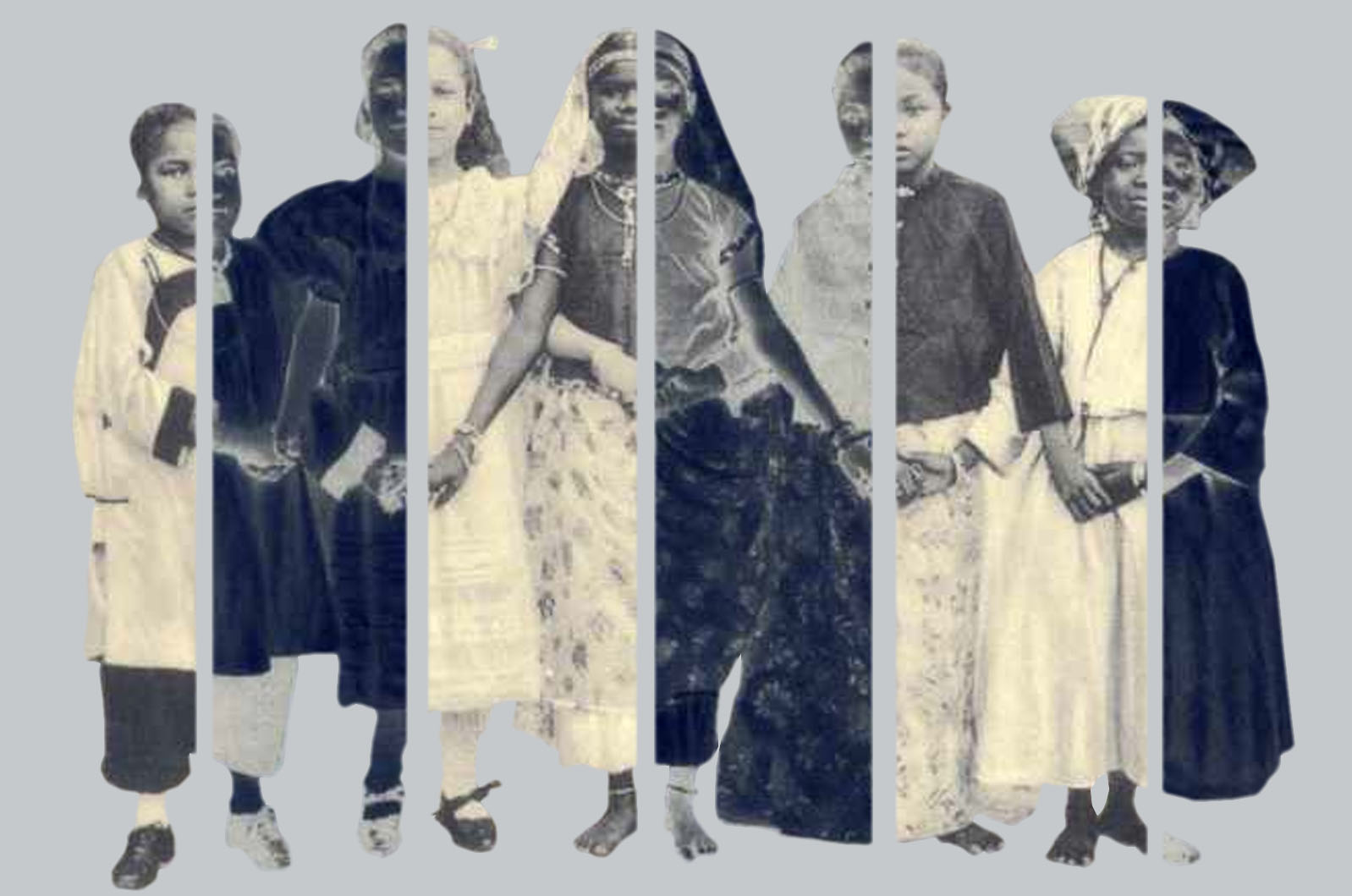
Is er een Europese landbouw-commissaris denkbaar die in de zin van een vangstbeperking van vissen om ‘overbevissing’ tegen te gaan, een “vangstbeperking van voedselconsumenten”  in verband met ‘overbewinkeling’ gaat instellen? Waneer worden er door een Europese commissaris beperkingen opgelegd aan de fusies, kartels, weilandwinkels, gigantische voedselplaza’s en andere monopoliserende activiteiten van de voedselhandelaren en distributeurs? Hoe lang zal het duren tot de Europese stem van de voedselconsument mee gaat tellen?

See also first post about this subject on ...

See also first post about this subject on May 25 on this blog...

On May 23 a bicycle bar serving eleven ladies  went down a slope in the northern part of town miscalculating the height of the mobile bar and an underpass that laid ahead. The impact of the cycle bar (bierfiets) on the roof of the traffic tunnel was such that three ladies landed in the hospital, two with neck fractures one lady lost a finger bone. This kind of absurd incident put the phenomenon of the combined sport of cycling, beer drinking and shouting once again in in unfavorable light. Today I had the pleasure of getting an answer of one of the members of the local city council for the Green Left party, on my request to stop the bicycle beer bars in Amsterdam. The city councillor had asked the alderman (local minister) for traffic affairs if this accident combined with a ban in several areas of the inner town on the bicycle bar because of of complaints about shouting, would not necessitate more stringent measures against this display of public drunkenness. The city authorities may want to wait  till a foreseeable future accident with a whole cycle café plunging in a canal after attempting to take one of the sharp and steep corners typical of the Amsterdam inner city bridges and I can assure you our ‘grachten’ are not yet filled with beer . It could be the cycle café will survive after all, with swimming vests and safety helmets…

   Elm trees may seem to be ill in certain years after an abundant blossoming; the tree has exhausted its reserves and only sparse leaves will grow at the top of the branches, this may look like the feared Dutch Elm Disease, but in most cases during the summer these trees will slowly develop their full foliage, or the next year the tree will display – once again –  its regular leaves.  

Die iep is ziek! Dat dacht ik althans toen een flinke wind de overdaad aan iepenbloesem weggeblazen had van de boom waarop het raam van mijn studio direct uitkijkt. Vrijwel kale takken met enkel aan de toppen wat lichtgroene blaadjes, dat was niet het gebruikelelijke jaarlijkse voorjaarsbeeld. Waar was het rijke lover dat zich normaliter na het wegwaaien van het ‘spilziekzaad’ ontplooit? Was de boom iets overkomen? Ik kon – heel ongebruikelijk – ook de tweede iep op het pleintje bij mijn huis in de takken kijken. Deze gaf het zelfde schrale beeld. Vanuit een ander raam gekeken, en ja, ook de nog jongere aanplant aan de overkant zag er uit als na een herfststorm. De volgende dagen, als ik door de stad fietste, begon ik extra op te letten op de veelvuldig in Amsterdam voorkomende iepen. Steeds dezelfde kaalheid. De schrik sloeg me om het hart. Was het de gevreesde iepenziekte die als een pandemie, of beter  een ‘pandentro’, over de stad en land raasde? Was er een soort ‘alarmfase’, werden er maatregelen genomen? Zoja, welke? Keek nog eens de Nederlandse nieuwsmedia van de afgelopen weken na, maar kon niets vinden. Todat ik na tevergeefs allerlei woordcombinaties geprobeerd te hebben op een webpgaina van het bedrijf  ‘Groenadvies Amsterdam bv‘ belandde: “Iepziekte of niet? Extreme bloei en wortelcontact” las ik en ook waren er plaatjes die precies datgene lieten zien wat ik opgemerkt had. De webpagina maakt gewag van “extreem zware bloei” in het voorjaar van 2009 en legt dan uit:

“In de meeste jaren verloopt de bloei normaal maar regelmatig treden jaren op waarin bepaalde iepencultivars (vaak uit de hybride x hollandica-groep) extreem zwaar bloeien. Dit fenomeen wordt een mastjaar genoemd. Dit jaar is er sprake van zo´n mastjaar. Hoe zorgwekkend het verschijnsel er ook uitziet, het is een natuurlijk proces dat regelmatig optreedt. Er is dan ook slechts zelden sprake van sterfte na een dergelijke bloei.”

Een zucht van verlichting, had mij al in gedachte het pleintje onder mijn raam voorgesteld, kaal geslagen zonder bomen, enkel met de gretige terrassen – waarmee het plaveisel zomers bezaaid is – en daarbij, in het volle zicht, de met het jaar groeiende reuze parasollen. Als ik de verschillende artikelen, die ik nadat ik de term ‘mastjaar’ ontdekt had, gemakkelijk kon vinden, nalees heeft een boom in zo’n mastjaar met buitenissige bloei, onvoldoende energie over om de op de bloesem volgende bladergroei te voltooien. De in de vorige zomer in het blad opgevangen en in tak en stam opgeslagen energie is in het daaropvolgende jaar onvoldoende voor een volledige groei.

xxx

Squandered elm tree blossoms as seen from the window of my Amsterdam studio in 2001.

Het is als een bedrijf dat  door een al te optimistische calculatie van uitbundige winsten, deze spilziek verstrooid in uitgekeerde dividenten en bonussen, om in het volgende boekjaar tot de ontdekking te komen dat de gedachte groei uitblijft en vervolgens ernstig moet gaat snijden in haar uitgaven, waarbij aan de top nog bladeren verschijnen, maar aan de basis ernstig gesnoeid wordt. Is 2009 niet zo’n economisch ‘mastjaar ‘?


It is like a company having calculated all too optimistic profits, squandering it as dividend payments and bonuses, coming to realize the next year that the estimated growth did not materialize, subsequently having to cut costs strongly, during which operation leaves would still appear at the top, while at the basis stringent pruning would be performed.

En dan toont de internet-zoekmachine haar ingebouwde serendipiteit, door de – niet geheel toevallige – volgende vondst gerelateerd aan iepenbloesem-oogst.

Rotterdam 2005 an artist project introducing a new form of celebration based on the seeds of the elm tree (elm-cents) that are gathered and packed into elm-blossom-shooters and shot into the air at the steps of the local Stock Exchange building.

Rotterdam 2005 an artist project introducing a new form of celebration based on the seeds of the elm tree (elm-cents) that are gathered and packed into elm-blossom-shooters and shot into the air at the steps of the local Stock Exchange building.

 Voorjaar 2005 sticht het kunstenaarscollectief Keijzer & Pars in Rotterdam de “Iepencentenfabriek” een vrolijke onderneming die vrijwilligers zakken vol met iepenbloesems laat verzamelen. Iepenbloesem die een rondachtige goudgele vorm heeft met een kleine kern waarin een soort vetbolltje zit die duivenpopulatie wekenlang aan de pik houdt. Deze ‘iepencenten’ werden bijeengebracht in een fabriekloods om daar verwerkt te worden in wat de kunstenaars de ‘iepenshooter’ noemen, een omgebouwd pneumatisch kartonnen confettikanon dat na een paar flinke pompslagen haar lading meters de lucht inschiet. In Rotterdam hebben ze daarmee een feestje gevierd op de stoeptreden van het plaatselijke Beursgebouw, al dat spilziek zaad – gevat in vele tientallen iepenshooters – werd in één enkel moment van kortstondige pracht, de lucht ingeschoten. Een nieuw ceremonieel voor felcitaties en gelukswensen met bijpassende liederen als “de uit zat in de olmen” (olm is een ander woord voor iep). Waarbij mijn verhaal nu bijna ten einde is en mij nog rest uit te leggen dat het woord ‘mastjaar’ een bosbouw en fruitteelt term is die niet zozeer verwijst naar het ‘mast-achtige’ beeld van een boom zonder bladeren, maar ‘mestjaar’ betekent, het jaar waarin eiken en beukenbomen een uitbundige vruchtval in de vorm van eikels en beukennootjes hebben en deze aangewend wordt om varkens die daar dol op zijn, extra vet te mesten.

De Universiteit van Wageningen heeft een leerzame web-pagina over de iepziekte

A recent municipal flyer with the text: "prevent nuisance on the water" with a second text line added by me: "Prevent nuisance on the land"
A recent municipal flyer with the text: “prevent nuisance on the water” introducing more strict rules for pleasure boats on the Amsterdam canals, with a second text line added by me: “Prevent nuisance on the land”, as lately a new vehicle appeared in the streets of Amsterdam, the fietscafé (bicycle café) a contraption on four or more wheels with a beer bar with ten or more seats  fitted with a set of pedals connected to a central conveyer system that makes the thing move with all its noisy clients peddling, drinking, sweating and shouting!

Maybe Amsterdam has always been “A-Party-City” even in the old days for the sailors who managed to get back alive after a trip to the East or West Indies (under the most appalling conditions), having their jenever (Dutch kind of gin) in quantities beyond our imagination and roaming the streets in a drunken state;  also the merry-making during special markets, the ‘kermesse’ (originally a fair to celebrate the church patron of a town) with intoxicated and bawdy public behavior, transposed to the football fan celebrations, the Queens-Day and Gay Parade extravaganza of now-a-days. With its Red Light district and ‘coffeeshops’, ‘paddoshops’ and other places and opportunities to consume recreational drugs, a major part of the tourists choosing this town, choose it to go partying, to get stoned and drunk, whereby  sex – if  it can be performed at all in such a state  – will often be more in the tourist’s imagination than for real.

One man’s pleasure easily turns into the other man’s burden and in certain tourist hot spots of town the negative effects of this kind of tourism are felt on a daily basis by the inhabitants. The cheap package deals of Easy Jet and the like have introduced plain-loads of partying-tourists who congregate in the Red Light District, around the Nieuwmarkt, Rembrandtplein and Leidseplein. The Britons have carved out their niche in the area with the highest number of whores, bars and pot-sellers and are known for roaming around in flocks and – as herd animals – tend to be more noisy, than the more individual Latin and Teutonic city roamers. This may all sound like some form of calvinist abhorrence of  (public) pleasure display, coupled with a tourist-phobia, but, as can be expected, it is the Dutch themselves who tend to make most of the noise and nuisance. Forgone are the days that popular outbursts of gaiety and pleasure where happening only on the aforementioned ‘patrons days’, as a kind of social safety valve in the tradition of the Roman maxim “give the people bread and games.” Partying has become the central core of Dutch society as has been recently researched and visualized in a splendid way by the Algerian/Belgian photographer Morad Bouchakour in his book “PARTY! in the Netherlands”, published in 2002.

xxx
Click image for a link to a library description of this book by worldcat.org

Let me quote just a few lines from the introduction of this book by Bas Heijne: “if there is so much concern in the Netherlands about how traditions are allegedly no longer being honored, then why are the Dutch throwing so many parties? If there’s one thing this country has, it’s a party culture. No occasion escapes unnoticed. There is isn’t a day without an excuse to celebrate.” The book depicts “almost every conceivable type of party, at every level of society” in the Netherlands and, however amazing the book maybe in its visuals, we are spared the noise on which most of the parties shown are thriving.

Noise – loud and unappreciated sound if you wish – is a spatial thing. It invades, often far beyond what can directly be seen, it may bounce on water, from walls, come back under unexpected angles, it may creep in through resonating floors or ceilings, it may be high pitched or subsonic, it may be continuous or bursting in with a sudden shock. A loud party of the neighbors is something one may need to tolerate once in a while, but it always is an intrusive act upon one’s personal living environment, lest one chooses to join the neighbors party or flee one’s house.

The inner city of Amsterdam is a network of canals, a product of  its original watery and muddy environment and the needs for local transport and its initial function as a European staple market with traders houses and warehouses along what the Dutch call ‘grachten’. Most of the inner city is situated on, or nearby these waterways. As the original transport functions were lost, modern forms of tourism took over the canals with rather big motor boats equipped with panoramic windows and sound systems used by a guide explaining all the views. This last thing has – over the years – been modernized and most tourist boats are now fitted with localized small speakers at the individual seats, so the people living or working along the canals have been freed from the echoing simplistic explanations with each passing of yet another tourist boat. Another considerate measure toward people living in the museum-like inner town, have been a municipal policy to supplant the polluting diesel motors of the tourists boats with electrical motors, a slow process of enforcing that has taken many years, but has really improved the ‘soundscape’ of the city.

Nothing but good news one would say, till the moment that the growing affluence of certain layers of Dutch society – who have a liking of showing off their wealth – combined with the miniaturization of electrical equipment, especially amplifiers and loudspeakers. The phenomenon of the party-boat parade was born. Luxury boats with drinks, loud chatter to cross over even louder amplified music. The nuisance of a party at your neighbors was exported to the canals of the inner city of Amsterdam. So ghetto-blasters changed their function and became yuppie-blasters, the crumbling walls of the ghetto were supplanted by the facades of  lordly houses and the acoustic properties of  the water surface combined with the bricks of the historic buildings worked together to give an optimum impact.

Some sample pictures taken by tourists visiting Amsterdam of local part-boats of the better situated classes parading during summer through the canals of Amsterdam. Beer and wine coolers, sound systems and comfortable deck seats characterize these boats. It is a phenomenon that only developed in the last two decades with the new rich enjoying the parade of their success.
Some sample pictures taken by tourists visiting Amsterdam of local party-boats of the better situated classes parading during summer through the canals of Amsterdam. Beer and wine coolers, sound systems and comfortable deck seats characterize these boats. It is a phenomenon that only developed in the last two decades with the new rich enjoying the parade of their success. Click the picture for a full size view.
xx
People living on house boats in the same canals, and also the inhabitants of some of the smaller canals or next to a lock and the like have been complaining for many years now about these pleasure outtings with no consideration at all of the discomfort for the inhabitants on or next to the water ways of the inner city of Amsterdam. Click the picture for a full size view of this happy crowd.

It is also in this period that smaller and smaller, and cheaper and cheaper sound-systems, were capable of producing more and more volume and so next to poor man’s ghetto-blaster, came the low class car sound system, that can turn a tiny car into a mobile discotheque. Once this mobility had been discovered, the separation of the private and the public came to a sudden end. Any fool may nowadays becomes a broadcaster of their own favorite music without any need for a radio license. One takes one’s car drives into the city, pushes up the volume knob and the capacity of the newest equipment is such that the car owner does not even need to open the window to let the passerby and even the inhabitant of adjacent buildings join into someone’s car-casts. At first something derived at by using bigger and bigger speaker boxes, and recently a even more bodily experience of loudness has been made possible whereby any part of the car’s body can be vibrated and becomes a sounding device. It was but a tiny step to transfer these systems to any kind of boat and go on a pleasure water tour.

The municipal flyer has this arguing texts to convince the party-boat people that they should behave in a more considerate way: "Sound over water reaches much further than over land. It is a nuisance for the inhabitant. We are not speaking about 'cozy' chatting on little boats. But purposeless shouting and much too loud music. Think abot the children that try and to sleep."
The municipal flyer has this arguing texts to convince the party-boat people that they should behave in a more considerate way: “Sound over water reaches much further than over land. It is a nuisance for the inhabitant. We are not speaking about ‘cozy’ chatting on little boats. But purposeless shouting and much too loud music. Think about the children that try to sleep.”
The less fortunate classes enjoying their boat party during Queens-Day in the canals of Amsterdam; notice the big sound system packed in the small boat in the left hand picture element
The somewhat less fortunate classes enjoying their boat party during Queens-Day in the canals of Amsterdam; notice the big sound system packed in the small boat in the left hand picture element; the wooden shoe boat has once be made as an advertisement boat for Heineken beer, probably recycled later as a pleasure boat, I remember seeing it for years parked in the Prinsengracht near the bridge of the Vijzelstraat. Click the picture for a full size view.

These sound systems have become also an integrated party of partying on the water in Amsterdam, especially during the two yearly grand parades of Queens Day in April and the Gay Parade through the canals of Amsterdam in August. No environmental and lest health rules seemed to apply to these pleasure boating events, which on the other hand do force many inhabitants out of the city during these days, especially people living on one of the hundreds of housing boats along the cities canals.

After many complaints and petitions the local authorities have started to limit some of the loudness excesses, but the tolerated massive sound pollution on Queens Day and the Gay Parade, have made public loudness somehow socially acceptable. A person – like me – complaining about it would get a standard reaction from police and other authorities, like “well then you should not live in the inner town” and I remember some organizers of the Gay Parade responding on my complaint posted at their web site with “what is your age? maybe you better move to the countryside” (so much for the gay emancipation movement  recursing to age-discrimination). 

It was a most happy moment when last week I spotted several big size A0 posters on public billboards next to the river close to my house with the new municipal campaign: “prevent nuisance on the water.”  The graphic language in rebus format did catch the eye immediately . Finally some officials caring about ‘ the sound of the city’, also attempting to argue instead of  menacing with punishments or fines.

The municpal flyer reads: "Too much alcohol by a boatsman is as bad as driving with too much alcohol.."
The municpal flyer reads: “Too much alcohol by a helmsman is as bad as behind a steering wheel of a car.

It must have been the same day, that a sudden  moving sound of a whole group of drunks cut through the relative tranquility of our double glassed home… it could not be the usual football fans that load themselves with beer across the river at the Rembrandtplein before diving en masse into the subway that brings them to the big Ajax football stadium in the outskirts… the sound differed from this dispersed unstable crowds crossing the bridge … so I looked out of the window and saw and heard a vehicle – a Beer-Bar-Cycle passing (as depicted and described below). “What a shame”, these were my first words and of course I knew this kind of vehicle that until that day hardly choose to move through my part of town. 

An example of a what is called a Fietscafé (Bicycle Cafe) in the inner town of Amsterdam; one can hear them coming, passing and disappearing on a long distance as bouts of drunken shouts accompany the pedalling exercise

An example of a what is called a Fietscafé (Bicycle Cafe) in the inner town of Amsterdam; one can hear them coming, passing and disappearing from a long distance as bouts of drunken shouts accompany the pedalling exercise. On the one hand professional alcoholics are constantly moved from the streets, especially in the inner town, while this display of public drunkenness is allowed as long as the main “driver” has signed a contract that she/he will stay sober during the rental trip.

The municipal slogan was still fresh in my mind: “Prevent nuisance on the water” and so I thought “but what about nuisance on the land?”  Which drove me to produce another rebus-banner to be posted soon on the streets of Amsterdam. 

My rendering of a new rebus to stop the Bicycle-Beer-Bar or Fietscafé pestering the inner town neighborhoods with public display of drunkeness.
My rendering of a new rebus to stop the Bicycle-Beer-Bar or Fietscafé pestering the inner town neighborhoods with public display of noisy drunkenness.


t_FietsCafe02

Three impressions taken of the Bike-O-Beer, Fietscafé, Party Bike, or whatever other name this device has been given, taken from Flickr.

“Fietscafe, aka bike-bar -only in Amsterdam says lludovic’s photostream; “weekend in amsterdam (yes, it’s a mobile bar powered by pedals under their feet and a barman in the middle keeping them hydrated)” says M Baskett;  “Ubriacarsi pedalando. Si sale, si ordina una birra, si pedala in libertà, tra schiamazzi e risate… una cosa così la trovi solo ad Amsterdam” (Getting drunk while peddling. You go out, you order a beer, you pedal in liberty, from shrieks to bouts of (hysterical) laughter… such a thing one only finds in Amsterdam”  says Tioma

The official municipal folder nuisance on the water can be found at the web site of the department of inner waters of the town: BBA.

An earlier post of the Limping Messenger of May 6th. 2009 about the armed robbery of the Scheringa Museum in the Netherlands (The museum of lootings and the looting of museums) displayed a picture of one of the two works of art that had been stolen, a Salvador Dali gouache of 1941. I already mentioned I was not sure whether I had found the right picture of that Dali work, and yesterday I did find the correct picture on a special page of the website of  the DSB bank – related to the Scheringa Museum – that has only recently be published.

De werken zijn van grote kunsthistorische waarde en praktisch onvervangbaar. Tamara de Lempicka schilderde slechts een aantal werken van deze kwaliteit. Er verschijnt zeer zelden een dergelijk schilderij op de markt. Voor een Dalí uit deze periode geldt hetzelfde. Dirk Scheringa had de buitenkans het werk via een goed bevriende Parijse kunsthandelaar te verwerven, dat het werk aan het Scheringa Museum gunde.
‘Adolescence’ (1941) van Salvador Dalí, gouache painted on a page of the French magazine ‘Pour Vous.’ The fusion of images is a mountain landscape that is at the same time a portrait of a famou actress of that time Betty Stockfeld., while it displays at the same time a mother and child sitting at the waterside. (a fragile work mounted in a gilded frame under glass; 45 x 30 cm).
here comes a caption
‘La Musicienne’ (1929) van Tamara de Lempickan (1898-1980), the Scheringa Museum, an “Art Deco” painting (116 x 73 cm).

The web page of the bank also reveals that the rare work by Dali has been personally acquired from a Parisian art dealer by Dirk Scheringa, the owner of the DSB bank and gives detailed of the vulnerability of the gouache in its gilded frame. Tips of the whereabouts of the artworks can be communicated to the bank of Scheringa via this web page. One wonders whether The DSB bank and its related web of financial firms in the field of mortgage and insurance has also insured these two artworks and for which amount of money. This last question of mine relates to recent  written-questions asked  by a member of  the dutch parliament Jolande Sap of the Green Left party (GroenLinks) to the minister of Finance Wouter Bos (social democrat party/PvdA). Jolande Sap (an economist who says she has an allergy for injustice) wanted to know whether the mortgage activities of the DSB bank involving frequent over-validation of real estate property and related high commission fees for the bank or its intermediaries leading to subsequently risks for their clients, was not going beyond the existing rules and what it socially acceptable. The answer of the Finance minister was – as to be expected – evading, though between the lines one can read that the controlling bodies of the Dutch government for the financial world (The National Bank and the AFM) will be enhancing their scrutiny on such issues and in some needed cases, will put sanctions on deviating financial institutions. Earlier this year (April 13)  a national television critical consumers program Radar had exposed some of the practices of the DSB bank and its (art collecting) director Scheringa, and that is not all. For some reason this bank founded in 1975 and named after his founder Dirk Scheringa, plus the word ‘Beheer’ (meaning: management, control, supervision) keeps coming in a negative way in the news. Last week it became known that a newly appointed director of the bank, a former liberal party (VVD) minister of Defense, Frank de Grave, left his new position within a period of two months, which is a rare phenomenon in the bank world and this has given rise to speculations of  him finding some skeletons in the closet, or worse, in the safe.
So, to come back to the Dali gouache and the other stolen artwork (Lempickan’s painting ‘La Muscienne’), have they been insured according to the same alleged DSB principles of validation? A press statement as published in the NRC/Handelsblad said that the value of the works has not been released. The blog arthostage (which claims to be the only that “reveals the truth about art crime investigation”) comes up with at least some price indication of the Tamara de Lempickan painting and states that it was traded at the Impressionist & Modern Art, Part One auction of Sotheby’s in May 2002, for US $ 2,649,500 and, when I do read their somewhat vague blog-post correctly, later  acquired for 3 million dollar by Scheringa.

As the value of a house may still has some objective criteria, especially now after the ‘housing bubble’ has been deflated by the ‘financial crisis’ it helped to create, the value of an art work is known to be ‘what a fool wants to pay for it.’  The ‘trading of wind’ is an old Dutch craft (windhandel) and one need not be surprised when a modern form is practiced in the windy quarters of the northern province of Holland where Dirk Scheringa has set up his quarters. Art collections are often used as safety reservoirs for speculative economic activities, as there can be big differences between the acquisition costs and the actual taxation value at a later point in time. Scheringa’s collection is still a modest enterprise encompassing just over one thousand art objects centred around the idea of ‘realism’ in modern art  as represented by surrealists and magic realists. The collection is now housed in a former school building in the small village of Spanbroek, but a new accommodation is under construction nearby and scheduled to open in 2010. If it is still a total private collection museum of Dirk Scheringa is difficult to say, several foundations have been created around the collection and the DSB bank and its sub-division DSB Vastgoed (DSB Real Estate) is the development company of the new museum building. Scheringa is known as a weaver of complex organizational tapestries not just in the banking and insurance world, but also as the main financer of a succesful football club in the region, AZ (they won the national professional football competition this year). Dirk Scheringa has many assets to juggle before he will have drifted out of sight …

De Zeppelin / The Blimp (1933). Artist: Carel Willink (The Netherlands 1900-1983). Collection: heirs Carel Willink Located until 06-01-2008: ‘Scheringa Museum For Realisme’ Spanbroek The Netherlands.
De Zeppelin / The Blimp (1933). Artist: Carel Willink (The Netherlands 1900-1983). Collection: heirs Carel Willink Located until 06-01-2008: ‘Scheringa Museum For Realisme’ Spanbroek The Netherlands. (with a “magical realist” apparition; click image for a full view)

NB the word ‘blimp’ may not be anymore known today, so here are two possible meanings:
blimp (as in “Colonel Blimp”) n. : (British) any elderly pompous reactionary ultranationalistic person (after the cartoon character created by Sir David Low)
blimp (as in “airship”) n. : a small nonrigid airship used for observation or as a barrage balloon

It was a few days after the tragic drama on Queens-Day in the city of Apeldoorn on April 30th 2009 that the Dutch prince Constantijn fulfilled one of his official duties as patron of World Press Photo and handed the WWP 2008 prize to American photographer Anthony Suau during a ceremony in Het Muziekgebouw in Amsterdam.

The winning photograph depicts Cuyahoga County Sheriff’s Department detective Robert Kole with his gun ensuring that the residents have fully moved out of their home, after a mortgage foreclosure and eviction. The photograph appeared in Time Magazine as a part of a story on the U.S. economy in crisis. Anthony Suau took this picture on March 26, 2008, during a two day ride-along with a sheriff's officer and describes how he experienced these two reportage days: "Every second I was there [in Clevelan, I was walking into another moment of human tragedy (...) I worked from morning to night in that place and there was never a moment's rest." (details found at Photo District News, a professional photographer magazine/PDN web site)"

The winning photograph depicts Cuyahoga County Sheriff’s Department detective Robert Kole with his gun ensuring that the residents have fully moved out of their home, after a mortgage foreclosure and eviction. The photograph appeared in Time Magazine as a part of a story on the U.S. economy in crisis. Anthony Suau took this picture on March 26, 2008, during a two day ride-along with a sheriff’s officer and describes how he experienced these two reportage days: “Every second I was there [in Cleveland, I was walking into another moment of human tragedy (…) I worked from morning to night in that place and there was never a moment’s rest.”

In the February 13 issue of Photo District News (PDN), a professional photographer magazine, the difficulties of Suau to get the story published and his own continuous struggle as a social engaged photographer to find assignments and commissions are described in detail.

The Prince started of his speech with a reference to the assault of a car driver steering straight through a festive crowd awaiting a special open bus, in which he and the rest of the royal family were standing and waving during Queens-Day parade in Apeldoorn. If the driver of the car -Karsten T. – was aiming at the royal family, or if he was committing public self murder choosing the royals as witnesses, are only two, of possible more, interpretations of the event, resulting in the death of seven bystanders, several wounded and the end of the life of the assaulter. Karsten T. missed his alleged target by far and bumped into the iron frame around a stone monument next to  a crossroad almost at the same moment the royal bus appeared  at the crossing from another direction. Police sources were surprisingly quick in spreading the news that the assaulter – however badly wounded he was – still had enough wits to state or confess that the queen or royals were his actual targets. These police sources failed – and fail till today – to give any details on how this last statement of the assaulter had been taken and by whom. The whole case is still under investigation, but already the same day circumstantial details became known: Karsten T. had lost his job; could not afford the rent of his house anymore; had informed the house owner he was leaving and would give back the key of the house the next day.  Karsten T. most probably had no other place to stay, nowhere to go, did not want his parents to know about his dire situation… In other words he was a desperate man ready for a desperate act.

Let us listen now to Prince Constantijn. He had instructed the State Press Service (RVD) that in his speech during the award ceremonial of World Press Photo a brief statement on how he had experienced the Apeldoorn drama a few days before, so he was assured of a full press coverage. (I have taken these lines from the web site of the Dutch Royal family to be sure that no deformation of what was said by the prince may occur):

Excellencies, dear guests,

As the tragic events in Apeldoorn are so fresh on our minds, please allow me the opportunity to say a few words. First and foremost, our thoughts are with the people whose loved ones have been torn away so suddenly, and with those who were injured. The images keep passing before my eyes, and the sounds echo in my ears. There is no “why”; no reasoning; there is only devastation and a useless, tragic loss of life. A senseless, horrific act ripping apart lives, shocking a nation, which feels like an attack on much that is dear to the Dutch as represented in Queen’s Day: a joyfulness that is inclusive, open, unifying, friendly and innocent, which I hope ultimately will remain intact.

Tomorrow is Remembrance Day in the Netherlands; the day on which we remember not to forget. We retell the stories and review the powerful images that have become part of our collective memories. These photos have captured our past and continue to do so for the future. Photography has certain advantages over film, as it is easier to store and review. Moreover, we need these ‘stills’ to project the news into, to have a peg from which we can hang our own memories and associations.

Photo 1) Apeldoorn 30 of April 2009: a photograph that did appear in the international press (possibly made by Albert Nieboer a photographer specialized in documenting royals) and that may be send it for the next World Press Photo competition and standing a good chance becuase of its complexity; with two (press) photographers being halted or interrupted in their trade right after the moment that Karsten T. crashed into the monument (with frieze pictures of the grandmother and father of Queen Beatrix visible), while in the open bus in the background the actual Dutch queen Beatrix (red costume and hat) can be seen.  This picture must have been made with a tele-lens which gives the wrong impression of the royal bus being very close to the monument and crashed car. This photograph is also taken at a short while after the car has crashed into the monument, A the moment of impact the royal bus was starting to make a curve and  arriving at the crossing. I added a red arrow that points at Prince Constantijn in the bus. The policeman at the left with the blue shirt seems to grab for his pistol and one wonders why he is doing so.  In the available pictures and videos of the Apeldoorn drama in the press and on the Internet I could not find any policeman or security officer grabbing or pointing a gun during the short moment of the deadly trajectory of the assault car.  It looks as if the policeman in the blue shirt tries to halt the photographing activity of the man with the light blue shirt and many camera's. The guys with the suits must be security officers of the royal family.

Photo 1) Apeldoorn 30 of April 2009: a photograph that did appear in the international press, a complex picture with two (press) photographers being halted or interrupted in their trade right after the moment that Karsten T. crashed into the monument (with frieze pictures of the grandmother and father of Queen Beatrix visible), while in the open bus in the background the actual Dutch queen Beatrix (red costume and hat) can be seen. This picture must have been made with a tele-lens which gives the wrong impression of the royal bus being very close to the monument and crashed car. This photograph is also taken at a short while after the car has crashed into the monument, A the moment of impact the royal bus was starting to make a curve and arriving at the crossing. I added a red arrow that points at Prince Constantijn in the bus. The policeman at the left with the blue shirt seems to grab for his pistol and one wonders why he is doing so. In the available pictures and videos of the Apeldoorn drama in the press and on the Internet I could not find any policeman or security officer grabbing or pointing a gun during the short moment of the deadly trajectory of the assault car. It looks as if the policeman in the blue shirt tries to halt the photographing activity of the man with the light blue shirt and many camera's. The guys with the suits must be security officers of the royal family.

This picture is possibly made by Albert Nieboer a photographer specialized in documenting royals and did a.o. appear in the New York Times.

“A peg from which we can hang our own memories and associations” says Constantijn and it made me wonder why he fails to make the obvious association, linking the subject of the winning World Press photograph of Anthony Suau with the pictures of the Apeldoorn drama, in which – he himself – even played a role. Both photographed scenes have a hidden story, from the pictures alone we can not derive what really happened. The modern spectator is supposed to be an active member of  ‘media society’ and its connotations, at least that has been the opinion of the World Press Photo jury, they take it for granted that connotations of a news photograph are actively gathered by the public:  newspaper headlines and associated pictures; emblematic television news visuals; the promises of advertisements and its friction with what is experienced as reality; repetitious cross referencing between texts and images. The ravaged house with the policeman and his pistol about to enter a door – to another room – in full concentration, can not be recognized as a house where the owner has been forced to leave because of failure to pay the mortgage as a result of the financial crisis, let alone  that the viewer of this picture could know, that the house only had been vandalized after the owner had left, and that there was some evidence that the vandals had taken a weapon from the house, which explains the pistol in hand search as photographed by Suau. There is a subtext to news images, be it the post eviction photograph of a house in the USA or pictures taken of the Queens-Day drama in Apeldoorn.

Quiet a lot of circumstantial information is needed to get in the real meaning of the photograph. For the jury members of World Press Photo these hidden meanings gave the picture an extra value, as chair MaryAnne Golon said: “The strength of the picture is in its opposites. It’s a double entendre. It looks like a classic conflict photograph, but it is simply the eviction of people from a house following foreclosure. Now war in its classic sense is coming into people’s houses because they can’t pay their mortgages.”

Quiet a lot of circumstantial information is needed to get in the real meaning of the photograph. For the jury members of World Press Photo these hidden meanings gave the picture an extra value, as chair MaryAnne Golon said: “The strength of the picture is in its opposites. It’s a double entendre. It looks like a classic conflict photograph, but it is simply the eviction of people from a house following foreclosure. Now war in its classic sense is coming into people’s houses because they can’t pay their mortgages.”

“Double entendre”, two ways to understand it says WPP jury member Golon, pointing at the figure of speech derived from the French whereby there is a twist to the obvious. One needs to read below the surface “go to the root of the problem” as prince Constantijn says in his speech when he comes to the moment where he directly speaks about the photograph that out of 96,268 pictures send in, won the contest. Is this the same prince who in the opening statement of his World Press Photo speech refers to his own involvement in a drama, only a few days ago, saying: “The images keep passing before my eyes, and the sounds echo in my ears. There is no “why”; no reasoning; there is only devastation and a useless, tragic loss of life.” Does Constantijn not read any newspapers, does he not look at the television news, does he not check the internet? He has studied law, works now for the Brussels office of the American ‘think thank’ organization RAND, so one supposes he is generally speaking, an informed man. Why does he not give one word to the publicly known facts – as anybody knows them today – that the ‘root of the problem’ can be found in a personal crisis of a man who had no job anymore and who could – most probably – not even afford to pay the rent of a non-luxury apartment. How is it possible that a few minutes before he will describe “the particular type of war zone” that Suau has depicted, he typifies the context in which the drama of Apeldoorn enfolded as a Dutch expression of “joyfulness that is inclusive, open, unifying, friendly and innocence”? Where is his imagination? However uncomfortable it may be for a royal to acknowledge, there was a “why”, there has been “a reasoning” – if only in the mind of Karsten T. – which led to the assault, public self-killing or some other explanation for his deed which still is to be found. The “inclusive joyfulness” of a Dutch Queens Day parade may even have been the actual trigger for Karsten T., may well have been ‘at the root of the problem’.

My guess is that Constantijn does not lack imagination. He is intelligent enough to somehow guess how such dramatic strings of events may be triggered, but being straightjacketed in the strictly organized Dutch royal family – even though he is only fifth reserve king in line – he can and he will, say nothing meaningful. His “memories and associations” will be hidden from us. Active self-censorhip is his trade. In the privacy of his home there may be several “pegs” on which pictures are hung with his own memories and associations. One of the pictures maybe this one showing his brother Willem Alexander and his sister in law Maxima clasping their hands on their mouths in bewilderment. Constantijn himself is only partly visible in this picture, that may tell – in World Press Photo aesthetics – in its simplicity the story better than the complex scenery of the Apeldoorn 1) photograph in this post.

Photo 2 Apeldoorn 30 of April 2009: Maxima clamps her one hand on the railing of the bus and the other over her mouth and nostrils, as she watches the totally unexpected terrible scene in front of her; Willem Alexander is captured with his mouth visible through his fingers in an inelegant way, one of the rare moments were his trained  official mask has fallen of; their eyes survey the disastrous scenery but also seem to be turned inward, thoughts racing through their minds; "was this aimed at us?"; seeing the victims on the street and people rushing up to help them; seeing the crashed car; curious is that the face of the one policeman that can be seen in full profile looks the other way, as if he has not seen what has just happened and it is a face without any sign of having witnessed a disaster; it could be that as the policemen stand lower their view is blocked; nobody is seen in a pose of shrinking back from an approaching danger, or pulling themselves together after such a fear. The overall impression is that of spectators in awe.

Photo 2 Apeldoorn 30 of April 2009: Maxima clamps her one hand on the railing of the bus and the other over her mouth and nostrils, as she watches the totally unexpected terrible scene in front of her; Willem Alexander is captured with his mouth visible through his fingers in an inelegant way, one of the rare moments were his trained official mask has fallen of; the hand over mouse gesture can be seen as a subconscious gesture that indicates that a person is perplexed by what just have been seen or heard, also to stop oneself from shouting; their eyes survey the disastrous scenery but also seem to be turned inward, thoughts racing through their minds, "was this aimed at us?"; feelings of empathy also, seeing the sprawled victims on the pavement and people rushing up to help them; dismay as well, because this act brutally puts an end to what Prince Constantijn described as "joyful", "friendly" and "innocent"; Willem Alexander and Maxima see the crashed car and must have asked themselves what the motive of the car driver could have been, including flashes of their public role and, apparently, not being loved by everybody; thoughts how this will effect their personal life and how it relates to their public role in the future. Curious is that the face of the one policeman that can be seen in full profile looks the other way, as if he has not seen what has just happened and it is a face without any sign of having witnessed a disaster; it could be that as the policemen stand lower and their view is blocked by people in front of them; also a strong tele-lens must have been used drawing together what in reality is far apart; nobody is seen in a pose of shrinking back from an approaching danger, or pulling themselves together after such an automatic body gesture of fear; the overall impression is that of spectators in shock and awe.

The pictures above appeared on a website of Daylife.com, that relates it to Reuter, but there are other agencies that have what seems to be a similar photograph, most probably a cut-out of this picture; that one is ascribed to the Dutch photographer Patrick van Katwijk (possibly related to dutchphotopress that has a set of pictures of what they call “Queensday Accident” which carries yet another link to Monarchy Press Europe (these two last agencies seem to be specialized in photographing royals).

There is a very long tradition of patronage of the arts by royals and artists and intellectuals under royal protection are not necessarily  total uncritical supporters of  a ruling power. Famous example is the Spanish painter Goya who had four kings as his patron, including a foreign occupying king (one of the brothers of Napoleon) and who combined big painting commissions for the aristocracy with  – on the side –  graphical works with biting social criticism. Goya’s well known works on the horrors of war depict the national Spanish rising against the French occupationand as such fitted the Spanish royal ‘canon’. Czarina Catherina II of Russia entertained foreign critical minds like Voltaire at her court, but merciless prosecuted local intellectuals with enlightened ideas like the writer Alexander Radishchev (influenced by Rousseau) who was send to a Siberian exile and later committed suicide. There is evidence that the French King Louis XIV wanted to invite Spinoza to his court, in the period that French armies had occupied half of the Dutch Republic, but the ‘caute’ (cautiousness) of this radical philosopher made him rightly refuse that offer. Somewhat later on John Locke who had been in opposition to the catholic monarchy of England found a refuge in the Netherlands where he published his work on Tolerance (Epistola de Tolerantia), eleaborated on his ideas about “ultimate sovereignty of the people”, and joined forces with the Dutch Prince William of Orange III, in the Glorious Revolution of  1688, which made the British isles a constitutional kingdom under the reign of a Dutch prince.

When it comes of patronage or support of critical intellectuals and artists, there is always some form of interest from the point of view of a king or aristocrat, to do so. The late husband of Queen Beatrix and the father of Prince Constantijn, Prince Claus has left as a legacy a foundation that supports “culture and development” directing its activities mainly at what the foundation publications (still) calls “The Third World”. One of the recent spearpoints of this patronage is the program “Creating Spaces of Freedom” directed at “people who are oppressed or who express opinions that differ from the general consensus.”  The publication on this specific project of the Prince Claus Fund classifies its support aim clearly: “defiant culture”, which means ‘boldly resisting authority or an opposing force.’ A publication on this subject supported by the fund, summarizes its intent, to look at “the role of art in places where subversion is the only way to challenge the status quo.” So the patronage of the Dutch royals maybe conservative at home and at the same time most radical in ‘far away countries’. Though, there is a policy of  some local critical intellectuals being invited for cultural events where the royals give acte de présence, and even anti-monarchist may be invited for a palace or other royal events, with names ranging from Peter Schat (once prosecuted for being involved in a lèse majesté cartoon case depicting the mother of Beatrix, Juliana, as a Dutch whore sitting in a window (with her yearly salary as a price tag) or lateley during National Remembrance Day on May 4. 2009, a speech – attended by the royals- by Wim de Bie, a Dutch comedian who has masterminded (together with Kees van Koten) over the last decades several television sketches poking jokes at the Queen and her extravaganza.

Must this particular Dutch policy of royal patronage of the arts be seen in a Marcusian sense as a form of “repressive tolerance” (Herbert Marcuse “Repressive Tolerance” 1965) ? Or is such a traditional left-wing branding too easy: “what is proclaimed and practiced as tolerance today, is in many of its most effective manifestations serving the cause of oppression.” Can there be still a creative and liberating role for hereditary queens and princes in the 21st. century?   The royal family and Prince Constantijn  had a shocking experience:  “The images keep passing before my eyes, and the sounds echo in my ears”, said the prince, but when he further deliberates on this dramatic subject his imagination is not only poor, it is a void.

If the role of patron of the competition World Press Photo would have been the only public function of this prince, I would not have even written this exposé, what alarmed me is that recently I did read a newspaper announcement in which I could read that Prince Constantijn had been installed as a board member of  the Supervison Council (Raad van Toezicht) of the Stedelijk Museum Amsterdam (Museum of Modern Art Amsterdam). The press release has hardly any information except the fact that the prince “has a lot of experience in European and international governance” and also that “his liking of modern art makes him an extra good candidate for this position.”  The Stedelijk Museum is a municipal museum, the municipality is formally governed by a municipal council that is democratically elected. This policy of nominating new members of a public governing body by co-optation is a shocking undemocratic act. Patronage of the arts thus becomes a form of Paternalism.

The State Press Service (RVD) choose this photograph of Prince Constantijn to go with the news item on the Stedelijk Museum Supervising Board memeberschip

The State Press Service (RVD) choose this photograph of Prince Constantijn to go with the news item on his Stedelijk Museum Supervising Board membership, beginning of April 2009.

It would lead too far to detail now how the other members of this “Super-vision Council” of the Stedelijk Museum Amsterdam opted in and out, but for the non-locals of Amsterdam it may be interesting to know that at the same time that Prince Constantijn moves in, the chairman of the council has moved out. And… who is this chairman? Rijkman Groenink, former director of the ABN/AMRO Bank who has made a reputation for himself by his adventurous banking and the demise of  Fortis and the whole string of other banks involved in the construction of the economic crisis we live today, a man who managed to leave the sinking ship, that his bank had become, with an extravagant personal bonus. Maybe Constantijn will also peg a picture of banker Rijkman Groenink (in Dutch, his first name means literal ‘rich man’) on his wall and refresh his memories and let his imagination provide the manifold associations with this picture.